Préparation du rapport

Chargement des informations et références disponibles

Connexion au corpus archéologique…

Collecte des archives antiques

Aller au contenu principal
Lokomotiv Eneolithic Echoes
Profil culturel

Lokomotiv Eneolithic Echoes

Four ancient lives from Lokomotiv reveal early north Eurasian genetic threads

5981 CE - 4852 BCE
Lokomotiv, Russia (Cis‑Baikal region)
Faites défiler pour commencer
Chapitre I

Le récit

Comprendre la culture Lokomotiv Eneolithic Echoes

Archaeological and genetic evidence from Lokomotiv (Russia, 5981–4852 BCE) links Eneolithic lifeways on the Cis‑Baikal fringe with East Eurasian maternal lineages and north Eurasian Y‑chromosome signals. Small sample size makes conclusions tentative.

Time Period

5981–4852 BCE

Region

Lokomotiv, Russia (Cis‑Baikal region)

Common Y-DNA

N1c, C

Common mtDNA

D4j, D4, D, A

Chapitre II

Chronologie

Moments clés de l'histoire de cette culture

5981 BCE

Earliest dated Lokomotiv individual (sample)

Radiocarbon‑calibrated human remains from Lokomotiv date to c. 5981 BCE, marking one of the earliest sampled individuals for this Eneolithic assemblage.

Chapitre III

Origins & Emergence

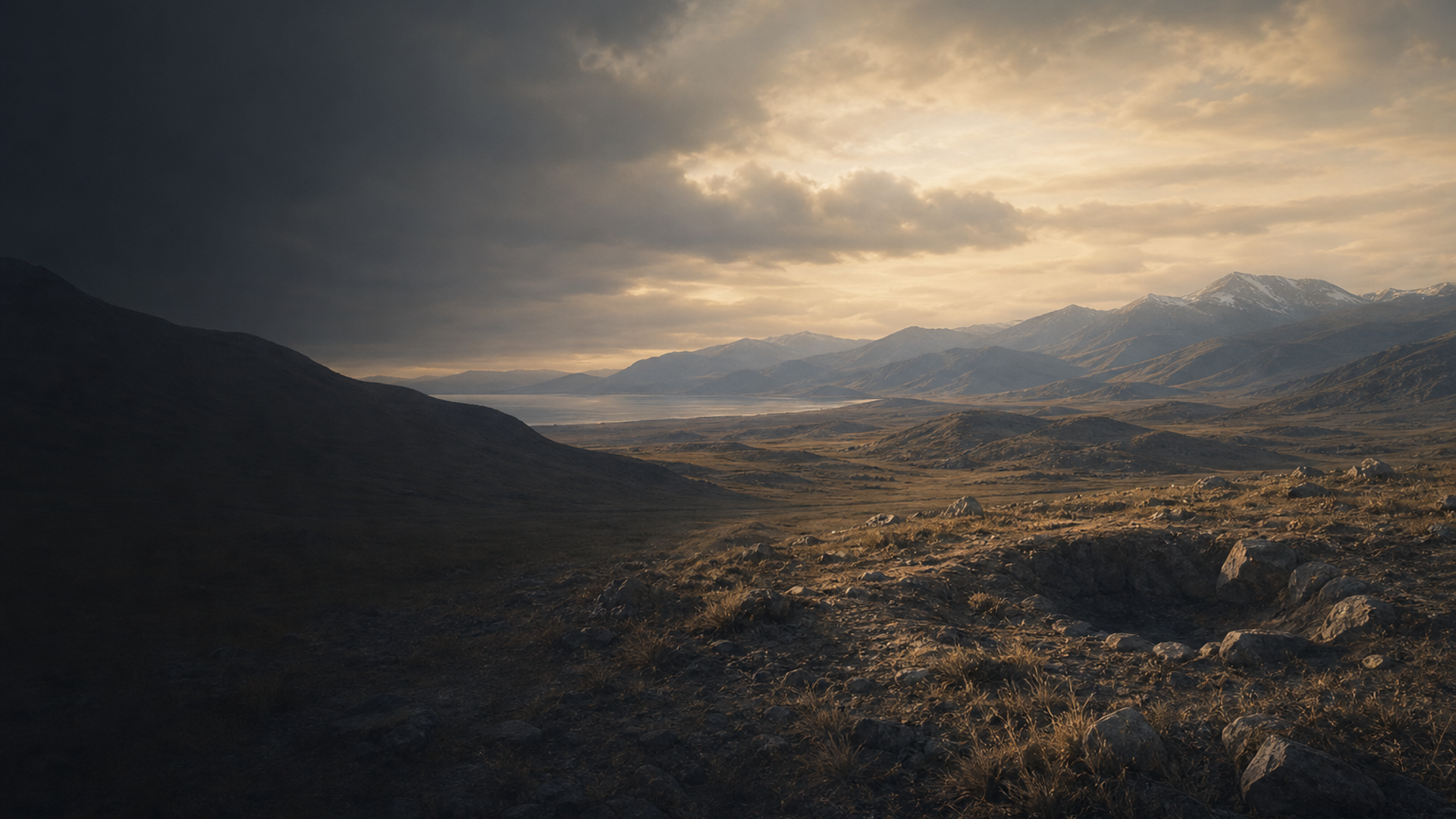
Under a pale northern sky, the Lokomotiv site emerges in the archaeological record during the late 7th–5th millennia BCE as part of a broader Eneolithic tapestry in far‑northeastern Eurasia. Excavations at Lokomotiv (Russia) have produced human burials dated between 5981 and 4852 BCE, placing these individuals in a period when mobile hunter‑forager communities were adapting to climatic shifts and new material practices. Archaeological data indicates local continuity in mortuary activity and subsistence strategies, but the sparse record resists sweeping cultural narratives.

Genetically, the small set of four sampled individuals hints at connections to north and east Eurasian genetic pools rather than to contemporaneous western steppe groups. The dual presence of Y‑chromosome haplogroups N1c and C and mitochondrial lineages dominated by haplogroups D and A reflect ancestries that are common across Siberia and parts of northeastern Asia. Limited evidence suggests that Lokomotiv populations were part of a web of regional demographic interchange across river corridors and lake margins.

Because the sample count is low, these patterns should be treated as preliminary. Future excavations and additional ancient DNA sampling will be needed to confirm whether the Lokomotiv profile reflects a stable local population, episodic migration, or complex admixture dynamics along the Cis‑Baikal frontier.

  • Dates: 5981–4852 BCE at Lokomotiv cemetery, Russia
  • Archaeological record: Eneolithic burial contexts with regional affinities
  • Preliminary genetic signal linking to north/east Eurasian lineages
Chapitre IV

Daily Life & Society

The lives behind the bones at Lokomotiv unfolded along lakeshores and river valleys where ice and thaw governed the rhythm of survival. Archaeological data indicates that inhabitants exploited aquatic resources, hunted game, and gathered seasonal plants; organic preservation at some sites preserves traces of fish and plant exploitation in this zone. Material traces associated with Eneolithic contexts—stone tools, ground implements, and portable ornaments—suggest communities skilled in lithic craft and personal display, though preservation and publication of the full material assemblage remain uneven.

Social life can be glimpsed through burial variability: interments at Lokomotiv include individual graves that point to recognizable social identities, perhaps age and sex–based roles, and community concern for the dead. Funerary arrangements and the presence of bodily modifications or grave goods (where documented) hint at social differentiation, ritual practice, and the embedding of memory within landscape. Yet archaeological evidence is fragmentary; many inferences about household composition, mobility, and craft specialization are modeled from regional comparisons rather than exhaustive local excavation.

In cinematic terms, these were people who navigated a mosaic landscape—seasonal camps alternating with more persistent burial places—anchoring social ties across generations in a challenging northern environment.

  • Economy: mixed aquatic and terrestrial resource use inferred from site context
  • Social indicators: burial variation suggests community identity and ritual
Chapitre V

Genetic Profile

The genetic portrait from Lokomotiv is compelling but small: only four ancient genomes currently inform our view (sample count = 4). Y‑chromosome diversity includes haplogroups N1c (1 individual) and C (1 individual). Mitochondrial lineages are dominated by East Eurasian haplogroups—D4j (1), D4 (1), D (1), and A (1)—a set typical of Siberian and northeastern Asian populations both in prehistory and among many modern Indigenous groups.

These markers collectively point toward substantial east and north Eurasian ancestry at Lokomotiv. Haplogroup N1c is often associated in later periods with northern Eurasian populations and, in modern contexts, with Uralic‑speaking groups; however, caution is required: the presence of N1c in a single individual at an Eneolithic site does not prove linguistic or cultural continuity. Haplogroup C is widespread across Asia and can signal deep regional continuity.

Crucially, the low sample count (<10) makes any demographic reconstruction provisional. Archaeological data paired with these genetic signals tentatively supports a model of local populations with eastern maternal ancestry and a mix of paternal lineages consistent with north Eurasian connectivity. Future sampling across Lokomotiv and neighboring sites, and genome‑wide analyses, will be required to test hypotheses about admixture timing, population structure, and links to later prehistoric groups.

  • Y‑DNA: N1c (1), C (1) — suggests north/east Eurasian paternal inputs
  • mtDNA: D4j, D4, D, A — East Eurasian maternal lineages; conclusions tentative due to n=4
Chapitre VI

Legacy & Modern Connections

The Lokomotiv individuals echo through time as part of the deep genetic fabric of northern Eurasia. Their mitochondrial and Y‑chromosome lineages connect to maternal and paternal ancestries that persist in varying frequencies across Siberia and adjacent regions. These genetic threads may contribute to the broader story of how eastern Eurasian ancestries spread and became integrated into later prehistoric communities across the Eurasian north.

Archaeologically, Lokomotiv helps define a local Eneolithic horizon on the Cis‑Baikal edge—an anchor point for comparing burial rites, mobility patterns, and material culture across the region. Genetically, the site underscores the importance of sampling small, well‑dated contexts: even four genomes can illuminate unexpected affinities, but they also exhort caution. Only with expanded sampling and interdisciplinary study can we trace how the Lokomotiv signal relates to later population movements, linguistic shifts, and the emergence of modern regional genetic landscapes.

  • Genetic continuity: links to modern Siberian and north Eurasian lineages, but tentative
  • Research need: expanded aDNA sampling to clarify long‑term population dynamics
Propulsé par l'IA

Assistant IA

Posez des questions sur la culture Lokomotiv Eneolithic Echoes

Assistant IA par DNAGENICS

Débloquer cette fonction
Posez des questions sur la culture Lokomotiv Eneolithic Echoes. L'assistant IA peut expliquer les résultats génétiques, le contexte historique, les preuves archéologiques et les liens génétiques avec les populations actuelles, dans les limites de l'interprétation.
Exemple d'analyse IA

La culture Lokomotiv Eneolithic Echoes représente un chapitre fascinant de l'histoire humaine…

L'analyse génétique met en évidence des similarités avec des populations antérieures et des signes d'adaptations propres. Les échantillons d'ADN ancien éclairent les schémas migratoires et les liens entre populations, avec des limites qui dépendent de l'étude et du contexte archéologique.

Il s'agit d'un aperçu de l'analyse IA. Accédez à l'assistant complet pour explorer :

  • Composition et similarité génétique
  • Schémas migratoires et origines
  • Vie quotidienne et pratiques culturelles
  • Contexte génétique actuel

Explorez d'autres cultures antiques

Découvrez les récits de civilisations issues du monde antique