Menu
Currency
Main
Store
Blog

Loading Report

Preparing your ancestry journey

Connecting to ancient matches...

Preparing your report

Skip to main content
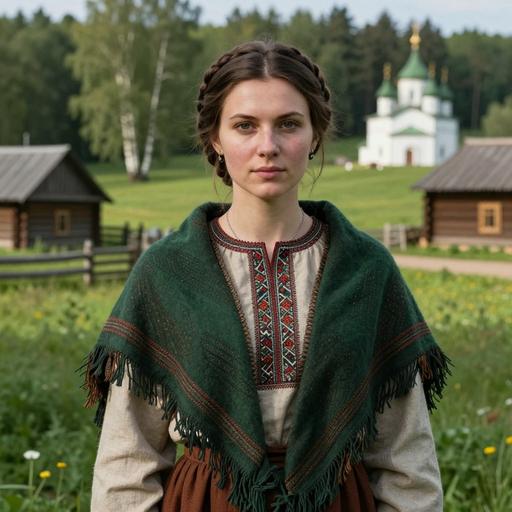
Portrait reconstruction of A woman buried in Russia in the Modern era
Ancient Individual

A woman buried in Russia in the Modern era

A woman buried in Russia during the Modern Russia Kibol (1900 CE)

A fragment of the ancient world, preserved across millennia in strands of DNA.

KBL003
1645 CE - 1800 CE
Female
Russia
Scroll to begin
Chapter I

Identity

The biological and cultural markers that define this ancient individual

Sample ID

KBL003

Date Range

1645 CE - 1800 CE

Cultural Period

Modern Russia Kibol (1900 CE)

Biological Sex

Female

mtDNA Haplogroup

Not available

Y-DNA Haplogroup

N/A (Female)

Chapter II

Place

Where this individual was discovered

Country Russia
Locality Kibol-3 (Vladimir Oblast, Suzdalsky District)
Coordinates 56.4429, 40.3847
Chapter III

Time

When this individual lived in the broader context of human history

KBL003 1645 CE - 1800 CE
Chapter IV

Story

The narrative of this ancient life

The term \Modern Russia Kibol" doesn't directly correspond to any specific historical era or cultural movement in Russian history. It's possible there might be a misunderstanding or it could be a fictional or speculative scenario. To provide a comprehensive analysis, let's break this down using what we know from Russian history around 1900 CE, and explore relevant cultural, social, and political aspects of that era.

Historical Context: Russia circa 1900

The year 1900 was a time of considerable change and unrest in Russia. During this period, the Russian Empire was under the rule of Tsar Nicholas II, the last reigning emperor of the Romanov dynasty.

  1. Political Landscape:

    • Autocracy: Nicholas II upheld an autocratic system, centralizing power and limiting political freedoms. There was little political reform, and political discontent was simmering across the empire.
    • Rise of Movements: Various political movements were gaining momentum, including the Socialist Revolutionaries and the burgeoning Bolshevik movement led by figures like Vladimir Lenin. There was a growing influence of Marxist ideologies advocating for a proletarian revolution.
  2. Socio-Economic Conditions:

    • Agrarian Society: Russia was predominantly agrarian, with a vast majority of its population involved in agriculture. Serfdom had been abolished in 1861, but many peasants continued to suffer under unfavorable economic conditions.
    • Industrialization: Although industrialization was underway, it was uneven. Urban centers like St. Petersburg and Moscow began developing industries, leading to the growth of an urban working class.
  3. Cultural Dynamics:

    • Literary Flourishing: This was a golden age for Russian literature, with authors like Leo Tolstoy, Anton Chekhov, and Fyodor Dostoevsky achieving worldwide acclaim.
    • Art and Music: Russian art and music were also thriving, with composers like Igor Stravinsky beginning to make their mark. The Silver Age of Russian poetry was underway, with poets like Anna Akhmatova and Alexander Blok gaining prominence.
    • Philosophical and Intellectual Movements: There was a rich dialogue among intellectuals regarding the direction Russia should take. Discussions about socialism, anarchism, and liberal reforms were common in intellectual circles and often reflected in the literature and art of the time.
  4. Social Changes:

    • Education and Reform: Educational reforms were sporadic, and while literacy rates were improving, there were still significant gaps between urban and rural education.
    • Women's Movement: The turn of the century also witnessed early movements advocating for women's rights, including access to education and suffrage. Key figures began to emerge advocating for these causes.
  5. International Relations:

    • Entanglement in Conflicts: Russia's imperial ambitions led to conflicts such as the Russo-Japanese War (1904-1905), which exposed the weaknesses of the Russian military and contributed to domestic unrest.
    • Alliances and Rivalries: Russia was involved in complex alliances and rivalries, setting the stage for its involvement in European conflicts like World War I.

Cultural Interpretation: "Kibol"

If "Kibol" refers to a particular cultural aspect or speculative narrative, we can imagine it reflecting a distinct subset of Russian culture during this time.

  • Speculative Elements: "Kibol" might represent a counter-cultural or technological movement within Russia, possibly involving avant-garde art, experimental political thought, or even early technological adaptations reflecting a modernist vision within the Russian Empire. A focus could include experimenting with new forms of governance, community structures, or an underground movement challenging the status quo.

  • Integration with Existing Culture: This hypothetical movement would likely interact with existing literary, artistic, and political elements — perhaps merging traditional Russian folklore with emerging modernist themes, or fostering a community of intellectual thought that blends Eastern philosophies with Western technological ideas.

Conclusion

While "Modern Russia Kibol" isn't an established historical or cultural term, this exploration of a speculative cultural and historical context around 1900 provides a backdrop reminiscent of the sort of dynamic changes, rich cultural production, and social movements that characterized Russia at the dawn of the 20th century."

Context

Related Samples

This individual exists within a broader network of ancient samples. No ancient genome stands alone.

Sample ID Culture/Period Date Location Action
BOL001_antiquity1240k Davydovskoye Archaeological Culture 239 CE Bolshoye-Davydovskoye-2 (Ivanovo Oblast, Gavrilovo-Posadsky District, Bolshoye Davydovskoye Village), Russia View
BOL002_antiquity1240k Davydovskoye Archaeological Culture 130 CE Bolshoye-Davydovskoye-2 (Ivanovo Oblast, Gavrilovo-Posadsky District, Bolshoye Davydovskoye Village), Russia View
BOL003_antiquity1240k Davydovskoye Archaeological Culture 237 CE Bolshoye-Davydovskoye-2 (Ivanovo Oblast, Gavrilovo-Posadsky District, Bolshoye Davydovskoye Village), Russia View
BOL004 Davydovskoye Archaeological Culture 212 CE Bolshoye-Davydovskoye-2 (Ivanovo Oblast, Gavrilovo-Posadsky District, Bolshoye Davydovskoye Village), Russia View
BOL005 Davydovskoye Archaeological Culture 130 CE Bolshoye-Davydovskoye-2 (Ivanovo Oblast, Gavrilovo-Posadsky District, Bolshoye Davydovskoye Village), Russia View
BOL006 Davydovskoye Archaeological Culture 130 CE Bolshoye-Davydovskoye-2 (Ivanovo Oblast, Gavrilovo-Posadsky District, Bolshoye Davydovskoye Village), Russia View
BOL007 Davydovskoye Archaeological Culture 261 CE Bolshoye-Davydovskoye-2 (Ivanovo Oblast, Gavrilovo-Posadsky District, Bolshoye Davydovskoye Village), Russia View
BOL008 Davydovskoye Archaeological Culture 235 CE Bolshoye-Davydovskoye-2 (Ivanovo Oblast, Gavrilovo-Posadsky District, Bolshoye Davydovskoye Village), Russia View
BOL009 Davydovskoye Archaeological Culture 240 CE Bolshoye-Davydovskoye-2 (Ivanovo Oblast, Gavrilovo-Posadsky District, Bolshoye Davydovskoye Village), Russia View
GOR001 Medieval Gorokhovets Culture 771 CE Puzhalova-gora (Vladimir Oblast, Gorokhovets municipality), Russia View
GOS001 Medieval Gorokhovets Culture 1047 CE Sretensky-monastery (Vladimir Oblast, Gorokhovetsky District), Russia View
GOS002 Medieval Gorokhovets Culture 1039 CE Sretensky-monastery (Vladimir Oblast, Gorokhovetsky District), Russia View
GOS003 Medieval Gorokhovets Culture 1021 CE Sretensky-monastery (Vladimir Oblast, Gorokhovetsky District), Russia View
KBL002 Modern Russia Kibol (1900 CE) 1665 CE Kibol-3 (Vladimir Oblast, Suzdalsky District), Russia View
KBL003 Modern Russia Kibol (1900 CE) 1645 CE Kibol-3 (Vladimir Oblast, Suzdalsky District), Russia View
KED001 Modern Russian (Kideksha) 1648 CE Kideksha (Vladimir Oblast, Suzdalsky District), Russia View
KED002 Modern Russian (Kideksha) 1661 CE Kideksha (Vladimir Oblast, Suzdalsky District), Russia View
KED003 Modern Russian (Kideksha) 1526 CE Kideksha (Vladimir Oblast, Suzdalsky District), Russia View
KED004 Medieval Rus' (Kideksha) 1400 CE Kideksha (Vladimir Oblast, Suzdalsky District), Russia View
KRS001 Medieval Krasnoe 1412 CE Krasnoe-3 (Vladimir Oblast, Suzdalsky District), Russia View
SHE001 Early Medieval Shekshovo 881 CE Shekshovo-9 (Ivanovo Oblast, Gavrilovo-Posadsky District, Sheksnovo Village), Russia View
SHE002 Early Medieval Shekshovo 993 CE Shekshovo-9 (Ivanovo Oblast, Gavrilovo-Posadsky District, Sheksnovo Village), Russia View
SHE003 Early Medieval Shekshovo 772 CE Shekshovo-9 (Ivanovo Oblast, Gavrilovo-Posadsky District, Sheksnovo Village), Russia View
SHE004 Early Medieval Shekshovo 888 CE Shekshovo-9 (Ivanovo Oblast, Gavrilovo-Posadsky District, Sheksnovo Village), Russia View
SHE005 Medieval Shekshovo Culture 992 CE Shekshovo-9 (Ivanovo Oblast, Gavrilovo-Posadsky District, Sheksnovo Village), Russia View
SHE006 Medieval Shekshovo Culture 986 CE Shekshovo-9 (Ivanovo Oblast, Gavrilovo-Posadsky District, Sheksnovo Village), Russia View
SHE007 Medieval Shekshovo Culture 1044 CE Shekshovo-9 (Ivanovo Oblast, Gavrilovo-Posadsky District, Sheksnovo Village), Russia View
SHE008 Medieval Shekshovo Culture 1303 CE Shekshovo-9 (Ivanovo Oblast, Gavrilovo-Posadsky District, Sheksnovo Village), Russia View
SHE009 Medieval Shekshovo Culture 1299 CE Shekshovo-9 (Ivanovo Oblast, Gavrilovo-Posadsky District, Sheksnovo Village), Russia View
SHK001 Medieval Shekshovo Culture 1166 CE Shekshovo-2 (Ivanovo Oblast, Gavrilovo-Posadsky District, Sheksnovo Village), Russia View
SHK002 Medieval Shekshovo Culture 1053 CE Shekshovo-2 (Ivanovo Oblast, Gavrilovo-Posadsky District, Sheksnovo Village), Russia View
Sample ID Culture/Period Date Location Action
KBL002 Modern Russia Kibol (1900 CE) 1665 CE Kibol-3 (Vladimir Oblast, Suzdalsky District), Russia View
KBL003 Modern Russia Kibol (1900 CE) 1645 CE Kibol-3 (Vladimir Oblast, Suzdalsky District), Russia View
Sources

References

Scientific publications and genetic data that inform this profile.

Scientific Publication

Genetic admixture and language shift in the medieval Volga-Oka interfluve

Authors Peltola S, Majander K, Makarov N, Dobrovolskaya M, Nordqvist K et al.
Abstract

The Volga-Oka interfluve in northwestern Russia has an intriguing history of population influx and language shift during the Common Era. Today, most inhabitants of the region speak Russian, but until medieval times, northwestern Russia was inhabited by Uralic-speaking peoples.1,2,3 A gradual shift to Slavic languages started in the second half of the first millennium with the expansion of Slavic tribes, which led to the foundation of the Kievan Rus' state in the late 9th century CE. The medieval Rus' was multicultural and multilingual-historical records suggest that its northern regions comprised Slavic and Uralic peoples ruled by Scandinavian settlers.4,5,6 In the 10th-11th centuries, the introduction of Christianity and Cyrillic literature raised the prestige status of Slavic, driving a language shift from Uralic to Slavic.3 This eventually led to the disappearance of the Uralic languages from northwestern Russia. Here, we study a 1,500-year time transect of 30 ancient genomes and stable isotope values from the Suzdal region in the Volga-Oka interfluve. We describe a previously unsampled local Iron Age population and a gradual genetic turnover in the following centuries. Our time transect captures the population shift associated with the spread of Slavic languages and illustrates the ethnically mixed state of medieval Suzdal principality, eventually leading to the formation of the admixed but fully Slavic-speaking population that inhabits the area today. We also observe genetic outliers that highlight the importance of the Suzdal region in medieval times as a hub of long-reaching contacts via trade and warfare.