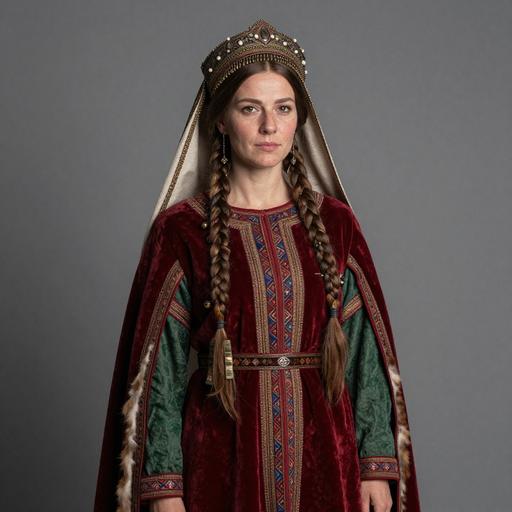
Medieval Rus', particularly during the period when Kideksha was prominent, is a fascinating era that showcases the intricate tapestry of early Russian statehood, culture, and religious life. Kideksha, a historical settlement located near modern-day Suzdal in Russia, stands as an emblem of this era around the 12th century, reflecting the unique blend of influences that characterized Rus' society.
Historical Context
Kievan Rus', a loose federation of Slavic and Finno-Ugric peoples under the rule of the Varangians, reached its zenith before fragmenting into a number of smaller principalities. Kideksha is geographically situated in the Vladimir-Suzdal Principality, which emerged as a powerful and influential region during the decline of Kievan central power. Prince Yuri Dolgorukiy, notable for founding Moscow, constructed a church in Kideksha dedicated to Saints Boris and Gleb in 1152, signaling the area's importance.
Architecture and Art
Kideksha's architectural splendor is epitomized by the Church of Saints Boris and Gleb. This church is one of the earliest examples of white-stone architecture that would later dominate Russian ecclesiastical architecture. The transition from wooden to stone edifices marks technological and cultural advancements, emphasizing a desire for permanence and divine representation. The intricate stone carvings and frescoes within such structures reflect both Byzantine influences and native iconographic traditions, creating a distinctive Rus' aesthetic.
Religion
Religion in Medieval Rus' was a central aspect of life, heavily influenced by the Christianization of the region in the late 10th century under Prince Vladimir the Great. The adoption of Orthodox Christianity not only unified various Slavic tribes but also aligned Rus' more closely with Byzantium, culturally and politically. The Church of Saints Boris and Gleb in Kideksha underscores the importance of princely patronage in religious and cultural life, with saints Boris and Gleb themselves representing a paradigm of princely martyrdom and Christian virtue.
Society and Economy
Medieval Rus' society was predominantly agrarian, with the economy relying heavily on agriculture, including crop farming and animal husbandry. Kideksha, like other towns of its time, would have participated in local and long-distance trade networks, exchanging goods like furs, wax, honey, and through connections to the Silk Road, acquiring silk, spices, and other luxury items.
Social hierarchy was distinctly stratified, with boyars and princes at the top, followed by merchants, artisans, and peasants. This stratification was often reflected in settlement patterns, where fortified towns housed the elites, and surrounding lands were occupied by peasant communities.
Culture and Daily Life
Culturally, Medieval Rus' was a vibrant tapestry woven from Slavic, Norse, and Byzantine threads. Oral literature flourished in the forms of epic poetry (byliny) and folktales, indicative of both pagan and Christian traditions. Art, music, and dance were integral to community life, with festivities often aligning with both Christian holy days and remnants of pre-Christian customs.
Daily life in Kideksha, as in other towns, would have revolved around the agricultural calendar, religious observances, and the princely court's functions. Clothing styles reflected social status and were influenced by both native tradition and international trade, with wealthier individuals accessing dyes and materials like silk and brocade.
Conclusion
Kideksha during the Medieval Rus' period served as a microcosm of the broader cultural and political shifts occurring in Eastern Europe at the time. The combination of local traditions with external influences forged a unique identity that laid the foundations for the later Russian state. As a historical site, Kideksha today provides invaluable insights into the architectural, religious, and societal norms that defined an era of transition and cultural blossoming in Rus'.