Menu
Currency
Main
Store
Blog

Loading Report

Preparing your ancestry journey

Connecting to ancient matches...

Preparing your report

Skip to main content
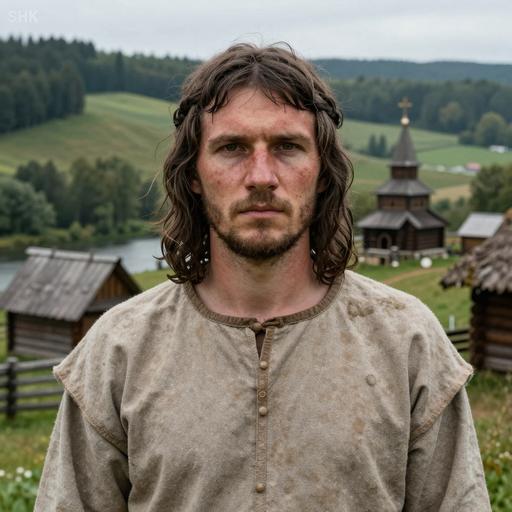
Portrait reconstruction of A man buried in Russia in the Medieval era
Ancient Individual

A man buried in Russia in the Medieval era

A man buried in Russia during the Medieval Shekshovo Culture

A fragment of the ancient world, preserved across millennia in strands of DNA.

SHK001
1166 CE - 1259 CE
Male
Russia
Scroll to begin
Chapter I

Identity

The biological and cultural markers that define this ancient individual

Sample ID

SHK001

Date Range

1166 CE - 1259 CE

Cultural Period

Medieval Shekshovo Culture

Biological Sex

Male

mtDNA Haplogroup

Not available

Y-DNA Haplogroup

J-PH1795

Chapter II

Place

Where this individual was discovered

Country Russia
Locality Shekshovo-2 (Ivanovo Oblast, Gavrilovo-Posadsky District, Sheksnovo Village)
Coordinates 56.5278, 40.1788
Chapter III

Time

When this individual lived in the broader context of human history

SHK001 1166 CE - 1259 CE
Chapter IV

Story

The narrative of this ancient life

The Medieval Sheksovo culture is an intriguing and lesser-known period in the expansive tapestry of Russian history, reflecting the complex melding of influences that characterized the early medieval period in Eastern Europe. This culture primarily flourished in the region that is now part of central Russia, over the terrain where the Volga and Oka rivers converge. During its peak, roughly between the 9th and 13th centuries, the Sheksovo culture stood at the crossroads of various Slavic, Finno-Ugric, and Scandinavian influences, deeply intertwining with the monumental historical events unfolding across the European mainland.

Geographic and Environmental Context

The geographical heart of the Sheksovo culture lay in a landscape characterized by dense forests, fertile soil, and extensive waterways. The Volga and Oka rivers facilitated trade and communication, serving as key arteries connecting the region to both northern Rus' cities like Novgorod and southern destinations like Tsargrad (Constantinople). The river systems supported not only economic activities but also cultural exchange and contact with traders, craftsmen, and explorers from different ethnic backgrounds, contributing significantly to the richness of Sheksovo's material culture.

Social Structure and Daily Life

Societal organization within the Sheksovo culture echoed the broader dynamics of medieval Eastern Europe, where hierarchical structures were defined by a blend of tribal traditions and emergent feudal systems. At the apex of the social order were the chieftains and local nobles, who owned large swathes of land, commanded warrior retinues, and maintained control over peasant populations. Peasants, often bound to the land, constituted the majority of the population, engaging in agriculture, animal husbandry, and forestry to sustain their communities.

Daily life emphasized subsistence through farming, with rye, barley, oats, and other cereals forming dietary staples, supplemented by fishing and hunting given the proximate forest and riverine resources. The craftsmanship was also a significant facet of Sheksovo life, with woodwork, pottery, and textiles serving as both functional and artistic expressions of cultural identity. The presence of metalworking, highlighted by weaponry and jewelry, indicates knowledge of metallurgy and trade of raw materials.

Religious and Cultural Practices

Religious life in the Sheksovo culture was marked by a fascinating syncretism. Pre-Christian pagan beliefs, characterized by animism and reverence for natural elements, coexisted with the growing influence of Eastern Orthodox Christianity, which had been spreading from the Byzantine Empire. Pagan rituals were observed in tandem with Christian rites, overseen by a spiritual elite adept in maintaining the delicate balance between the two.

Cultural practices were often expressed through music, oral traditions, and ceremonial activities. Storytelling, through epic tales and folklore, played a critical role in preserving history and imparting moral teachings. Bardic performances and communal festivals punctuated the yearly calendar, ensuring a vibrant and cohesive community life.

Influence and Legacy

The legacy of the Sheksovo culture is subtle but enduring in the fabric of Russian history. Over time, the culture was subsumed into the expanding dominion of the Kievan Rus' and later the Grand Duchy of Moscow. However, its contributions are discernible in Russian folklore, artisanal techniques, and certain linguistic elements. The blending of Slavic, Finno-Ugric, and Norse elements within the Sheksovo culture laid the foundation for the rich multiculturalism that has characterized Russian civilization throughout the centuries.

Archaeological Insights

Archaeological excavations in the Sheksovo region have yielded fascinating insights into the material culture of this era. Burial mounds, settlement remains, and artifact caches offer a window into the daily lives and societal structure of the Sheksovo people. Burial practices, including both cremation and inhumation with grave goods, reveal beliefs in an afterlife and the social status of the interred. Pottery shards, ornate jewelry, and household tools further illustrate the sophistication of Sheksovo craftsmanship and trade networks.

In conclusion, the Medieval Sheksovo culture embodies a unique synthesis of diverse cultural and historical currents during a formative period in Russian history. Its integration of pagan traditions with burgeoning Christian influences, alongside its strategic geographical positioning, highlights the dynamic interplay between continuity and change that defines the medieval tapestry of Eastern Europe.

Context

Related Samples

This individual exists within a broader network of ancient samples. No ancient genome stands alone.

Sample ID Culture/Period Date Location Action
BOL001_antiquity1240k Davydovskoye Archaeological Culture 239 CE Bolshoye-Davydovskoye-2 (Ivanovo Oblast, Gavrilovo-Posadsky District, Bolshoye Davydovskoye Village), Russia View
BOL002_antiquity1240k Davydovskoye Archaeological Culture 130 CE Bolshoye-Davydovskoye-2 (Ivanovo Oblast, Gavrilovo-Posadsky District, Bolshoye Davydovskoye Village), Russia View
BOL003_antiquity1240k Davydovskoye Archaeological Culture 237 CE Bolshoye-Davydovskoye-2 (Ivanovo Oblast, Gavrilovo-Posadsky District, Bolshoye Davydovskoye Village), Russia View
BOL004 Davydovskoye Archaeological Culture 212 CE Bolshoye-Davydovskoye-2 (Ivanovo Oblast, Gavrilovo-Posadsky District, Bolshoye Davydovskoye Village), Russia View
BOL005 Davydovskoye Archaeological Culture 130 CE Bolshoye-Davydovskoye-2 (Ivanovo Oblast, Gavrilovo-Posadsky District, Bolshoye Davydovskoye Village), Russia View
BOL006 Davydovskoye Archaeological Culture 130 CE Bolshoye-Davydovskoye-2 (Ivanovo Oblast, Gavrilovo-Posadsky District, Bolshoye Davydovskoye Village), Russia View
BOL007 Davydovskoye Archaeological Culture 261 CE Bolshoye-Davydovskoye-2 (Ivanovo Oblast, Gavrilovo-Posadsky District, Bolshoye Davydovskoye Village), Russia View
BOL008 Davydovskoye Archaeological Culture 235 CE Bolshoye-Davydovskoye-2 (Ivanovo Oblast, Gavrilovo-Posadsky District, Bolshoye Davydovskoye Village), Russia View
BOL009 Davydovskoye Archaeological Culture 240 CE Bolshoye-Davydovskoye-2 (Ivanovo Oblast, Gavrilovo-Posadsky District, Bolshoye Davydovskoye Village), Russia View
GOR001 Medieval Gorokhovets Culture 771 CE Puzhalova-gora (Vladimir Oblast, Gorokhovets municipality), Russia View
GOS001 Medieval Gorokhovets Culture 1047 CE Sretensky-monastery (Vladimir Oblast, Gorokhovetsky District), Russia View
GOS002 Medieval Gorokhovets Culture 1039 CE Sretensky-monastery (Vladimir Oblast, Gorokhovetsky District), Russia View
GOS003 Medieval Gorokhovets Culture 1021 CE Sretensky-monastery (Vladimir Oblast, Gorokhovetsky District), Russia View
KBL002 Modern Russia Kibol (1900 CE) 1665 CE Kibol-3 (Vladimir Oblast, Suzdalsky District), Russia View
KBL003 Modern Russia Kibol (1900 CE) 1645 CE Kibol-3 (Vladimir Oblast, Suzdalsky District), Russia View
KED001 Modern Russian (Kideksha) 1648 CE Kideksha (Vladimir Oblast, Suzdalsky District), Russia View
KED002 Modern Russian (Kideksha) 1661 CE Kideksha (Vladimir Oblast, Suzdalsky District), Russia View
KED003 Modern Russian (Kideksha) 1526 CE Kideksha (Vladimir Oblast, Suzdalsky District), Russia View
KED004 Medieval Rus' (Kideksha) 1400 CE Kideksha (Vladimir Oblast, Suzdalsky District), Russia View
KRS001 Medieval Krasnoe 1412 CE Krasnoe-3 (Vladimir Oblast, Suzdalsky District), Russia View
SHE001 Early Medieval Shekshovo 881 CE Shekshovo-9 (Ivanovo Oblast, Gavrilovo-Posadsky District, Sheksnovo Village), Russia View
SHE002 Early Medieval Shekshovo 993 CE Shekshovo-9 (Ivanovo Oblast, Gavrilovo-Posadsky District, Sheksnovo Village), Russia View
SHE003 Early Medieval Shekshovo 772 CE Shekshovo-9 (Ivanovo Oblast, Gavrilovo-Posadsky District, Sheksnovo Village), Russia View
SHE004 Early Medieval Shekshovo 888 CE Shekshovo-9 (Ivanovo Oblast, Gavrilovo-Posadsky District, Sheksnovo Village), Russia View
SHE005 Medieval Shekshovo Culture 992 CE Shekshovo-9 (Ivanovo Oblast, Gavrilovo-Posadsky District, Sheksnovo Village), Russia View
SHE006 Medieval Shekshovo Culture 986 CE Shekshovo-9 (Ivanovo Oblast, Gavrilovo-Posadsky District, Sheksnovo Village), Russia View
SHE007 Medieval Shekshovo Culture 1044 CE Shekshovo-9 (Ivanovo Oblast, Gavrilovo-Posadsky District, Sheksnovo Village), Russia View
SHE008 Medieval Shekshovo Culture 1303 CE Shekshovo-9 (Ivanovo Oblast, Gavrilovo-Posadsky District, Sheksnovo Village), Russia View
SHE009 Medieval Shekshovo Culture 1299 CE Shekshovo-9 (Ivanovo Oblast, Gavrilovo-Posadsky District, Sheksnovo Village), Russia View
SHK001 Medieval Shekshovo Culture 1166 CE Shekshovo-2 (Ivanovo Oblast, Gavrilovo-Posadsky District, Sheksnovo Village), Russia View
SHK002 Medieval Shekshovo Culture 1053 CE Shekshovo-2 (Ivanovo Oblast, Gavrilovo-Posadsky District, Sheksnovo Village), Russia View
Sample ID Culture/Period Date Location Action
SHK001 Medieval Shekshovo Culture 1166 CE Shekshovo-2 (Ivanovo Oblast, Gavrilovo-Posadsky District, Sheksnovo Village), Russia View
SHK002 Medieval Shekshovo Culture 1053 CE Shekshovo-2 (Ivanovo Oblast, Gavrilovo-Posadsky District, Sheksnovo Village), Russia View
Sources

References

Scientific publications and genetic data that inform this profile.

Scientific Publication

Genetic admixture and language shift in the medieval Volga-Oka interfluve

Authors Peltola S, Majander K, Makarov N, Dobrovolskaya M, Nordqvist K et al.
Abstract

The Volga-Oka interfluve in northwestern Russia has an intriguing history of population influx and language shift during the Common Era. Today, most inhabitants of the region speak Russian, but until medieval times, northwestern Russia was inhabited by Uralic-speaking peoples.1,2,3 A gradual shift to Slavic languages started in the second half of the first millennium with the expansion of Slavic tribes, which led to the foundation of the Kievan Rus' state in the late 9th century CE. The medieval Rus' was multicultural and multilingual-historical records suggest that its northern regions comprised Slavic and Uralic peoples ruled by Scandinavian settlers.4,5,6 In the 10th-11th centuries, the introduction of Christianity and Cyrillic literature raised the prestige status of Slavic, driving a language shift from Uralic to Slavic.3 This eventually led to the disappearance of the Uralic languages from northwestern Russia. Here, we study a 1,500-year time transect of 30 ancient genomes and stable isotope values from the Suzdal region in the Volga-Oka interfluve. We describe a previously unsampled local Iron Age population and a gradual genetic turnover in the following centuries. Our time transect captures the population shift associated with the spread of Slavic languages and illustrates the ethnically mixed state of medieval Suzdal principality, eventually leading to the formation of the admixed but fully Slavic-speaking population that inhabits the area today. We also observe genetic outliers that highlight the importance of the Suzdal region in medieval times as a hub of long-reaching contacts via trade and warfare.