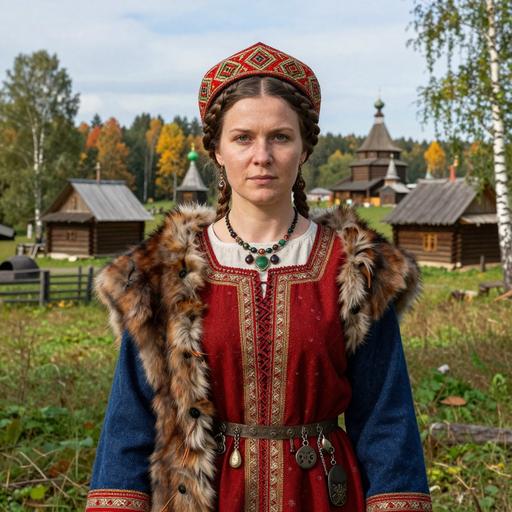
The concept of \Medieval Krasnoe" in Russia isn't a well-documented or commonly recognized historical term or entity, as there isn't a widely known region or cultural group specifically referred to as "Medieval Krasnoe" in historical records or scholarly research. However, if we are to infer that this term relates to a medieval period or locale within the broader expanse of the medieval Russian principalities, we can provide a generalized depiction of what a medieval culture in this region might entail.
Geographical Context
Krasnoe could refer to a village, town, or region within medieval Russia, possibly situated in the northern or central parts of the principalities that made up the Kyivan Rus' and later the fragmented territories preceding the rise of Muscovy. The geography of medieval Russia was characterized by vast, forested areas, rolling plains, and numerous rivers and lakes, which played a crucial role in shaping the economic activities and lifestyle of the communities.
Political Structure
During the medieval period, the Rus' lands were divided into numerous principalities ruled by a prince, often from the Rurikid dynasty. These political entities included major centers like Novgorod, Moscow, and Vladimir-Suzdal. The political structure was feudal in nature, where local lords and princes wielded power over their territories, collecting taxes, and owing allegiance to overlord princes or, during certain periods, to the Grand Prince of Kyiv or Vladimir.
Social Organization
The society was hierarchically structured, with a clear distinction between the classes. The nobility (boyars) and princely class held significant power, followed by a class of free townspeople (posadniks) and merchants. Below them were the peasantry, who worked the land under a system that bound them to their lord's estates, resembling serfdom.
Economy
The economy of medieval Russian territories was predominantly agrarian. Agriculture was the mainstay, with peasants farming crops such as rye, oats, barley, and flax. The substantial forested landscape provided resources like timber, furs, and honey — crucial for trade. Notably, trade routes such as the Varangian to Greek trade route facilitated the exchange of goods between the Byzantine Empire, Norse merchants, and the East Slavic lands.
Religion and Culture
The Christianization of Kyivan Rus' in 988 introduced Eastern Orthodox Christianity, which significantly influenced the cultural and spiritual life of medieval Russians. Churches and monasteries became centers of learning, literacy, and artistic expression. The iconography, frescoes, and wooden church architecture from this period are notable cultural legacies. Folklore and oral traditions remained robust, often interwoven with Christian motifs.
Architecture and Art
Architecture was primarily characterized by wooden structures due to the abundance of forests, although stone churches and fortifications began to emerge with increased influence from Byzantine and Romanesque styles. Icons and frescoes were prominent forms of religious art, reflecting Byzantine influence blended with local styles.
Military and Defense
Defense strategies in these regions often relied on wooden fortifications known as kremlins or gorodishches, and the use of cavalry was significant in warfare. The threat from nomadic tribes, such as the Mongols, in the later medieval period, led to a focus on militaristic security and fortification enhancements.
Daily Life
The lifestyle was harsh, with communities largely self-sufficient. Daily life revolved around seasonal agricultural cycles, religious festivals, and communal gatherings. Crafts such as pottery, textiles, metalwork, and woodworking were vital to everyday life and trade.
In conclusion, while "Medieval Krasnoe" is not a term anchored in recognized historical discourse, by extrapolating common elements from the medieval Russian context, one can imagine a village or town in this era as a microcosm of the broader cultural, religious, and socio-economic dynamics that characterized medieval Russia."