Menu
Currency
Main
Store
Blog

Loading Report

Preparing your ancestry journey

Connecting to ancient matches...

Preparing your report

Skip to main content
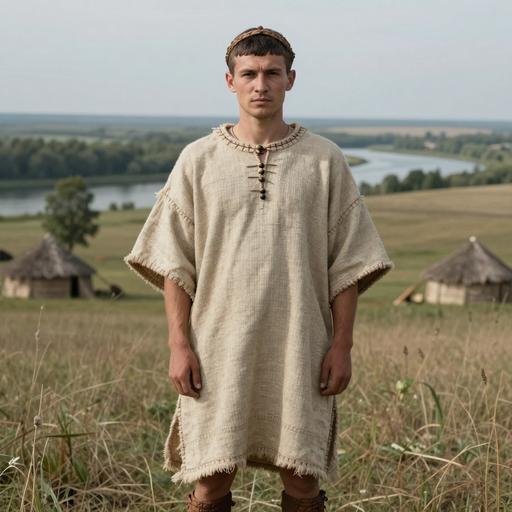
Portrait reconstruction of A man buried in Ukraine in the Neolithic era
Ancient Individual

A man buried in Ukraine in the Neolithic era

A man buried in Ukraine during the Yasinovatka Culture

A fragment of the ancient world, preserved across millennia in strands of DNA.

ukr160
5357 BCE - 5214 BCE
Male
Ukraine
Scroll to begin
Chapter I

Identity

The biological and cultural markers that define this ancient individual

Sample ID

ukr160

Date Range

5357 BCE - 5214 BCE

Cultural Period

Yasinovatka Culture

Biological Sex

Male

mtDNA Haplogroup

U4b1a

Y-DNA Haplogroup

Not available

Chapter II

Place

Where this individual was discovered

Country Ukraine
Locality Yasynuvatka (Zaporizhia Oblast, Zaporizhia District, Petro-Mykhailivka municipality)
Coordinates 48.1213, 35.0902
Chapter III

Time

When this individual lived in the broader context of human history

ukr160 5357 BCE - 5214 BCE
Chapter IV

Story

The narrative of this ancient life

The Yasinovatka culture, a lesser-known yet distinct archaeological culture of Eastern Europe, emerged during a transformative era known as the Eneolithic period or the Copper Age, bridging the Neolithic and the Bronze Age. This period, roughly spanning from the late 4th to the early 3rd millennium BCE, was characterized by the gradual adoption of metalworking alongside established Neolithic practices. The Yasinovatka culture primarily flourished in the steppes and forest-steppe zones of present-day Ukraine and southwestern parts of Russia, particularly along the Dnieper River basin.

Geographic and Environmental Context

The Yasinovatka culture inhabited a region that provides a mix of steppe and forested areas, creating a unique ecological niche. These environments allowed for a balanced adaptation that included both agricultural and pastoral elements in their lifestyle. The river systems, especially the Dnieper, were crucial, offering routes for trade, communication, and resources like fish and water.

Societal Structure

The Yasinovatka community, like many of its contemporaries in the Eneolithic period, likely had a semi-sedentary lifestyle. Small to medium-sized settlements, often comprising pit-houses—semi-subterranean structures insulated against the harsh winters—were typical. The social structure was probably kin-based and egalitarian, with extended families living in close proximity. Evidence from burial practices suggests some level of social differentiation, though not as pronounced as in later Bronze Age cultures.

Economy and Subsistence

The subsistence economy of the Yasinovatka culture was mixed, combining hunting, gathering, agriculture, and animal husbandry. They cultivated crops like barley and wheat and domesticated animals such as cattle, sheep, and goats. Hunting supplemented their diet with wild game, including deer and wild boar.

Their strategic location along major river routes facilitated trade and interaction with neighboring cultures, allowing the exchange of goods, ideas, and technologies, including metalworking skills that started to influence their tool-making practices.

Technological and Artistic Developments

One of the defining features of the Yasinovatka culture was the nascent use of metallurgy, predominantly in the form of copper. Tools and ornaments from this period show a blend of stone and copper, symbolizing a transitional phase in technological evolution.

Pottery from this culture often featured decorations with cord impressions and geometric patterns, reflecting both utilitarian purposes and artistic expression. These ceramics, crucial for storage and cooking, offer significant insight into the everyday lives of the Yasinovatka people.

Spiritual and Burial Practices

The Yasinovatka culture had a rich spiritual life, as evidenced by their burial customs. Graves were often part of larger burial grounds or kurgans, which raised mounds of earth above them. Some burials included grave goods such as pottery, weapons, and ornaments made of bone, stone, or copper, indicating beliefs in an afterlife or reverence for ancestors.

The presence of anthropomorphic and zoomorphic figurines suggests a spiritual belief system that included the veneration of deities or spirits associated with nature and fertility. Ritual practices may have played a significant role in community cohesion and cultural continuity.

Cultural Interactions and Legacy

The Yasinovatka culture’s interactions with neighboring tribes and groups, such as the Tripolye–Cucuteni to the west and the later Pit–Comb Ware cultures to the north, were vital for cultural dissemination and technological advancement. These interactions enabled the exchange of ideas and commodities, through which the Yasinovatka people contributed to the broader narrative of prehistoric European cultures.

Over time, the influence of the Yasinovatka culture waned as populations migrated and environmental changes prompted cultural shifts, leading to the emergence of new cultural entities. However, their legacy persists in the archaeological record, offering a window into the formative processes that shaped early European societies.

Conclusion

The Yasinovatka culture represents a critical period in the prehistoric timeline of Eastern Europe, marked by innovation, adaptation, and cultural exchange. While not as extensively documented or monumental as some contemporaneous cultures, the Yasinovatka people contributed to the technological and social foundations that would eventually lead to more complex societal organizations in the Bronze Age. Their study aids in understanding the dynamics of cultural development and interaction on the prehistoric European landscape.

Context

Related Samples

This individual exists within a broader network of ancient samples. No ancient genome stands alone.

Sample ID Culture/Period Date Location Action
buk002 Starčevo-Criș Culture of Negrileşti 5612 BCE Negrilești (Galati, Negrilești), Romania View
buk003 Starčevo-Criș Culture of Grădinile 5801 BCE Grădinile, Romania View
buk004 Gumelnița Culture 4045 BCE Gumelnița (Călărași, Oltenita), Romania View
buk010 Sălcuța Culture 5548 BCE Gârlești (Dolj County, Craiova), Romania View
buk012 Sălcuța Culture 5624 BCE Gârlești (Dolj County, Craiova), Romania View
buk013 Sălcuța Culture 5557 BCE Gârlești (Dolj County, Craiova), Romania View
buk018 Boian Culture 4931 BCE Curătești, Romania View
buk019 Boian Culture 4984 BCE Curătești, Romania View
buk022 Boian Culture 4984 BCE Curătești, Romania View
buk023 Boian Culture 4938 BCE Curătești, Romania View
buk029 Boian Culture 4715 BCE Căscioarele, Romania View
buk033 Boian Culture 4721 BCE Căscioarele, Romania View
buk040 Boian Culture 5204 BCE Sultana Valea (Călărași, Manasteria), Romania View
lbk101 Early Linear Pottery Culture of Ludwinowo 4350 BCE Ludwinowo-6 (Kuyavian-Pomeranian Province, Włocławek), Poland View
lbk102 Eastern Linear Pottery Culture of Kruszyn 4350 BCE Kruszyn-13 (Kuyavian-Pomeranian Province, Włocławek), Poland View
lbk104 Eastern Linear Pottery Culture of Kruszyn 4350 BCE Kruszyn-13 (Kuyavian-Pomeranian Province, Włocławek), Poland View
lbk138 Late Lengyel Culture from Krusza Zamkowa 4330 BCE Krusza Zamkowa-3 (Kuyavian-Pomeranian Province, Inowrocław), Poland View
poz120 Late Lengyel Culture from Krusza Zamkowa 4333 BCE Krusza Zamkowa-3 (Kuyavian-Pomeranian Province, Inowrocław), Poland View
poz121 Late Lengyel Culture from Krusza Zamkowa 4333 BCE Krusza Zamkowa-3 (Kuyavian-Pomeranian Province, Inowrocław), Poland View
poz177 Lublin-Volhynian Culture 4152 BCE Książnice (Świętokrzyskie Province, Busko County, Pacanów), Poland View
poz236 Late Neolithic Lengyel Culture of Racot 4311 BCE Racot (Greater Poland Province, Kościan), Poland View
poz252 Late Lengyel Culture from Siniarzewo 4531 BCE Siniarzewo-1 (Kuyavian-Pomeranian Province, Aleksandrów County, Zakrzewo), Poland View
poz264 Lublin-Volhynian Culture 3956 BCE Książnice (Świętokrzyskie Province, Busko County, Pacanów), Poland View
poz275 Lublin-Volhynian Culture 3954 BCE Książnice (Świętokrzyskie Province, Busko County, Pacanów), Poland View
poz297 Komornica Culture 5621 BCE Łojewo (Kuyavian-Pomeranian Province, Inowrocław), Poland View
poz375 Lublin-Volhynian Culture 3951 BCE Bronocice (Świętokrzyskie Province, Pińczów County, Działoszyce), Poland View
poz503 Kamienskie Culture Mesolithic 6814 BCE Kamienskie (Warmian-Masurian Province, Pisz County, Orzysz), Poland View
rom011 Iclod Culture 4836 BCE Iclod (Cluj, Iclod), Romania View
rom046 Iclod Culture 4711 BCE village Iclod, Cluj county, Romania View
rom047 Decea Mureșului Culture 4343 BCE village Decea Mureșului, Alba county, Romania View
rom057_rom058 Starčevo-Criș Culture 5623 BCE village Baciu, Cluj county, Romania View
rom061 Mesolithic Iron Gates, Romania 7584 BCE Ostrovul-Corbului (Mehedinți County, Hinova), Romania View
rom066 Mesolithic Iron Gates, Romania 6641 BCE Ostrovul-Corbului (Mehedinți County, Hinova), Romania View
ukr005 Neolithic Ukraine 5471 BCE Deriivka (Kirovohrad Oblast, Oleksandriia District), Ukraine View
ukr033 Neolithic Nikolske Culture 4681 BCE Nikol’ske, Ukraine View
ukr040 Neolithic Nikolske Culture 4442 BCE Nikol’ske, Ukraine View
ukr087 Neolithic Ukraine 5356 BCE Vasylivka (Zaporizhia Oblast, Vasylivka District, Vasylivska municipality), Ukraine View
ukr102 Mesolithic Ukraine 6471 BCE Deriivka (Kirovohrad Oblast, Oleksandriia District), Ukraine View
ukr104 Serednii Stih culture 3701 BCE Deriivka (Kirovohrad Oblast, Oleksandriia District), Ukraine View
ukr108 Mesolithic Ukraine 6066 BCE Deriivka (Kirovohrad Oblast, Oleksandriia District), Ukraine View
ukr111 Neolithic Ukraine 4834 BCE Deriivka (Kirovohrad Oblast, Oleksandriia District), Ukraine View
ukr112 Serednii Stih culture 4446 BCE Deriivka (Kirovohrad Oblast, Oleksandriia District), Ukraine View
ukr113 Neolithic Ukraine 4836 BCE Deriivka (Kirovohrad Oblast, Oleksandriia District), Ukraine View
ukr116 Serednii Stih culture 4446 BCE Deriivka (Kirovohrad Oblast, Oleksandriia District), Ukraine View
ukr117 Neolithic Ukraine 5304 BCE Deriivka (Kirovohrad Oblast, Oleksandriia District), Ukraine View
ukr123 Serednii Stih culture 4342 BCE Deriivka (Kirovohrad Oblast, Oleksandriia District), Ukraine View
ukr125 Ukrainian Epipaleolithic-Mesolithic Culture 8708 BCE Deriivka (Kirovohrad Oblast, Oleksandriia District), Ukraine View
ukr144 Neolithic Nikolske Culture 5209 BCE Nikol’ske, Ukraine View
ukr147 Neolithic Nikolske Culture 4784 BCE Nikol’ske, Ukraine View
ukr149 Neolithic Nikolske Culture 4602 BCE Nikol’ske, Ukraine View
ukr158 Neolithic Yasinovatka Culture 5314 BCE Yasynuvatka (Zaporizhia Oblast, Zaporizhia District, Petro-Mykhailivka municipality), Ukraine View
ukr159 Neolithic Yasinovatka Culture 5210 BCE Yasynuvatka (Zaporizhia Oblast, Zaporizhia District, Petro-Mykhailivka municipality), Ukraine View
ukr160 Yasinovatka Culture 5357 BCE Yasynuvatka (Zaporizhia Oblast, Zaporizhia District, Petro-Mykhailivka municipality), Ukraine View
ukr161 Neolithic Yasinovatka Culture 5209 BCE Yasynuvatka (Zaporizhia Oblast, Zaporizhia District, Petro-Mykhailivka municipality), Ukraine View
ukr162 Yasinovatka Culture 4784 BCE Yasynuvatka (Zaporizhia Oblast, Zaporizhia District, Petro-Mykhailivka municipality), Ukraine View
Sample ID Culture/Period Date Location Action
ukr160 Yasinovatka Culture 5357 BCE Yasynuvatka (Zaporizhia Oblast, Zaporizhia District, Petro-Mykhailivka municipality), Ukraine View
ukr162 Yasinovatka Culture 4784 BCE Yasynuvatka (Zaporizhia Oblast, Zaporizhia District, Petro-Mykhailivka municipality), Ukraine View
Sources

References

Scientific publications and genetic data that inform this profile.

Scientific Publication

Genetic continuity, isolation, and gene flow in Stone Age Central and Eastern Europe

Authors Mattila TM, Svensson EM, Juras A, Günther T, Kashuba N et al.
Abstract

The genomic landscape of Stone Age Europe was shaped by multiple migratory waves and population replacements, but different regions do not all show similar patterns. To refine our understanding of the population dynamics before and after the dawn of the Neolithic, we generated and analyzed genomic sequence data from human remains of 56 individuals from the Mesolithic, Neolithic, and Eneolithic across Central and Eastern Europe. We found that Mesolithic European populations formed a geographically widespread isolation-by-distance zone ranging from Central Europe to Siberia, which was already established 10,000 years ago. We found contrasting patterns of population continuity during the Neolithic transition: people around the lower Dnipro Valley region, Ukraine, showed continuity over 4000 years, from the Mesolithic to the end of the Neolithic, in contrast to almost all other parts of Europe where population turnover drove this cultural change, including vast areas of Central Europe and around the Danube River.

Use code for 25% off Expires Jul 12