Aller au contenu principal
Y-DNA · lignée Paternelle

IJ

Y-DNA Haplogroup IJ

Profil de référence pour une branche de lignée. Des haplogroupes partagés n'établissent pas de lien familial ni d'identité culturelle.

Profil de référence

Contexte de la branche

Contexte historique de la branche de lignée Y-DNA IJ

Origins and Evolution

Y-DNA haplogroup IJ is an important intermediate branch in the paternal Y-chromosome tree, lying upstream of the well-known descendant lineages I and J. It is generally inferred to have arisen in West Eurasia during the Upper Paleolithic, likely around 30 thousand years ago, though the exact timing remains uncertain because ancient DNA evidence for deep prehistory is still incomplete.

From a population genetics perspective, IJ is best understood as a shared ancestral node rather than a single modern population marker. Its descendants later diversified into two major clades with very different historical trajectories: haplogroup I, which became strongly associated with European hunter-gatherer ancestry and later northern and southeastern European populations, and haplogroup J, which expanded widely in the Near East, Caucasus, Mediterranean, and parts of Europe.

Subclades

Haplogroup IJ is the ancestral branch for two major paternal lineages:

  • I: A predominantly European lineage associated with Mesolithic hunter-gatherers and later European populations.
  • J: A lineage with deep roots in the Near East and surrounding regions, later linked to Neolithic expansions and historic Mediterranean and West Asian populations.

Because IJ is an intermediate clade, it is usually discussed in relation to its daughter branches rather than as a frequently identified terminal haplogroup in modern surveys.

Geographical Distribution

Although IJ itself is rarely reported as a high-frequency modern lineage, its descendant branches are widespread across Europe, the Near East, the Caucasus, and parts of Central and South Asia. The geographic pattern of IJ reflects an early West Eurasian origin followed by the divergent dispersals of I and J.

In modern populations, the broader IJ paternal heritage is most visible indirectly through the presence of its descendants. Haplogroup I is common in Scandinavia, the Balkans, Central Europe, and the British Isles, while haplogroup J is frequent in the Levant, Anatolia, the Caucasus, the Arabian Peninsula, and the Mediterranean.

Historical and Cultural Significance

Haplogroup IJ is significant because it connects two major branches of West Eurasian paternal ancestry. The split between I and J likely reflects deep population structure among Upper Paleolithic groups before the major demographic transformations of the Holocene.

Its descendant lineages became associated with several major prehistoric and historic processes:

  • Mesolithic hunter-gatherer persistence in Europe, especially through haplogroup I
  • Neolithic and post-Neolithic population movements in the Near East and Mediterranean, especially through haplogroup J
  • Bronze Age and Iron Age expansions that spread these lineages further across Eurasia

In ancient DNA studies, the broader IJ ancestry helps illuminate how early West Eurasian populations diversified before the emergence of farming societies and later complex civilizations.

Conclusion

Y-DNA haplogroup IJ is a foundational ancestral branch in West Eurasian paternal history. While rarely emphasized as a modern population marker on its own, it is crucial for understanding the deep evolutionary split that gave rise to two of the most important paternal lineages in Eurasia: I and J.

Points clés

  • Origins and Evolution
  • Subclades
  • Geographical Distribution
  • Historical and Cultural Significance
  • Conclusion
Profil de référence

Arbre et relations

Contexte phylogénétique et sous-clades

Voie évolutive

Suivez les branches parentes consignées jusqu'à IJ. Les dates sont des estimations et peuvent évoluer lorsque les données de référence sont révisées.

Étapes Haplogroupe Âge estimé Époque archéologique Temps écoulé Descendants immédiats Descendants modernes testés Liens anciens
1 IJ Actuel ~30,000 years ago Paleolithic 30,000 ans 1 178 9
2 I ~25,000 years ago Paleolithic 25,000 ans 4 3,486 79

Branches sœurs (3)

Autres branches issues du même haplogroupe parent

Profil de référence

Dans le monde

Distribution géographique et présence moderne

Origine consignée

West Eurasia

Distribution moderne

The populations where Y-DNA haplogroup IJ is found include:

  1. Scandinavians
  2. Balkan populations
  3. Germans and Austrians
  4. British and Irish populations
  5. East Slavic populations
  6. Baltic populations
  7. Central European populations
  8. Near Eastern populations
  9. Caucasus populations
  10. Recent diaspora populations in the Americas and Australia

Présence régionale

Western Europe Moderate
Northern Europe Moderate
Southern Europe Moderate
Western Asia (Near East / Anatolia) High
Caucasus Moderate
Northern Africa Low
Central Asia Low
Southeastern Europe Moderate
Central Europe Low
Near East Low
Caucasus Low
Contexte historique

Une branche dans le temps

Formation estimée sur une chronologie historique large. Les repères de période servent de contexte et n'impliquent pas de lien avec des cultures particulières.

  1. Il y a ~30k ans

    Haplogroupe IJ

    Formation estimée de cette branche Y-DNA ; les dates et les lieux sont des estimations de référence.

    Cette branche
  2. Il y a ~20k ans

    Dernier maximum glaciaire

    Apogée de la dernière période glaciaire, populations isolées

  3. Il y a ~10k ans

    Révolution néolithique

    Début de l'agriculture et émergence de communautés sédentaires

  4. Il y a ~5k ans

    Âge du bronze

    Travail des métaux, écriture et premières civilisations

  5. Il y a ~3k ans

    Âge du fer

    Outils en fer, réseaux d'échanges élargis

  6. Il y a ~2.5k ans

    Antiquité classique

    Floraison des civilisations grecque et romaine

  7. Aujourd'hui

    Aujourd'hui

    Époque moderne

Profil de référence

Contexte archéologique

Associations archéologiques consignées pour la branche Y-DNA IJ

Associations consignées

Ces libellés décrivent des contextes archéologiques consignés pour des échantillons de référence liés à IJ. Une association n'établit pas que tous les porteurs appartenaient à une culture ni qu'ils ont suivi une route migratoire précise.

Alföld Linear Pottery Austria_Avar Danish Late Neolithic Denmark_Stalmosegard_LateRoman Dnieper-Mariupol Early Iron Age Hungarian Krems-Wachtberg Culture Los Millares Malak Preslavets Culture Nazarlebi Norse Greenland Pavlovian Culture Sweden_Hojagard_IA_Jastorf TRB-CWC Transition
Les attributions culturelles reposent sur le contexte archéologique des échantillons d'ADN ancien et peuvent refléter des associations régionales à certaines périodes.
Profil de référence

Catalogue d'échantillons

5 porteurs directs et 4 porteurs de sous-clade de l'haplogroupe IJ

9 affiché(s) · 9 échantillons correspondants

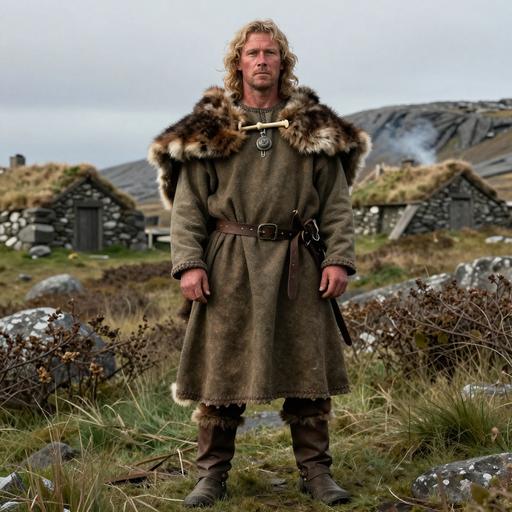
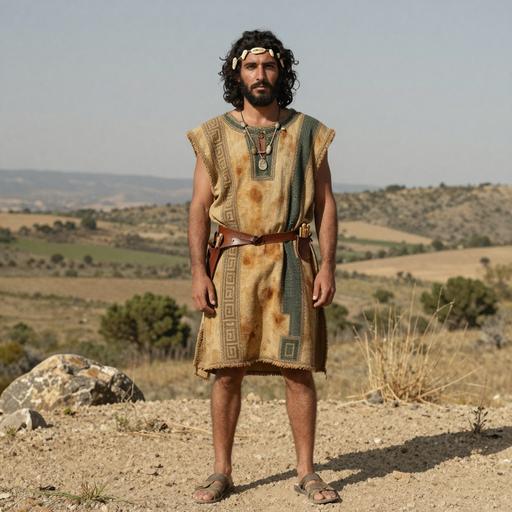
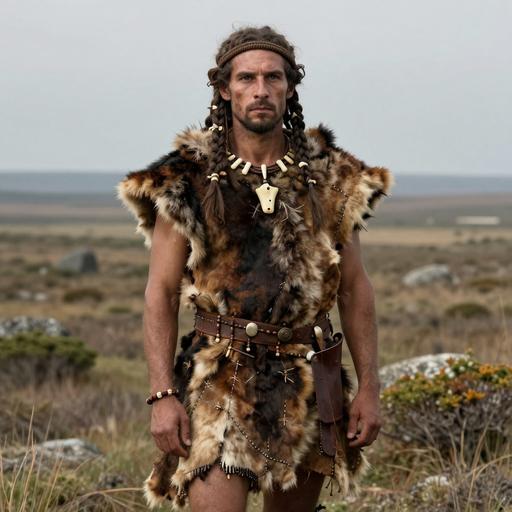
Les portraits sont des illustrations générées par IA. Les libellés d'échantillon et identifiants d'accès désignent les enregistrements de référence.

Portrait Échantillon Pays Époque Date Culture Y-DNA Correspondance
Portrait illustratif généré par IA de Norse individual, Eastern Settlement. 029a, Greenland (900-1,200 CE)
Identifiant d'échantillon : VK180
Greenland Greenland EarlyNorse 900 CE - 1200 CE Norse Greenland IJ Direct
Portrait illustratif généré par IA de Nazarlebi LBA individual, Nazarlebi (Eastern Georgia, Kakheti, Shiraki Plain), Georgia (1,500-1,000 BCE)
Identifiant d'échantillon : gur016
Georgia Georgia Nazarlebi LBA 1500-1000 BCE Nazarlebi IJ Direct
Portrait illustratif généré par IA de LN individual, Strøby Ladeplads (Zealand region), Denmark (1,931-1,744 BCE)
Identifiant d'échantillon : NEO93
Denmark Late Neolithic Denmark 1931-1744 calBCE (3512±33 BP, UBA-37879) Danish Late Neolithic IJ Direct
Portrait illustratif généré par IA de N TRB individual, Toftum Mose (Jutland region), Denmark (2,437-2,065 BCE)
Identifiant d'échantillon : NEO875
Denmark Funnel Beaker Culture to Corded Ware Culture Transition 2437-2065 calBCE (3803±36 BP, UBA-37906) TRB-CWC Transition IJ Direct
Portrait illustratif généré par IA de N Mariupol individual, Mamai-Gora (Zaporizhia Oblast, Vasylivka District, Kamianka-Dniprovska municipality), Ukraine (5,766-5,633 BCE)
Identifiant d'échantillon : NEO270
Ukraine Dnieper-Mariupol Culture 5766-5633 calBCE (6823±34 BP, UBA-40021) Dnieper-Mariupol IJ Direct
Portrait illustratif généré par IA de America North Ancient individual, Lucier. Southwestern Ontario, Canada (1,223-1,384 CE)
Identifiant d'échantillon : CK-03
Canada The First Peoples of North America 1223 CE - 1384 CE IJK-L15 Sous-clade
Portrait illustratif généré par IA de Paleo-Arctic Tradition individual, Lucier. Southwestern Ontario, Canada (1,223-1,384 CE)
Identifiant d'échantillon : CK-03
Canada Arctic Small Tool Tradition, Canada 1223 CE - 1384 CE Arctic Small Tool IJK-L15 Sous-clade
Portrait illustratif généré par IA de Iberian Chalcolithic individual, Murcia. Caravaca. Camino del Molino, Spain (3,000-2,100 BCE)
Identifiant d'échantillon : I0457
Spain Spain C 3000-2100 BCE Los Millares IJ-P124 Sous-clade
Portrait illustratif généré par IA de Czechia Gravettian individual, Dolni Vestonice, Czech Republic (28,500-27,200 BCE)
Identifiant d'échantillon : Vestonice43
Czech Republic Vestonice 43 Site, Czech Republic 28500-27200 BCE Pavlovian Culture IJ-P124 Sous-clade
LIGNÉE PATERNELLE · ADN ANTIQUE

Carte des preuves de lignées antiques

Suivez les clades parents jusqu'à cette branche et explorez où des porteurs antiques ont été identifiés.

Chargement des observations antiques…

Les marqueurs indiquent des lieux de découvertes archéologiques. Un trait pointillé représente une transition géographique proposée et incertaine entre branches consécutives, appuyée sur plusieurs observations datées ; ce n'est pas un itinéraire exact, un lieu de naissance ni une preuve de descendance directe. Des échantillons de clades parents peuvent appartenir à d'autres branches descendantes. Des lacunes subsistent lorsque les preuves sont insuffisantes. Les dates d'échantillon diffèrent des dates de formation des haplogroupes.

Profil de référence

Carte de répartition des porteurs

Répartition géographique de 9 échantillons d'ADN ancien (porteurs directs et de sous-clade de IJ)

Porteur direct Porteur de sous-clade
Filtre de période
Toutes les périodes
Affichage de tous les échantillons
Profil de référence

Répartition temporelle

Répartition des porteurs selon les périodes archéologiques

Profil de référence

Répartition géographique

Effectifs par pays d'échantillon consigné. Ils reflètent la sélection de référence disponible, pas des fréquences de population.

Profil de référence

Répartition pays × époque

Comparez les effectifs d'échantillons consignés selon les pays et les périodes archéologiques. Sélectionnez une cellule renseignée pour examiner un échantillon.

Données

Données et provenance

Informations sur les sources et qualité des données

Dernière mise à jour 2026-06-17
Score de confiance 50/100
Couverture Low

Source des données

La classification, les dates estimées et le contexte géographique reflètent les données de référence consignées et peuvent évoluer lorsque les éléments sont révisés. La couverture d'échantillons est inégale ; les lieux consignés et les associations archéologiques n'établissent pas une origine personnelle ni une identité culturelle.