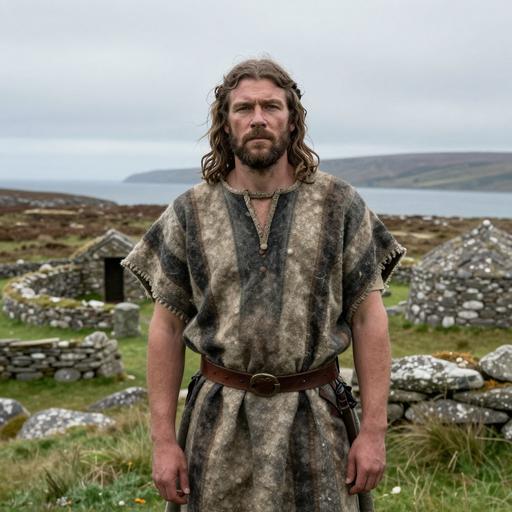
Iron Age Orkney, located in the far north of Scotland, is a fascinating period steeped in mystery, rich cultural development, and architectural achievements. This era, spanning roughly from 800 BCE to 800 CE, witnessed the emergence and flourishing of a vibrant Celtic culture, interwoven with remnants of earlier Neolithic traditions and later influences. Here’s an extensive exploration of this era:
Geography and Environment
Orkney is an archipelago characterized by its rugged coastline, fertile plains, and numerous small islands, which provided abundant marine and agricultural resources. The unique geography played a crucial role in shaping its Iron Age culture. The mild maritime climate, although often windy and wet, enabled farming to thrive, while the surrounding seas offered rich fishing grounds.
Social Structure and Lifestyle
The Iron Age society of Orkney was likely organized into clans or tribes, each governed by chieftains who wielded both political and religious power. The social hierarchy was quite distinct, with a clear division between the elite and commoners, reflected in the differential treatment in burial practices and settlement sizes.
Daily life in Iron Age Orkney revolved around agriculture, supplemented by hunting, fishing, and gathering. The community engaged in rearing sheep, cattle, and pigs, alongside growing barley and oats, which formed the staple diet. Seasonal activities shaped their year, with periods allocated for planting, harvesting, and tending to livestock.
Settlement Patterns and Architecture
One of the most remarkable aspects of Iron Age Orkney is its distinctive architecture, epitomized by the broch. These are large, drystone, circular towers, believed to have served defensive, social, and symbolic functions. Brochs like the Broch of Gurness and the Midhowe Broch reflect advanced building techniques, showcasing high, tapering walls with narrow entrance passages and guard cells.
Besides brochs, Orkney's Iron Age landscape featured complex roundhouses, wheelhouses, and underground souterrains used for storage or refuge. Settlements frequently clustered along coastlines, optimizing access to the sea for fishing and trade.
Art and Crafts
The Iron Age Orcadians were skilled artists and craftsmen, as evidenced by ornate jewelry, pottery, and tools crafted from bone, stone, and metal. Decorative motifs, often reflective of Celtic art styles, adorned many objects, featuring intricate geometric patterns, spirals, and animal forms. Metalworking skills were highly advanced, with evidence of bronze and iron tools and weapons.
Religion and Spirituality
Iron Age Orkney's spiritual life was deeply intertwined with nature and celestial events. Many archaeological sites, like the Ring of Brodgar, hint at a complex belief system centered around the sun, moon, and stars, possibly involving rituals or ceremonies aligned with solstices and equinoxes.
While the exact nature of deities worshiped remains speculative, it is likely that natural elements and ancestors were venerated. Ritualistic deposits of objects in water and votive offerings suggest practices aimed at appeasing spirits or gods for protection and prosperity.
Trade and External Influences
Trade played a significant role in Iron Age Orkney, facilitating exchanges with other Celtic tribes and regions, including mainland Scotland, Ireland, and even Scandinavia. Evidence of exotic items like Roman artifacts points to far-reaching trade networks and cultural interactions.
Legacy and Archaeological Significance
The archaeological significance of Iron Age Orkney cannot be overstated. Many well-preserved sites, such as Skara Brae and Maeshowe, provide invaluable insights into the daily lives, social structures, and spiritual beliefs of its people. These sites underscore Orkney's role as a center of cultural innovation and connectivity during the Iron Age.
In conclusion, Iron Age Orkney was a period marked by dynamic social transformations, impressive construction achievements, and rich cultural traditions. Its legacy continues to captivate archaeologists and historians, offering glimpses into the remarkable resilience and creativity of its inhabitants amidst the challenging environment of the North Atlantic.