Menu
Currency
Main
Store
Blog

Loading Report

Preparing your ancestry journey

Connecting to ancient matches...

Preparing your report

Skip to main content
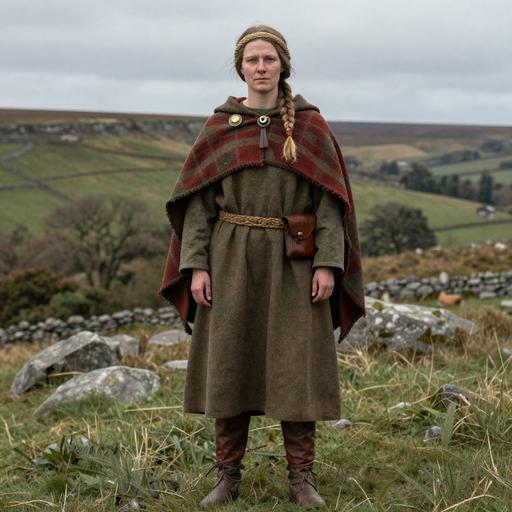
Portrait reconstruction of A woman buried in United Kingdom in the Iron Age era
Ancient Individual

A woman buried in United Kingdom in the Iron Age era

A woman buried in United Kingdom during the Iron Age North Yorkshire, England

A fragment of the ancient world, preserved across millennia in strands of DNA.

KD072
750 BCE - 100 CE
Female
United Kingdom
Scroll to begin
Chapter I

Identity

The biological and cultural markers that define this ancient individual

Sample ID

KD072

Date Range

750 BCE - 100 CE

Cultural Period

Iron Age North Yorkshire, England

Biological Sex

Female

mtDNA Haplogroup

H1b1+16362

Y-DNA Haplogroup

N/A (Female)

Social Role

Farmer (AI estimate, era-typical)

Chapter II

Place

Where this individual was discovered

Country United Kingdom
Locality England. North Yorkshire. Knapton Wold
Coordinates 54.1596, -0.6418
Chapter III

Time

When this individual lived in the broader context of human history

KD072 750 BCE - 100 CE
Chapter IV

Story

The narrative of this ancient life

The Iron Age in North Yorkshire, England, was a period that spanned from approximately 800 BCE to the Roman invasion in 43 CE. This era, which marked the latter part of the broader Celtic culture across the British Isles, was characterized by significant social, technological, and cultural developments. The people of Iron Age North Yorkshire were part of a broader Celtic network that extended across much of Europe, with shared linguistic, artistic, and religious attributes.

Geography and Settlements

North Yorkshire, with its diverse landscapes, including the Yorkshire Dales, the North York Moors, and fertile lowlands, provided a variety of environments for Iron Age communities. The region's terrain influenced settlement patterns, with tribes often choosing elevated sites for their hillforts, such as Stanwick and Ingleborough, which provided strategic views and natural defenses. These hillforts served not only as military strongholds but also as centers of trade, politics, and community life.

Other settlements were found in the lowlands where the fertile soil allowed for agriculture. Roundhouses built with timber, wattle, and daub, and thatched roofs were the typical dwelling structure, reflecting both practical needs and a connection to the surrounding natural environment.

Economy and Technology

The economy of Iron Age North Yorkshire was primarily agrarian, with the cultivation of wheat, barley, and oats, and the rearing of livestock such as cattle, sheep, and pigs. The introduction of iron tools during this period revolutionized farming, making land clearance and cultivation more efficient and contributing to increased agricultural yields.

Craftsmanship flourished, with local artisans producing pottery, textiles, and metalwork. The use of iron became widespread for the manufacture of tools and weapons, while precious metals were worked into jewelry and ceremonial objects, often featuring intricate Celtic designs such as spirals and knots.

Trade was an important aspect of life, facilitated by the region's rivers and trackways. There was exchange of goods not only within the local tribes but also with continental Europe, evidenced by the discovery of items such as wine amphorae and glass beads.

Social Structure and Tribal Organization

The social structure of Iron Age communities in North Yorkshire was likely hierarchical. Tribal societies were led by chieftains or kings supported by a warrior aristocracy. The Celts are known for their fierce warrior culture, with status often determined by prowess in battle and the accumulation of wealth.

The region was divided among several tribal groups, each with distinct territories. The Brigantes, one of the most powerful tribes in Britain, dominated much of northern England, including North Yorkshire. Their society was complex, with confederations of smaller clans that operated semi-autonomously yet were united under a larger tribal identity.

Religion and Belief Systems

Celtic religion during the Iron Age was polytheistic and deeply connected to nature. The spiritual life of the people in North Yorkshire revolved around the veneration of various deities associated with natural elements like rivers, forests, and mountains. Rituals were often conducted in sacred groves or at natural features, such as springs or hilltops.

Archaeological findings suggest druids played a significant role as religious leaders, believed to possess great wisdom and influence over both spiritual and temporal matters. The reverence for ancestors was also a central aspect of their belief system, with burial practices reflecting a belief in an afterlife.

Art and Culture

Art from the Iron Age in North Yorkshire, as with much of Celtic Britain, was marked by its abstract and flowing designs. Artisans produced decorative items including torcs, brooches, and mirrors, exhibiting distinct La Tène style motifs that included symmetrical patterns, curvilinear designs, and natural forms.

While there are no written records from the Celtic tribes, their oral traditions were rich, featuring storytelling, poetry, and music. The bard played an integral role in these societies, responsible for remembering and performing tales that conveyed the history, laws, and legends of the people.

Legacy

The Iron Age in North Yorkshire laid the foundation for later historical developments, even as the region transitioned into the Roman era. The cultural and technological advancements made during this time had a lasting impact on the socio-economic landscape, leaving behind a wealth of archaeological sites that continue to provide insights into the lives of these ancient peoples.

In summary, Iron Age North Yorkshire was a vibrant and dynamic part of Celtic Britain, characterized by its rich cultural traditions, advanced technological practices, and complex social structures, all of which contributed significantly to the historical tapestry of the region.

Context

Related Samples

This individual exists within a broader network of ancient samples. No ancient genome stands alone.

Sample ID Culture/Period Date Location Action
CE003 Iron Age Derbyshire, England 758 BCE England. Derbyshire. Carsington Pasture Cave, United Kingdom View
CE004 Iron Age Derbyshire, England 387 BCE England. Derbyshire. Carsington Pasture Cave, United Kingdom View
KD001 Iron Age Black Isle, Scotland 441 CE Scotland. Black Isle. Rosemarkie Cave, United Kingdom View
KD003 Early Bronze Age North Yorkshire, England 2500 BCE England. North Yorkshire. West Heslerton, United Kingdom View
KD004 Iron Age Orkney, Scotland 340 BCE Orkney. Westray. Knowe of Skea, United Kingdom View
KD005 Iron Age Skye, Scotland 25 CE Scotland. Isle of Skye. High Pasture Cave, United Kingdom View
KD006 Middle Bronze Age Orkney, Scotland 1622 BCE Orkney. Westray. Links of Noltland, United Kingdom View
KD026 Neolithic Skye, Scotland 4000 BCE Scotland. Isle of Skye. Strathglebe, United Kingdom View
KD040 Early Bronze Age North Yorkshire, England 2500 BCE England. North Yorkshire. West Heslerton, United Kingdom View
KD041 Early Bronze Age North Yorkshire, England 2500 BCE England. North Yorkshire. West Heslerton, United Kingdom View
KD042 Iron Age Orkney, Scotland 1 CE Orkney. Westray. Knowe of Skea, United Kingdom View
KD043 Iron Age Orkney, Scotland 25 CE Orkney. Westray. Knowe of Skea, United Kingdom View
KD044 Middle Bronze Age Orkney, Scotland 1650 BCE Orkney. Westray. Links of Noltland, United Kingdom View
KD045 Middle Bronze Age Orkney, Scotland 1650 BCE Orkney. Westray. Links of Noltland, United Kingdom View
KD046 Middle Bronze Age Orkney, Scotland 1650 BCE Orkney. Westray. Links of Noltland, United Kingdom View
KD047 Middle Bronze Age Orkney, Scotland 1501 BCE Orkney. Westray. Links of Noltland, United Kingdom View
KD048 Middle Bronze Age Orkney, Scotland 1509 BCE Orkney. Westray. Links of Noltland, United Kingdom View
KD049 Middle Bronze Age Orkney, Scotland 1650 BCE Orkney. Westray. Links of Noltland, United Kingdom View
KD050_65 Middle Bronze Age Orkney, Scotland 1609 BCE Orkney. Westray. Links of Noltland, United Kingdom View
KD051 Middle Bronze Age Orkney, Scotland 1743 BCE Orkney. Westray. Links of Noltland, United Kingdom View
KD052 Middle Bronze Age Orkney, Scotland 1650 BCE Orkney. Westray. Links of Noltland, United Kingdom View
KD053 Middle Bronze Age Orkney, Scotland 1650 BCE Orkney. Westray. Links of Noltland, United Kingdom View
KD055 Middle Bronze Age Orkney, Scotland 1650 BCE Orkney. Westray. Links of Noltland, United Kingdom View
KD057 Middle Bronze Age Orkney, Scotland 1650 BCE Orkney. Westray. Links of Noltland, United Kingdom View
KD058 Middle Bronze Age Orkney, Scotland 1616 BCE Orkney. Westray. Links of Noltland, United Kingdom View
KD059 Middle Bronze Age Orkney, Scotland 1620 BCE Orkney. Westray. Links of Noltland, United Kingdom View
KD060 Middle Bronze Age Orkney, Scotland 1650 BCE Orkney. Westray. Links of Noltland, United Kingdom View
KD061 Middle Bronze Age Orkney, Scotland 1650 BCE Orkney. Westray. Links of Noltland, United Kingdom View
KD062 Middle Bronze Age Orkney, Scotland 1536 BCE Orkney. Westray. Links of Noltland, United Kingdom View
KD063 Middle Bronze Age Orkney, Scotland 1650 BCE Orkney. Westray. Links of Noltland, United Kingdom View
KD064 Middle Bronze Age Orkney, Scotland 1650 BCE Orkney. Westray. Links of Noltland, United Kingdom View
KD066 Middle Bronze Age Orkney, Scotland 1650 BCE Orkney. Westray. Links of Noltland, United Kingdom View
KD067 Middle Bronze Age Orkney, Scotland 1650 BCE Orkney. Westray. Links of Noltland, United Kingdom View
KD070 Early Bronze Age in Northumberland, England 2464 BCE England. Northumberland. Low Hauxley, United Kingdom View
KD071 Iron Age North Yorkshire, England 750 BCE England. North Yorkshire. Knapton Wold, United Kingdom View
KD072 Iron Age North Yorkshire, England 750 BCE England. North Yorkshire. Knapton Wold, United Kingdom View
KD073 Iron Age Shetland, Scotland 236 CE Shetland. Unst. Milla Skerra, United Kingdom View
Sample ID Culture/Period Date Location Action
KD071 Iron Age North Yorkshire, England 750 BCE England. North Yorkshire. Knapton Wold, United Kingdom View
KD072 Iron Age North Yorkshire, England 750 BCE England. North Yorkshire. Knapton Wold, United Kingdom View
Sources

References

Scientific publications and genetic data that inform this profile.

Scientific Publication

Ancient DNA at the edge of the world: Continental immigration and the persistence of Neolithic male lineages in Bronze Age Orkney

Authors Dulias K, Foody MGB, Justeau P, Silva M, Martiniano R et al.
Abstract

Orkney was a major cultural center during the Neolithic, 3800 to 2500 BC. Farming flourished, permanent stone settlements and chambered tombs were constructed, and long-range contacts were sustained. From ∼3200 BC, the number, density, and extravagance of settlements increased, and new ceremonial monuments and ceramic styles, possibly originating in Orkney, spread across Britain and Ireland. By ∼2800 BC, this phenomenon was waning, although Neolithic traditions persisted to at least 2500 BC. Unlike elsewhere in Britain, there is little material evidence to suggest a Beaker presence, suggesting that Orkney may have developed along an insular trajectory during the second millennium BC. We tested this by comparing new genomic evidence from 22 Bronze Age and 3 Iron Age burials in northwest Orkney with Neolithic burials from across the archipelago. We identified signals of inward migration on a scale unsuspected from the archaeological record: As elsewhere in Bronze Age Britain, much of the population displayed significant genome-wide ancestry deriving ultimately from the Pontic-Caspian Steppe. However, uniquely in northern and central Europe, most of the male lineages were inherited from the local Neolithic. This suggests that some male descendants of Neolithic Orkney may have remained distinct well into the Bronze Age, although there are signs that this had dwindled by the Iron Age. Furthermore, although the majority of mitochondrial DNA lineages evidently arrived afresh with the Bronze Age, we also find evidence for continuity in the female line of descent from Mesolithic Britain into the Bronze Age and even to the present day.

Use code for 25% off Expires Jul 15