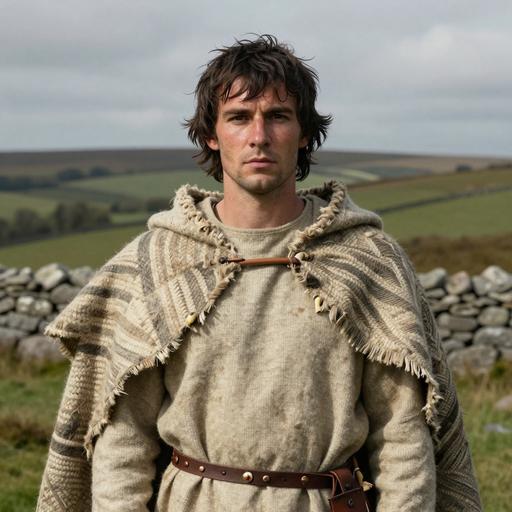
The Early Bronze Age in North Yorkshire, England, marks a fascinating era in prehistoric Britain, spanning approximately from 2500 to 1500 BCE. During this period, the region saw significant developments in metalworking, social structures, and cultural practices. While it is essential to note that the Celtic culture, as we traditionally understand it, emerged later during the Iron Age, some precursors to Celtic traditions can be observed in this era.
Geography and Environment
North Yorkshire, with its diverse landscapes, from the North York Moors to the Vale of York and the Yorkshire Dales, offered a variety of resources. The fertile valleys and rolling hills provided ample opportunities for agriculture, while the rugged moors and uplands were resources for hunting and gathering. This environment played a crucial role in shaping the early societies, influencing settlement patterns and economic activities.
Society and Social Structure
The societal organization during the Early Bronze Age in North Yorkshire was likely tribal, with communities comprising several families led by chieftains or prominent figures. These societies were primarily agrarian, with evidence of both pastoralism and primitive crop cultivation. The emergence of metallurgy, particularly the working of bronze, enabled the creation of more effective tools and weapons, which in turn facilitated agricultural expansion and warfare.
The presence of round barrows and cairns across North Yorkshire suggests a society with complex social structures, possibly with tribal alliances and hierarchies. These burial sites indicate a belief in an afterlife and may reflect the emergence of social stratification, with elite members of society afforded more elaborate burials.
Material Culture and Technology
The Early Bronze Age is marked by the advent of bronze metallurgy, an alloy of copper and tin, which was a significant technological advancement over the previous stone tools. In North Yorkshire, evidence of bronze tools, weapons, and ornaments has been found, indicating skilled craftsmanship. These artifacts underline the importance of trade networks, as tin had to be sourced from distant locations, possibly Cornwall or even further afield, suggesting long-distance interactions.
Ceramics also evolved during this period, with the development of Beaker pottery. The Beaker culture, known for its distinctive pottery decorated with geometric patterns, played a significant role in the spread of metallurgy and new cultural practices across Britain. This pottery style is often associated with burial practices and is found in various burial sites across North Yorkshire, linking the region to broader European cultures.
Burial Practices and Beliefs
Burial practices during this era were intricate, reflecting the community’s spiritual beliefs and social organization. Barrows, or burial mounds, are a distinctive archaeological feature from this period. These barrows vary in size and complexity, some containing single burials, while others are more elaborate, indicating collective or high-status burials. Grave goods often accompany burials, including pottery, weapons, and ornaments, suggesting a belief in an afterlife where such items might be needed.
Art and Symbolism
Artistic expression during the Early Bronze Age was primarily functional, reflected in the decorative patterns on pottery, metalwork, and stone carvings. The motifs often had symbolic meanings, potentially linked to spiritual or cultural narratives understood within these communities. Megalithic art, although less prevalent in North Yorkshire compared to other areas, also provides insights into the symbolic world of these societies.
Conclusion
In summary, the Early Bronze Age in North Yorkshire represents a period of technological innovation, social development, and cultural transformation. While not directly \Celtic," the foundations laid during this time would eventually influence later cultures in the region. The archaeological remains from this period provide a window into the lives of early inhabitants, revealing their adaptation to the environment, social organization, and cultural practices. Through ongoing study, archaeologists continue to unravel the complexities of this fascinating era, piecing together the historical tapestry of prehistoric Britain."