Menu
Currency
Main
Store
Blog

Loading Report

Preparing your ancestry journey

Connecting to ancient matches...

Preparing your report

Skip to main content
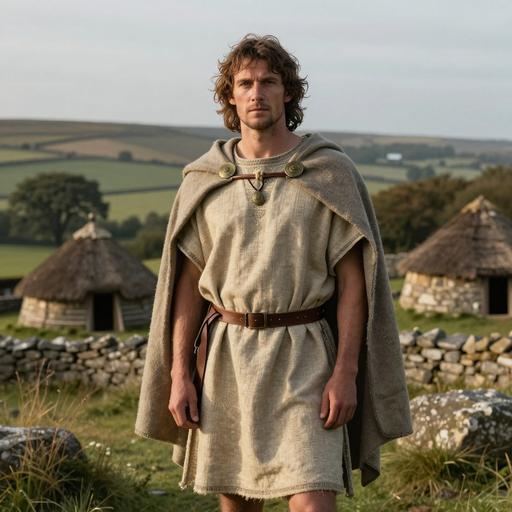
Portrait reconstruction of A man buried in United Kingdom in the Early Bronze Age era
Ancient Individual

A man buried in United Kingdom in the Early Bronze Age era

A man buried in United Kingdom during the Early Bronze Age North Yorkshire, England

A fragment of the ancient world, preserved across millennia in strands of DNA.

KD040
2500 BCE - 1200 BCE
Male
United Kingdom
Scroll to begin
Chapter I

Identity

The biological and cultural markers that define this ancient individual

Sample ID

KD040

Date Range

2500 BCE - 1200 BCE

Cultural Period

Early Bronze Age North Yorkshire, England

Biological Sex

Male

mtDNA Haplogroup

T2b4h

Y-DNA Haplogroup

Not available

Social Role

Farmer (AI estimate, era-typical)

Chapter II

Place

Where this individual was discovered

Country United Kingdom
Locality England. North Yorkshire. West Heslerton
Coordinates 54.1716, -0.6065
Chapter III

Time

When this individual lived in the broader context of human history

KD040 2500 BCE - 1200 BCE
Chapter IV

Story

The narrative of this ancient life

The Early Bronze Age in North Yorkshire, England, marks a fascinating era in prehistoric Britain, spanning approximately from 2500 to 1500 BCE. During this period, the region saw significant developments in metalworking, social structures, and cultural practices. While it is essential to note that the Celtic culture, as we traditionally understand it, emerged later during the Iron Age, some precursors to Celtic traditions can be observed in this era.

Geography and Environment

North Yorkshire, with its diverse landscapes, from the North York Moors to the Vale of York and the Yorkshire Dales, offered a variety of resources. The fertile valleys and rolling hills provided ample opportunities for agriculture, while the rugged moors and uplands were resources for hunting and gathering. This environment played a crucial role in shaping the early societies, influencing settlement patterns and economic activities.

Society and Social Structure

The societal organization during the Early Bronze Age in North Yorkshire was likely tribal, with communities comprising several families led by chieftains or prominent figures. These societies were primarily agrarian, with evidence of both pastoralism and primitive crop cultivation. The emergence of metallurgy, particularly the working of bronze, enabled the creation of more effective tools and weapons, which in turn facilitated agricultural expansion and warfare.

The presence of round barrows and cairns across North Yorkshire suggests a society with complex social structures, possibly with tribal alliances and hierarchies. These burial sites indicate a belief in an afterlife and may reflect the emergence of social stratification, with elite members of society afforded more elaborate burials.

Material Culture and Technology

The Early Bronze Age is marked by the advent of bronze metallurgy, an alloy of copper and tin, which was a significant technological advancement over the previous stone tools. In North Yorkshire, evidence of bronze tools, weapons, and ornaments has been found, indicating skilled craftsmanship. These artifacts underline the importance of trade networks, as tin had to be sourced from distant locations, possibly Cornwall or even further afield, suggesting long-distance interactions.

Ceramics also evolved during this period, with the development of Beaker pottery. The Beaker culture, known for its distinctive pottery decorated with geometric patterns, played a significant role in the spread of metallurgy and new cultural practices across Britain. This pottery style is often associated with burial practices and is found in various burial sites across North Yorkshire, linking the region to broader European cultures.

Burial Practices and Beliefs

Burial practices during this era were intricate, reflecting the community’s spiritual beliefs and social organization. Barrows, or burial mounds, are a distinctive archaeological feature from this period. These barrows vary in size and complexity, some containing single burials, while others are more elaborate, indicating collective or high-status burials. Grave goods often accompany burials, including pottery, weapons, and ornaments, suggesting a belief in an afterlife where such items might be needed.

Art and Symbolism

Artistic expression during the Early Bronze Age was primarily functional, reflected in the decorative patterns on pottery, metalwork, and stone carvings. The motifs often had symbolic meanings, potentially linked to spiritual or cultural narratives understood within these communities. Megalithic art, although less prevalent in North Yorkshire compared to other areas, also provides insights into the symbolic world of these societies.

Conclusion

In summary, the Early Bronze Age in North Yorkshire represents a period of technological innovation, social development, and cultural transformation. While not directly \Celtic," the foundations laid during this time would eventually influence later cultures in the region. The archaeological remains from this period provide a window into the lives of early inhabitants, revealing their adaptation to the environment, social organization, and cultural practices. Through ongoing study, archaeologists continue to unravel the complexities of this fascinating era, piecing together the historical tapestry of prehistoric Britain."

Context

Related Samples

This individual exists within a broader network of ancient samples. No ancient genome stands alone.

Sample ID Culture/Period Date Location Action
CE003 Iron Age Derbyshire, England 758 BCE England. Derbyshire. Carsington Pasture Cave, United Kingdom View
CE004 Iron Age Derbyshire, England 387 BCE England. Derbyshire. Carsington Pasture Cave, United Kingdom View
KD001 Iron Age Black Isle, Scotland 441 CE Scotland. Black Isle. Rosemarkie Cave, United Kingdom View
KD003 Early Bronze Age North Yorkshire, England 2500 BCE England. North Yorkshire. West Heslerton, United Kingdom View
KD004 Iron Age Orkney, Scotland 340 BCE Orkney. Westray. Knowe of Skea, United Kingdom View
KD005 Iron Age Skye, Scotland 25 CE Scotland. Isle of Skye. High Pasture Cave, United Kingdom View
KD006 Middle Bronze Age Orkney, Scotland 1622 BCE Orkney. Westray. Links of Noltland, United Kingdom View
KD026 Neolithic Skye, Scotland 4000 BCE Scotland. Isle of Skye. Strathglebe, United Kingdom View
KD040 Early Bronze Age North Yorkshire, England 2500 BCE England. North Yorkshire. West Heslerton, United Kingdom View
KD041 Early Bronze Age North Yorkshire, England 2500 BCE England. North Yorkshire. West Heslerton, United Kingdom View
KD042 Iron Age Orkney, Scotland 1 CE Orkney. Westray. Knowe of Skea, United Kingdom View
KD043 Iron Age Orkney, Scotland 25 CE Orkney. Westray. Knowe of Skea, United Kingdom View
KD044 Middle Bronze Age Orkney, Scotland 1650 BCE Orkney. Westray. Links of Noltland, United Kingdom View
KD045 Middle Bronze Age Orkney, Scotland 1650 BCE Orkney. Westray. Links of Noltland, United Kingdom View
KD046 Middle Bronze Age Orkney, Scotland 1650 BCE Orkney. Westray. Links of Noltland, United Kingdom View
KD047 Middle Bronze Age Orkney, Scotland 1501 BCE Orkney. Westray. Links of Noltland, United Kingdom View
KD048 Middle Bronze Age Orkney, Scotland 1509 BCE Orkney. Westray. Links of Noltland, United Kingdom View
KD049 Middle Bronze Age Orkney, Scotland 1650 BCE Orkney. Westray. Links of Noltland, United Kingdom View
KD050_65 Middle Bronze Age Orkney, Scotland 1609 BCE Orkney. Westray. Links of Noltland, United Kingdom View
KD051 Middle Bronze Age Orkney, Scotland 1743 BCE Orkney. Westray. Links of Noltland, United Kingdom View
KD052 Middle Bronze Age Orkney, Scotland 1650 BCE Orkney. Westray. Links of Noltland, United Kingdom View
KD053 Middle Bronze Age Orkney, Scotland 1650 BCE Orkney. Westray. Links of Noltland, United Kingdom View
KD055 Middle Bronze Age Orkney, Scotland 1650 BCE Orkney. Westray. Links of Noltland, United Kingdom View
KD057 Middle Bronze Age Orkney, Scotland 1650 BCE Orkney. Westray. Links of Noltland, United Kingdom View
KD058 Middle Bronze Age Orkney, Scotland 1616 BCE Orkney. Westray. Links of Noltland, United Kingdom View
KD059 Middle Bronze Age Orkney, Scotland 1620 BCE Orkney. Westray. Links of Noltland, United Kingdom View
KD060 Middle Bronze Age Orkney, Scotland 1650 BCE Orkney. Westray. Links of Noltland, United Kingdom View
KD061 Middle Bronze Age Orkney, Scotland 1650 BCE Orkney. Westray. Links of Noltland, United Kingdom View
KD062 Middle Bronze Age Orkney, Scotland 1536 BCE Orkney. Westray. Links of Noltland, United Kingdom View
KD063 Middle Bronze Age Orkney, Scotland 1650 BCE Orkney. Westray. Links of Noltland, United Kingdom View
KD064 Middle Bronze Age Orkney, Scotland 1650 BCE Orkney. Westray. Links of Noltland, United Kingdom View
KD066 Middle Bronze Age Orkney, Scotland 1650 BCE Orkney. Westray. Links of Noltland, United Kingdom View
KD067 Middle Bronze Age Orkney, Scotland 1650 BCE Orkney. Westray. Links of Noltland, United Kingdom View
KD070 Early Bronze Age in Northumberland, England 2464 BCE England. Northumberland. Low Hauxley, United Kingdom View
KD071 Iron Age North Yorkshire, England 750 BCE England. North Yorkshire. Knapton Wold, United Kingdom View
KD072 Iron Age North Yorkshire, England 750 BCE England. North Yorkshire. Knapton Wold, United Kingdom View
KD073 Iron Age Shetland, Scotland 236 CE Shetland. Unst. Milla Skerra, United Kingdom View
Sample ID Culture/Period Date Location Action
KD003 Early Bronze Age North Yorkshire, England 2500 BCE England. North Yorkshire. West Heslerton, United Kingdom View
KD040 Early Bronze Age North Yorkshire, England 2500 BCE England. North Yorkshire. West Heslerton, United Kingdom View
KD041 Early Bronze Age North Yorkshire, England 2500 BCE England. North Yorkshire. West Heslerton, United Kingdom View
Sources

References

Scientific publications and genetic data that inform this profile.

Scientific Publication

Ancient DNA at the edge of the world: Continental immigration and the persistence of Neolithic male lineages in Bronze Age Orkney

Authors Dulias K, Foody MGB, Justeau P, Silva M, Martiniano R et al.
Abstract

Orkney was a major cultural center during the Neolithic, 3800 to 2500 BC. Farming flourished, permanent stone settlements and chambered tombs were constructed, and long-range contacts were sustained. From ∼3200 BC, the number, density, and extravagance of settlements increased, and new ceremonial monuments and ceramic styles, possibly originating in Orkney, spread across Britain and Ireland. By ∼2800 BC, this phenomenon was waning, although Neolithic traditions persisted to at least 2500 BC. Unlike elsewhere in Britain, there is little material evidence to suggest a Beaker presence, suggesting that Orkney may have developed along an insular trajectory during the second millennium BC. We tested this by comparing new genomic evidence from 22 Bronze Age and 3 Iron Age burials in northwest Orkney with Neolithic burials from across the archipelago. We identified signals of inward migration on a scale unsuspected from the archaeological record: As elsewhere in Bronze Age Britain, much of the population displayed significant genome-wide ancestry deriving ultimately from the Pontic-Caspian Steppe. However, uniquely in northern and central Europe, most of the male lineages were inherited from the local Neolithic. This suggests that some male descendants of Neolithic Orkney may have remained distinct well into the Bronze Age, although there are signs that this had dwindled by the Iron Age. Furthermore, although the majority of mitochondrial DNA lineages evidently arrived afresh with the Bronze Age, we also find evidence for continuity in the female line of descent from Mesolithic Britain into the Bronze Age and even to the present day.

Use code for 25% off Expires Jul 15