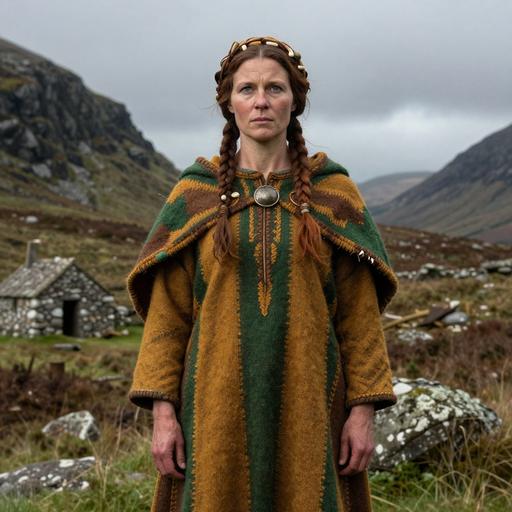
Iron Age Skye, located in Scotland's Inner Hebrides, represents a period and culture rich in both mystery and historical significance. The Iron Age, spanning from approximately 800 BCE to the early centuries CE, was a transformative era for the Celtic peoples inhabiting the region. The Iron Age on Skye, like much of Scotland, was marked by the adoption of iron-working technology, which dramatically influenced daily life, social structures, and cultural practices.
Geography and Environment
Skye's landscape during the Iron Age was characterized by a rugged terrain of mountains, moorlands, and a dramatic coastline, punctuated by sea lochs and peninsulas. The natural environment significantly influenced the lifestyle and settlements of its inhabitants. The island’s geology, marked by volcanic rock formations, provided both challenges and resources, such as stone for building and diverse ecosystems for hunting and gathering.
Settlements and Architecture
The archaeological record of Iron Age Skye reveals a landscape dotted with unique structures such as brochs, duns, and crannogs. Brochs are large, drystone towers built with precision, serving as defensive structures and residences for elite members of society. They reflect a deep understanding of architectural design and labor organization. Duns, simpler fortified structures, and crannogs, man-made islands in lochs, further illustrate the complexity and variety of Iron Age fortifications and settlements.
These settlements suggest a society that was hierarchical, with a focus on defense and community cohesion. The strategic location of such settlements indicates an awareness of both terrestrial and maritime threats, possibly from rival tribes or Viking incursions in later periods.
Society and Culture
The culture of Iron Age Skye was distinctly Celtic, sharing both similarities and unique traits with mainland Celtic societies. The Celts of Skye practiced a tribal social organization with a clan-based system that influenced their governance and daily life. The society was likely governed by chieftains or kings, with kinship and tribal allegiance playing crucial roles in social cohesiveness.
Celtic art from this period, including metalwork, pottery, and stone carvings, reflects the society's spiritual beliefs and aesthetic values. Artistic expressions such as intricate metal jewelry and weaponry exhibit widespread skills in metallurgy and an appreciation for beauty and symbolism.
Economy and Lifestyle
The economy of Iron Age Skye was predominantly agrarian, supplemented by hunting, fishing, and trade. The development of iron tools revolutionized agriculture, allowing for more efficient farming practices and, by extension, greater food production. Livestock, including cattle and sheep, formed a cornerstone of the economy, providing meat, wool, and hides.
Trade was also vital, with evidence suggesting contact with other Celtic tribes, the mainland, and possibly even further afield. Skye's maritime position facilitated this exchange, allowing for the flow of goods like metals, textiles, and other materials.
Religion and Beliefs
Spirituality and religion on Iron Age Skye were likely intertwined with Celtic polytheism and animistic traditions, though direct evidence is scarce. Sacred sites, hill forts, and natural features like springs and trees might have held religious significance, being sites of rituals and worship. The Celts were known for their belief in the sacredness of nature and the existence of a pantheon of deities, each presiding over different aspects of life and nature.
Legacy
The legacy of Iron Age Skye continues to be explored and understood through archaeological research and oral histories. This era laid the foundations for later cultural developments and has left an indelible mark on the cultural landscape of Scotland. The stone structures, artefacts, and traditions that remain from this period are vital to understanding the evolution of Scottish identity and Celtic heritage.
In summary, Iron Age Skye was a vibrant, strategically significant part of Celtic society in Scotland. Its people were adaptive and resourceful, creating enduring structures and a complex society that balanced defense, subsistence, and cultural richness, set against one of the most beautiful and challenging landscapes in the British Isles.