

The Kalash of Pakistan: DNA Evidence vs the Myth
New DNA research shows the Kalash are a real local Hindu Kush population with steppe ancestry, not Greek descendants or frozen relics of Europe.


New DNA research shows the Kalash are a real local Hindu Kush population with steppe ancestry, not Greek descendants or frozen relics of Europe.
How the conquering Magyars shaped Hungary’s language, while centuries of mixing reduced their steppe ancestry to a faint genetic trace.
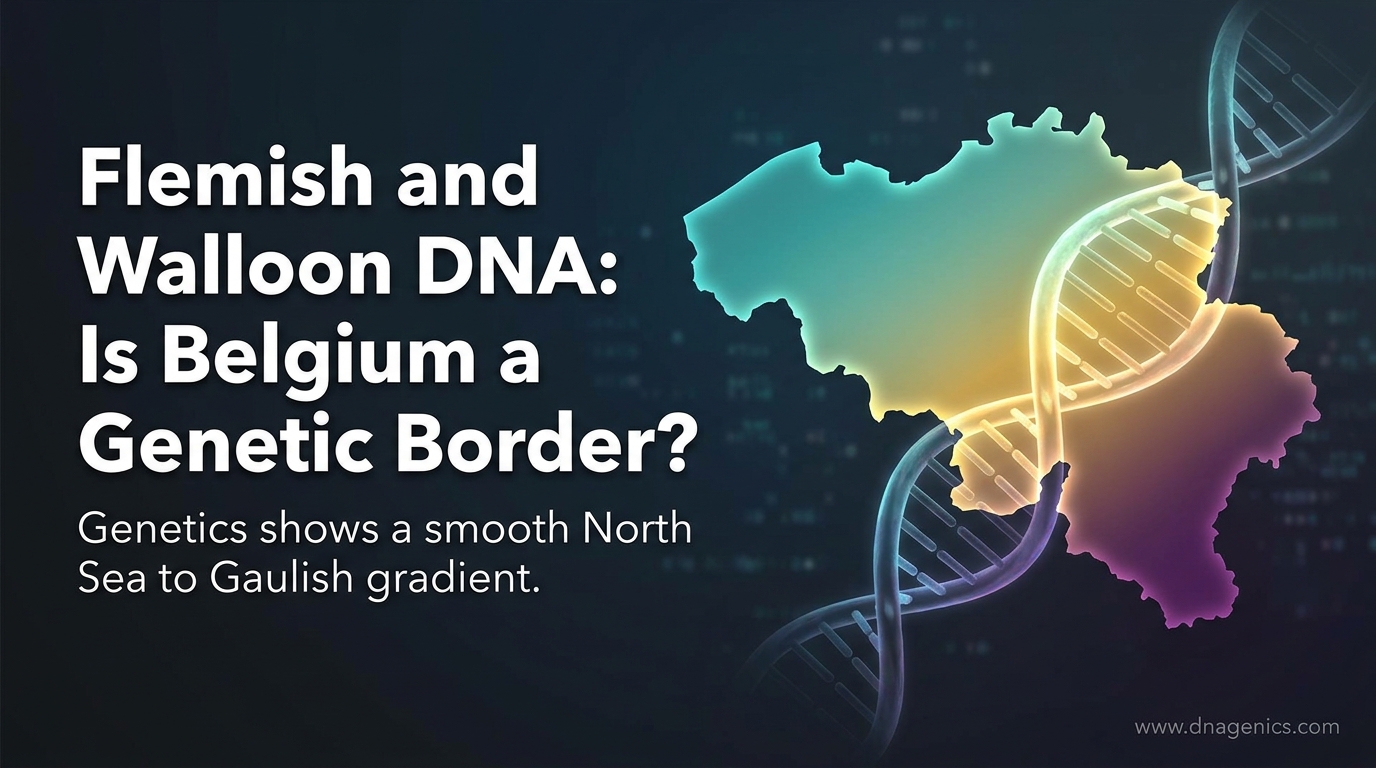
Does Belgium's language line reflect DNA? Ancient and modern genetics show a smooth North Sea to Gaulish gradient, not a hard Flemish-Walloon divide.
Explore how ancient DNA reveals Alsace and Lorraine as a Celto-Germanic transition zone, shaped by Iron Age Celts, Roman Gaul, and migration.
Explore how Sami DNA, ancient DNA, and population genetics reveal a rare Siberian ancestry signal in Europe’s far north, plus what it means for DNA testing.
Ancient DNA from Dorset shows a rare matrilocal society, female line continuity, and male-biased migration across the Channel during the Iron Age.
A major ancient DNA study reshapes the story of Carthage, showing that Phoenician culture spread west with little Levantine ancestry in the Punic world.
Ancient DNA shows why the Hittites spoke an Indo-European language without steppe ancestry, and how population genetics solved this Anatolian paradox.
Explore how Samaritan DNA preserves a rare southern Levantine profile, what it reveals about ancient Canaanites, and why it matters for ancestry testing.
Can ancient DNA test Atlantis theories? Learn how population genetics, haplogroups, and migration data rule out many lost civilization claims.
Explore how Druze endogamy, ancient Levantine roots, and northern Near Eastern ancestry created one of the region's most distinctive DNA profiles.
Corsican DNA tells a different story from its politics. Global25 and genome-wide studies show Corsicans cluster with Italians, especially Tuscan and northern Italian populations.