

Bell Beaker Heritage and Red Hair in Northwestern Europe
Why red hair is most common in Atlantic Europe, and how Bell Beaker ancestry, MC1R variants, and Bronze Age migration shaped this striking DNA pattern.


Imported from WordPress: DNA>Genetic history
Why red hair is most common in Atlantic Europe, and how Bell Beaker ancestry, MC1R variants, and Bronze Age migration shaped this striking DNA pattern.
Explore how Basque DNA, haplogroups, and ancient DNA reveal a rare pattern of continuity, isolation, and Bronze Age ancestry in Western Europe.
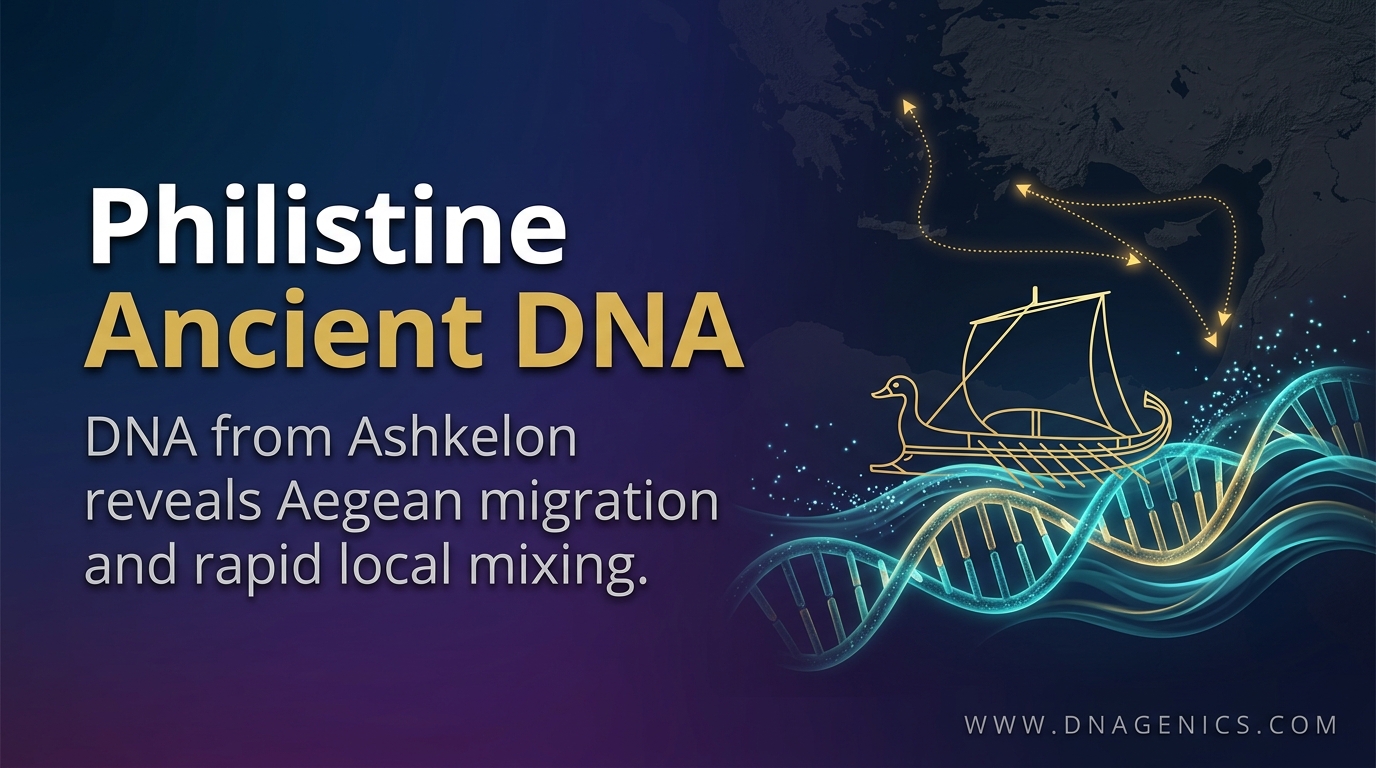
Ancient DNA from Ashkelon shows a real Aegean-related migration into Philistine territory, then rapid mixing with local Levantine populations.
New ancient DNA insights show how Tajiks, Yaghnobis, and Pamiris preserve an Iron Age Central Asian genetic foundation beneath a later Persian language shift.
New ancient DNA insights show Vlach and Aromanian ancestry is deeply Balkan, with language inherited from Rome but genetics rooted in Iron Age populations.
Why the famous Cherokee princess story rarely matches DNA, what population genetics actually shows, and how ancestry tests detect Native American admixture.
See how Italian, Scandinavian, French and German migration shaped the DNA landscape of the United States and Canada, from census patterns to ancient population genetics.
New autosomal comparisons with Italkim Jews help test Ashkenazi ancestry, showing why southern Italian and Aegean affinities may reflect real population history.
Ancient DNA reveals how Jewish diasporas spread from the Levant, formed distinct founder groups, and preserved ancestry signals across 2,500 years.
Modern Spanish DNA shows less North African ancestry than many expect. Explore ancient DNA, migration, haplogroups, and the real genetic legacy of al-Andalus.
Population genetics is moving past ADMIXTURE and G25. Learn how IBD, ARGs, and deep learning are reshaping DNA ancestry, haplogroups, and migration analysis.
Corsican DNA tells a different story from its politics. Global25 and genome-wide studies show Corsicans cluster with Italians, especially Tuscan and northern Italian populations.