

Lapita DNA, Polynesian Migration, and the Papuan Zero
New Global25 modeling reveals early Lapita settlers lacked Papuan ancestry, Vanuatu underwent major turnover, and Polynesian migration spans two oceans.


Imported from WordPress: DNA>Health|History and Genetics
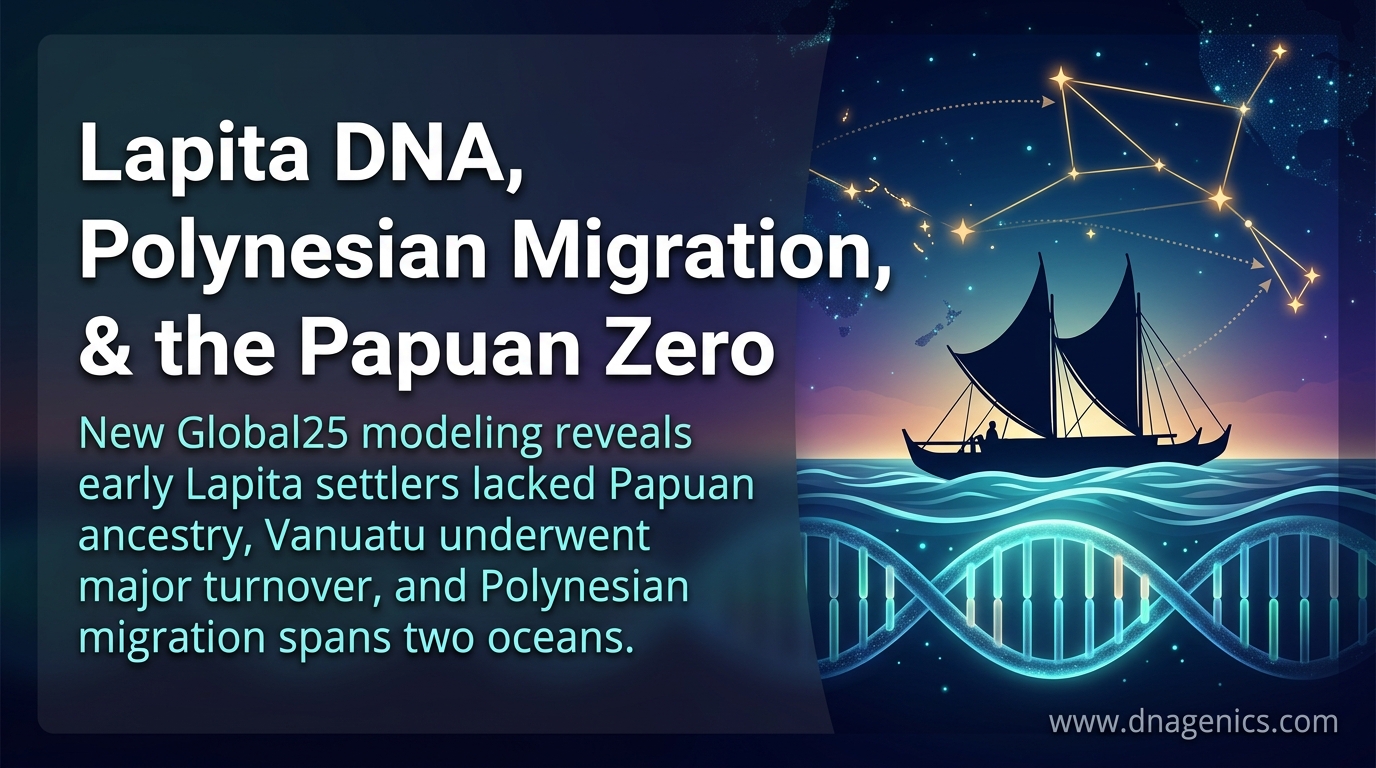
New Global25 modeling reveals early Lapita settlers lacked Papuan ancestry, Vanuatu underwent major turnover, and Polynesian migration spans two oceans.
A large ancient DNA study along the Silk Road corridor finds rising diversity over time, but little evidence that trade alone transformed local populations.
A 534-genome ancient DNA study shows the Arras Culture was local to Britain, not a Marne migrant group, revealing new insights into Iron Age ancestry and migration.
New population genetics findings reveal a North African-related signal in Fulani DNA, but the deeper story involves Sahelian history, migration, and internal diversity.
New ancient DNA evidence shows how haplogroup I1 became a major Scandinavian paternal lineage after surviving centuries at low frequency in prehistoric Europe.
New ancient DNA from Dorset reveals a rare matrilocal kin group, Channel-linked ancestry, and what it means for Iron Age Britain and your own DNA results.
Explore how Ukrainian and Belarusian DNA compares across modern and ancient reference panels, and why steppe migrations left surprisingly faint genetic traces.
New ancient DNA research reshapes what we know about the Yamnaya, their origins, and why their steppe ancestry still matters in modern European genomes.
New ancient DNA results show how Corded Ware ancestry changed as it moved west, and what four Bohemian burials reveal about the people already there.
DNA data suggest most French Sephardim are genetically closest to Maghrebi Jewish populations, while medieval Sepharad remains a smaller historical anchor.
New ancient DNA and population genetics insights reshape Korean ancestry, from Mumun farming and Yayoi links to Silla and the unanswered Goguryeo question.
Why Quebec DNA can look ordinary in calculators, yet carry one of the strongest founder effects in population genetics, with major lessons for ancestry and health.