

Tollense Battle DNA: Who Were Europe’s Bronze Age Warriors?
Ancient DNA from the Tollense battlefield reveals Bronze Age ancestry patterns, migration clues, and what the warriors may have shared across Europe.


Expert articles, research insights, and the latest in genetic science. Stay informed with our team's discoveries.
Ancient DNA from the Tollense battlefield reveals Bronze Age ancestry patterns, migration clues, and what the warriors may have shared across Europe.
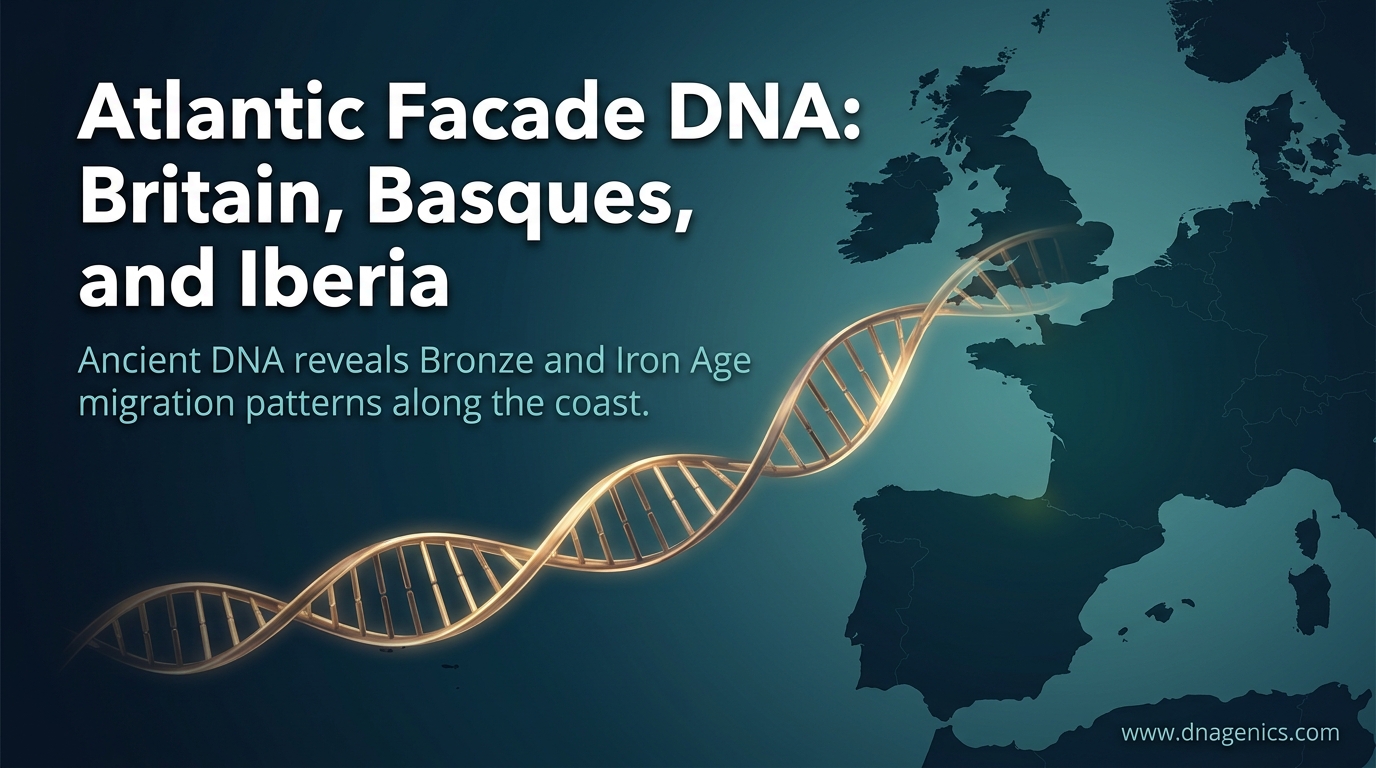
Ancient DNA reveals a shifting Atlantic coast, with Bronze Age and Iron Age migration patterns linking Britain, France, and Iberia in unexpected ways.

A new genome-wide study sheds light on the Cagots and Agotes, showing a local Basque genetic profile and challenging old origin myths.
A 2024 documentary revived the debate over Columbus’s origins. Here is what DNA can, and cannot, tell us about Sephardic ancestry, migration, and birthplace.
Ancient DNA shows Imperial Rome was not a small exception, its whole population shifted toward the eastern Mediterranean and North Africa over time.
Learn how Y-DNA and mtDNA reveal the different colonial histories of Peru and Bolivia, and what these haplogroups mean for ancestry, migration, and identity.
Ancient DNA from a Sidon mass grave shows Crusader-era men were not genetically uniform, revealing local Levantine, mixed, and European ancestry in one burial.
Beethoven’s DNA reveals liver disease risk, a Y-DNA mismatch, and why a nickname is not proof of ancestry. Here is what the genome really shows.

Learn how Neanderthal DNA can influence COVID-19 severity, pain sensitivity, and allergy risk, and what these ancient segments may mean for your ancestry.
New genetic analyses show Otzi was closest to Sardinians by autosomal DNA, while a rare Tyrolean Y-chromosome match tells a very different story about ancestry.
A genetic look at the Bene Israel of India shows a strong mix of Indian and Middle Eastern ancestry, with results that hold up against placebo tests and historical context.
New ancient DNA comparisons challenge the Solutrean hypothesis, showing Clovis ancestry aligns with Siberian sources, while contaminated genomes can mislead models.