Saltar al contenido principal
mtDNA · Materno linaje

K1B

mtDNA Haplogroup K1B

Un perfil de referencia de una rama de linaje. Compartir haplogrupos no demuestra una relación familiar ni una identidad cultural.

Perfil de referencia

Contexto de la rama

Contexto histórico de la rama de linaje mtDNA K1B

Origins and Evolution

mtDNA haplogroup K1B is a subclade of K1, itself derived from haplogroup K. Based on its phylogenetic position beneath K1 and the known coalescence of K1 in the Late Glacial to Early Holocene in the Near East/Anatolia, K1B most likely split from other K1 lineages during the early Holocene (roughly ~11–9 kya). The pattern of diversity and its presence in both ancient and modern Near Eastern and European samples is consistent with origination in or near Anatolia followed by dispersal with early farming communities.

Population genetics studies and ancient DNA (aDNA) work repeatedly show that haplogroup K and its subclades were important components of the maternal gene pool of early Neolithic farmers in Europe; K1B fits this broader pattern as one of the K1 lineages that moved westward from the Near East during the Neolithic transition.

Subclades

K1B contains further downstream branches that are recognized in high-resolution mtDNA phylogenies; nomenclature and fine structure can vary as more mitogenomes are sequenced. Sub-branches (reported variously as K1b1, K1b2 and further subdivisions) show geographically structured diversity—some lineages are more frequent in Mediterranean and Anatolian populations while others are more detectable in parts of Europe. Many subclades have low to moderate modern diversity, which is consistent with founder effects and local expansions following migration events.

Geographical Distribution

K1B is most strongly associated with the Near East/Anatolia and regions of Europe that received Neolithic farmer ancestry. Modern and ancient samples show the haplogroup (and its subclades) in:

  • Anatolia and the Levant, where K1 and K1-derived lineages are frequent and diverse.
  • Southern Europe and the Mediterranean (Iberia, Italy, Greece, some islands) reflecting early farmer maritime and coastal movements and later gene flow.
  • Central and Western Europe at moderate frequencies, in keeping with Neolithic farmer ancestry carried inland by cultures such as LBK and related groups.
  • Detectable but lower frequencies in the Caucasus, parts of North Africa (coastal communities with Near Eastern contacts), and pockets of western/central Asia due to later contacts.

Ancient DNA from Early Neolithic farmers (e.g., LBK and Mediterranean Neolithic sites) often includes members of haplogroup K and K1 subclades, supporting a direct role for K1B-type lineages in the agricultural expansion into Europe.

Historical and Cultural Significance

The distribution and coalescence time of K1B align it with the Neolithic transition—the spread of farming from Anatolia into Europe beginning ~9–8 kya. As such, K1B can be considered part of the maternal signal of migrating farmer communities (complementary to paternal farmer-associated markers like Y‑DNA G2a). In some later populations, localized founder effects or genetic drift have increased the frequency of particular K1B sublineages; these effects are most evident in island or isolated populations and in communities with historical endogamy.

Although haplogroup K in general shows notable founder effects in certain Jewish populations, most reported strong Ashkenazi founder lineages belong to other K subclades (e.g., particular K1a branches). K1B is present at low-to-moderate levels in some Jewish groups but is not typically cited as one of the dominant Ashkenazi maternal founders.

Conclusion

K1B is a Neolithic-era maternal lineage that links the Near East/Anatolia with widespread early farmer ancestry in Europe. Its phylogenetic placement beneath K1 and its geographic pattern make it a useful marker for studying the demographic processes of the Neolithic expansion, regional founder events, and subsequent population movements across the Mediterranean and Europe. Continued sequencing of complete mitogenomes and integration with aDNA will refine the internal structure and historical narrative of K1B and its subclades.

Puntos clave

  • Origins and Evolution
  • Subclades
  • Geographical Distribution
  • Historical and Cultural Significance
  • Conclusion
Perfil de referencia

Árbol y relaciones

Contexto filogenético y subclados

Trayectoria evolutiva

Sigue las ramas superiores registradas hasta K1B. Las fechas son estimaciones y pueden cambiar al revisarse los datos de referencia.

Pasos Haplogrupo Antigüedad estimada Época arqueológica Tiempo transcurrido Subclados inmediatos Portadores modernos analizados Referencias antiguas
1 K1B Actual ~10,000 years ago Neolithic 10,500 years 2 90 9
2 K1 ~13,000 years ago Mesolithic 13,000 years 8 1,405 116
3 K ~16,000 years ago Mesolithic 16,000 years 4 1,769 55
4 U8B ~30,000 years ago Paleolithic 30,000 years 2 1,805 1
5 U8B'C - - - 2 1,834 0
6 U8 ~45,000 years ago Paleolithic 45,000 years 2 1,873 5
7 U2'3'4'7'8'9 - - - 5 3,500 0
8 U ~46,000 years ago Paleolithic 46,000 years 5 5,557 110
9 R ~55,000 years ago Paleolithic 55,000 years 17 22,830 57
10 NA - - - 1 22,830 0
11 N ~60,000 years ago Paleolithic 60,000 years 16 26,150 13
12 L3 ~70,000 years ago Paleolithic 70,000 years 7 30,162 6
13 L3'4 - - - 2 30,212 0
14 L3'4'6 - - - 2 30,216 0
15 L2'3'4'6 - - - 2 31,333 0
16 L2'3'4'5'6'7 - - - 2 31,349 0
17 L1'2'3'4'5'6'7 - - - 2 31,852 0
18 L ~160,000 years ago Paleolithic 160,000 years 2 32,236 5

Ramas hermanas (7)

Otras ramas del mismo haplogrupo superior

Perfil de referencia

En el mundo

Distribución geográfica y presencia moderna

Origen registrado

Near East / Anatolia

Distribución moderna

The populations where mtDNA haplogroup K1B is found include:

  1. Ashkenazi Jewish communities
  2. Anatolian (modern Turkey) populations
  3. European Early Neolithic farmer-descended populations (e.g., LBK descendants in Central Europe)
  4. Southern European populations (Iberia, Italy, Greece)
  5. Western and Northern European populations (British Isles, Scandinavia) at moderate to low frequencies
  6. Caucasus populations (Armenians, Georgians)
  7. North African coastal groups with Near Eastern admixture
  8. Iranian and Levantine populations
  9. Island and isolated Mediterranean populations (e.g., Sardinia and other islands)
  10. Low-frequency occurrences in parts of Central Asia from west–east contacts
Contexto histórico

Una rama a través del tiempo

Formación estimada en una cronología histórica amplia. Los marcadores temporales aportan contexto y no implican relación con culturas concretas.

  1. ~10.5k años de antigüedad

    Haplogrupo K1B

    Formación estimada de esta rama de mtDNA; las fechas y ubicaciones son estimaciones de referencia.

    Esta rama
  2. ~10k años de antigüedad

    Revolución neolítica

    Inicio de la agricultura y formación de comunidades sedentarias

  3. ~5k años de antigüedad

    Edad del Bronce

    Metalurgia, escritura y primeras civilizaciones

  4. ~3k años de antigüedad

    Edad del Hierro

    Herramientas de hierro y ampliación de redes comerciales

  5. ~2.5k años de antigüedad

    Antigüedad clásica

    Desarrollo de las civilizaciones griega y romana

  6. Actualidad

    Actualidad

    Época moderna

Perfil de referencia

Contexto arqueológico

Asociaciones arqueológicas registradas para la rama mtDNA K1B

Asociaciones registradas

Estas etiquetas describen contextos arqueológicos registrados para las muestras de referencia enlazadas a K1B. Una asociación no demuestra que todos los portadores pertenecieran a una cultura ni siguieran una ruta migratoria concreta.

Anatolian Neolithic Çayönü Culture Iron Gates Iron Gates Culture Pottery Neolithic Tepecik-Çiftlik
Las atribuciones culturales se basan en el contexto arqueológico de las muestras de ADN antiguo y pueden representar asociaciones regionales de periodos concretos.
Perfil de referencia

Catálogo de muestras

9 portadores de subclados del haplogrupo K1B (sin portadores directos en la selección de referencia actual)

9 mostradas · 9 muestras coincidentes

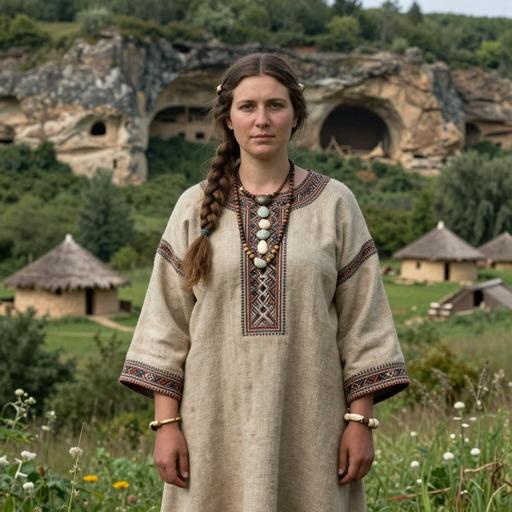
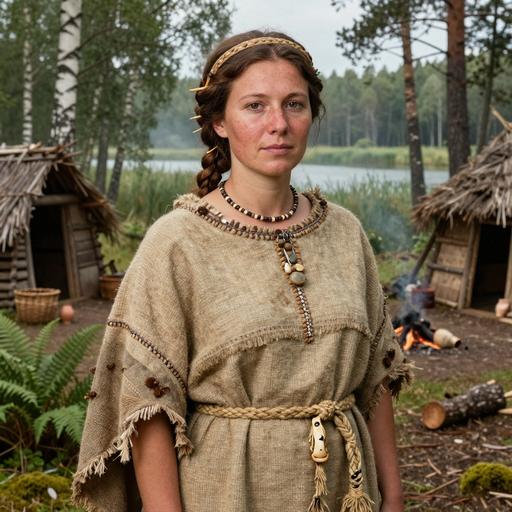
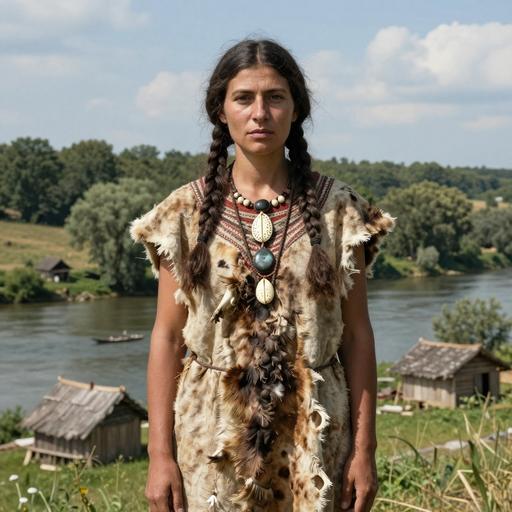
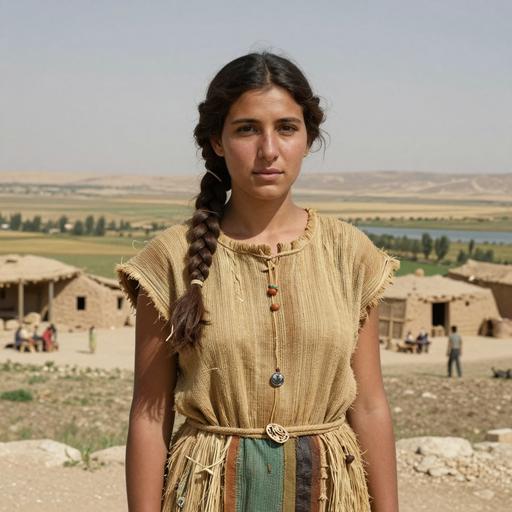
Los retratos son ilustraciones generadas con IA. Las etiquetas de muestra y los identificadores de acceso identifican los registros de referencia.

Retrato Muestra País Época Fecha Cultura mtDNA Coincidencia
Retrato ilustrativo de EIA individual, Grofove njive, Slovenia (750-415 BCE) generado con IA
Identificador de muestra: I5689
Slovenia Slovenia EIA 750-415 calBCE (2450±20 BP, KIA-37316) Hallstatt Culture K1b1 Subclado
Retrato ilustrativo de Eneolithic Trypillia individual, Ternopil oblast. Verteba Cave. Site 20, Ukraine (3,800-3,500 BCE) generado con IA
Identificador de muestra: VERT111
Ukraine Middle to Late Trypillia Culture, Verteba Cave, Ukraine 3800-3500 BCE Trypillia Culture K1b1 Subclado
Retrato ilustrativo de Calvados MN individual, Calvados. Fleury-sur-Orne, France (4,678-4,458 BCE) generado con IA
Identificador de muestra: FLR004
France France MN 4678-4458 calBCE (5720±30 BP, Beta-413158) Middle Neolithic French K1b1 Subclado
Retrato ilustrativo de LN Tisza individual, Hódmezővásárhely-Kökénydomb Vörös tanya, Hungary (5,000-4,500 BCE) generado con IA
Identificador de muestra: I2387
Hungary Hungary LN Tisza 5000-4500 BCE Tisza Culture K1b1 Subclado
Retrato ilustrativo de N LBK individual, Asparn Schletz (Niederösterreich, Mistelbach), Austria (5,300-5,000 BCE) generado con IA
Identificador de muestra: I24268
Austria Austria N LBK 5300-5000 BCE Linear Pottery Culture K1b1 Subclado
Retrato ilustrativo de Ivanovo LN Lyalovo- Dup individual, Sakhtysh-2 (Ivanovo Oblast, Teykovsky District, Sakhtysh Village), Russia (5,319-5,072 BCE) generado con IA
Identificador de muestra: NEO192
Russia Lyalovo culture 5311-5210 calBCE (6271±24 BP) [R_Combine: (6275±30 BP, PSUAMS-14534), (6265±38 BP, UBA-40003) Lyalovo Culture K1b2 Subclado
Retrato ilustrativo de EN Starcevo-1 individual, Vörs-Màriaasszonysziget (Zala County, Marcali), Hungary (5,631-5,482 BCE) generado con IA
Identificador de muestra: I17927
Hungary Hungary EN Starcevo 1 5631-5482 calBCE (6645±40 BP, PSUAMS-15078) Starčevo Culture K1b1 Subclado
Retrato ilustrativo de Iron Gates Late Mesolithic individual, Schela-Cladovei (Mehedinți County, Drobeta-Turnu Severin), Romania (7,574-7,338 BCE) generado con IA
Identificador de muestra: NEO672
Romania Late Mesolithic Iron Gates Culture 7574-7338 calBCE (8384±43 BP, UBA-40104) Iron Gates K1b2 Subclado
Retrato ilustrativo de PPN individual, Boncuklu (Diyarbakır, Ergani), Turkey (8,893-8,327 BCE) generado con IA
Identificador de muestra: cay016
Turkey Çayönü Pre-Pottery Neolithic Culture 8900-8300 BCE Çayönü Culture K1b1 Subclado
MATERNAL LINAJE · ADN ANTIGUO

Mapa de pruebas de linajes antiguos

Sigue los clados superiores hasta esta rama y explora dónde se encontraron portadores antiguos.

Cargando observaciones antiguas...

Los marcadores son ubicaciones de hallazgos arqueológicos. Una línea discontinua representa una transición geográfica propuesta e incierta entre ramas consecutivas, apoyada en varias observaciones fechadas; no es una ruta de viaje exacta, un lugar de nacimiento ni una prueba de descendencia directa. Las muestras del clado parental pueden pertenecer a otras ramas descendientes. Se mantienen huecos cuando las pruebas son insuficientes. Las fechas de las muestras son distintas de las fechas de formación de los haplogrupos.

Perfil de referencia

Mapa de distribución de portadores

Distribución geográfica de muestras de ADN antiguo (9), portadores directos o de subclados de K1B

Portador de un subclado
Filtro de periodo temporal
Todos los periodos
Mostrando todas las muestras
Perfil de referencia

Distribución temporal

Distribución de portadores por periodos arqueológicos

Perfil de referencia

Distribución geográfica

Recuentos por país registrado de las muestras. Reflejan la selección de referencia disponible, no frecuencias de población.

Perfil de referencia

Distribución por país y época

Compara los recuentos de muestras registradas por países y periodos arqueológicos. Selecciona una celda con datos para examinar una muestra.

Datos

Datos y procedencia

Información sobre las fuentes y la calidad de los datos

Última actualización 2026-02-16
Puntuación de confianza 50/100
Cobertura Low

Fuente de datos

La clasificación, las fechas estimadas y el contexto geográfico reflejan los datos de referencia registrados y pueden cambiar al revisarse las pruebas. La cobertura de muestras es desigual; las ubicaciones registradas y las asociaciones arqueológicas no establecen el origen personal ni la identidad cultural.