The Story
The journey of mtDNA haplogroup K1B
Origins and Evolution
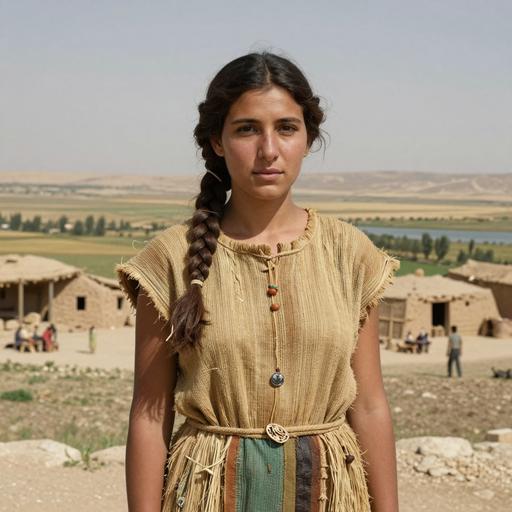
mtDNA haplogroup K1B is a subclade of K1, itself derived from haplogroup K. Based on its phylogenetic position beneath K1 and the known coalescence of K1 in the Late Glacial to Early Holocene in the Near East/Anatolia, K1B most likely split from other K1 lineages during the early Holocene (roughly ~11–9 kya). The pattern of diversity and its presence in both ancient and modern Near Eastern and European samples is consistent with origination in or near Anatolia followed by dispersal with early farming communities.
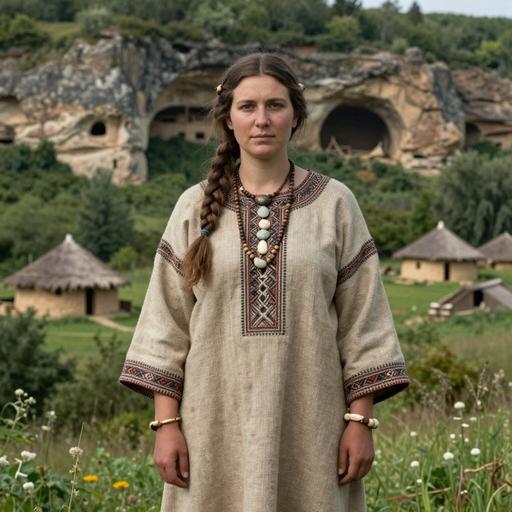
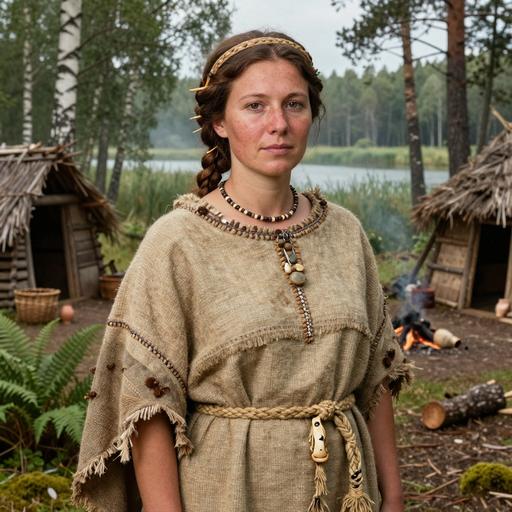
Population genetics studies and ancient DNA (aDNA) work repeatedly show that haplogroup K and its subclades were important components of the maternal gene pool of early Neolithic farmers in Europe; K1B fits this broader pattern as one of the K1 lineages that moved westward from the Near East during the Neolithic transition.
Subclades
K1B contains further downstream branches that are recognized in high-resolution mtDNA phylogenies; nomenclature and fine structure can vary as more mitogenomes are sequenced. Sub-branches (reported variously as K1b1, K1b2 and further subdivisions) show geographically structured diversity—some lineages are more frequent in Mediterranean and Anatolian populations while others are more detectable in parts of Europe. Many subclades have low to moderate modern diversity, which is consistent with founder effects and local expansions following migration events.
Geographical Distribution
K1B is most strongly associated with the Near East/Anatolia and regions of Europe that received Neolithic farmer ancestry. Modern and ancient samples show the haplogroup (and its subclades) in:
- Anatolia and the Levant, where K1 and K1-derived lineages are frequent and diverse.
- Southern Europe and the Mediterranean (Iberia, Italy, Greece, some islands) reflecting early farmer maritime and coastal movements and later gene flow.
- Central and Western Europe at moderate frequencies, in keeping with Neolithic farmer ancestry carried inland by cultures such as LBK and related groups.
- Detectable but lower frequencies in the Caucasus, parts of North Africa (coastal communities with Near Eastern contacts), and pockets of western/central Asia due to later contacts.
Ancient DNA from Early Neolithic farmers (e.g., LBK and Mediterranean Neolithic sites) often includes members of haplogroup K and K1 subclades, supporting a direct role for K1B-type lineages in the agricultural expansion into Europe.
Historical and Cultural Significance
The distribution and coalescence time of K1B align it with the Neolithic transition—the spread of farming from Anatolia into Europe beginning ~9–8 kya. As such, K1B can be considered part of the maternal signal of migrating farmer communities (complementary to paternal farmer-associated markers like Y‑DNA G2a). In some later populations, localized founder effects or genetic drift have increased the frequency of particular K1B sublineages; these effects are most evident in island or isolated populations and in communities with historical endogamy.
Although haplogroup K in general shows notable founder effects in certain Jewish populations, most reported strong Ashkenazi founder lineages belong to other K subclades (e.g., particular K1a branches). K1B is present at low-to-moderate levels in some Jewish groups but is not typically cited as one of the dominant Ashkenazi maternal founders.
Conclusion
K1B is a Neolithic-era maternal lineage that links the Near East/Anatolia with widespread early farmer ancestry in Europe. Its phylogenetic placement beneath K1 and its geographic pattern make it a useful marker for studying the demographic processes of the Neolithic expansion, regional founder events, and subsequent population movements across the Mediterranean and Europe. Continued sequencing of complete mitogenomes and integration with aDNA will refine the internal structure and historical narrative of K1B and its subclades.
Key Points
- Origins and Evolution
- Subclades
- Geographical Distribution
- Historical and Cultural Significance
- Conclusion