Aller au contenu principal
mtDNA · lignée Maternelle

L4B2A2

mtDNA Haplogroup L4B2A2

Profil de référence pour une branche de lignée. Des haplogroupes partagés n'établissent pas de lien familial ni d'identité culturelle.

Profil de référence

Contexte de la branche

Contexte historique de la branche de lignée mtDNA L4B2A2

Origins and Evolution

mtDNA haplogroup L4B2A2 sits within the broader African macro-haplogroup L4, a deep African maternal clade that branches alongside other early African lineages (L0, L1, L2, L3, L5, L6). L4 is generally associated with East Africa and the Horn, and radiations within L4 have multiple downstream subclades with varied local histories. L4B2A2, as a subclade of L4B2A, is best interpreted as a relatively recent Holocene offshoot (likely a few thousand years old), derived from earlier L4B2 diversity. Because L4B2A2 is a narrow, intermediate clade in current phylogenies, its exact time depth and internal structure remain tentative and dependent on increased whole-mtGenome sampling.

Subclades (if applicable)

At present L4B2A2 is treated as a terminal or near-terminal branch in available phylogenies (Phylotree / emerging studies). There are no well-characterized, widely recognized downstream subclades reported in the literature for L4B2A2 specifically; future high-resolution sequencing in East African populations may reveal further branching. Its immediate context is as a descendant of L4B2A, itself nested within L4B2 and L4B, indicating a localized evolutionary history within East African maternal lineages.

Geographical Distribution

The best-supported inference from the phylogenetic position (L4 → L4B → L4B2 → L4B2A → L4B2A2) and published population surveys is that L4B2A2 is concentrated in the Horn of Africa and adjacent East African regions. Observed and inferred occurrences are mostly among populations of Ethiopia, Somalia, Eritrea, neighboring Sudan/South Sudan groups, and to a lesser extent among coastal Kenyan/Tanzanian samples and diasporic communities. Frequency appears to be low to moderate locally and very low or sporadic outside East Africa.

Historical and Cultural Significance

Because L4 lineages have deep African roots but many subclades show Holocene diversification, L4B2A2 may reflect localized maternal demographic events in the late Holocene — for example, movements tied to pastoralist expansions, agropastoral transformations, and local population structure in the Horn and East Africa. It is not currently associated with major transcontinental expansions. The lineage may co-occur with other East African-specific mtDNA haplogroups (e.g., L3 subclades, L2 variants, M1 in the Horn) in populations with Afroasiatic or Nilo-Saharan affiliations, but specific cultural attributions remain tentative until broader sampling and ancient DNA evidence clarify its antiquity and movements.

Conclusion

L4B2A2 is a narrowly distributed, recently derived mtDNA subclade within the East African L4 phylogeny. Its identification helps refine maternal lineage relationships in the Horn and adjacent regions, but its rarity and limited sampling mean age and precise geographic origins are provisional. Additional complete mtGenome sequencing and targeted population/ancient DNA studies in East Africa will be required to resolve its substructure, demographic history, and cultural associations with higher confidence.

Points clés

  • Origins and Evolution
  • Subclades (if applicable)
  • Geographical Distribution
  • Historical and Cultural Significance
  • Conclusion
Profil de référence

Arbre et relations

Contexte phylogénétique et sous-clades

Voie évolutive

Suivez les branches parentes consignées jusqu'à L4B2A2. Les dates sont des estimations et peuvent évoluer lorsque les données de référence sont révisées.

Étapes Haplogroupe Âge estimé Époque archéologique Temps écoulé Descendants immédiats Descendants modernes testés Liens anciens
1 L4B2A2 Actuel ~4,000 years ago Bronze Age 4,000 ans 2 13 0
2 L4B2AA - - - 2 15 0
3 L4B2A ~8,000 years ago Neolithic 8,000 ans 1 15 6
4 L4B2 ~12,000 years ago Neolithic 12,000 ans 2 35 0
5 L4B ~40,000 years ago Paleolithic 40,000 ans 1 36 0
6 L4 ~80,000 years ago Paleolithic 80,000 ans 2 43 0
7 L3'4 - - - 2 30,212 0
8 L3'4'6 - - - 2 30,216 0
9 L2'3'4'6 - - - 2 31,333 0
10 L2'3'4'5'6'7 - - - 2 31,349 0
11 L1'2'3'4'5'6'7 - - - 2 31,852 0
12 L ~160,000 years ago Paleolithic 160,000 ans 2 32,236 5

Branches sœurs (1)

Autres branches issues du même haplogroupe parent

Profil de référence

Dans le monde

Distribution géographique et présence moderne

Origine consignée

Horn of Africa / East Africa

Distribution moderne

The populations where mtDNA haplogroup L4B2A2 is found include:

  1. Ethiopian highland populations (e.g., Amhara, Tigray) and other groups in Ethiopia
  2. Somali and Oromo populations in the Horn of Africa
  3. Eritrean coastal and highland communities
  4. Nilotic and mixed populations in Sudan and South Sudan (sporadic reports)
  5. Coastal East African populations (Kenya, Tanzania) at low frequency and African diaspora groups in the Middle East and beyond
Contexte historique

Une branche dans le temps

Formation estimée sur une chronologie historique large. Les repères de période servent de contexte et n'impliquent pas de lien avec des cultures particulières.

  1. Il y a ~10k ans

    Révolution néolithique

    Début de l'agriculture et émergence de communautés sédentaires

  2. Il y a ~5k ans

    Âge du bronze

    Travail des métaux, écriture et premières civilisations

  3. Il y a ~4k ans

    Haplogroupe L4B2A2

    Formation estimée de cette branche mtDNA ; les dates et les lieux sont des estimations de référence.

    Cette branche
  4. Il y a ~3k ans

    Âge du fer

    Outils en fer, réseaux d'échanges élargis

  5. Il y a ~2.5k ans

    Antiquité classique

    Floraison des civilisations grecque et romaine

  6. Aujourd'hui

    Aujourd'hui

    Époque moderne

Profil de référence

Contexte archéologique

Associations archéologiques consignées pour la branche mtDNA L4B2A2

Associations consignées

Ces libellés décrivent des contextes archéologiques consignés pour des échantillons de référence liés à L4B2A2. Une association n'établit pas que tous les porteurs appartenaient à une culture ni qu'ils ont suivi une route migratoire précise.

Elmenteitan Culture Jordanow-Michelsberg Culture Kansyore Culture Late Swahili LSA Kenya Lukenya Hill Culture Makwasinyi Modern Period Pastoral Neolithic Tanzanian Prehistoric Zanzibar Culture
Les attributions culturelles reposent sur le contexte archéologique des échantillons d'ADN ancien et peuvent refléter des associations régionales à certaines périodes.
Profil de référence

Catalogue d'échantillons

2 porteurs directs et 7 porteurs de sous-clade de l'haplogroupe L4B2A2

9 affiché(s) · 9 échantillons correspondants

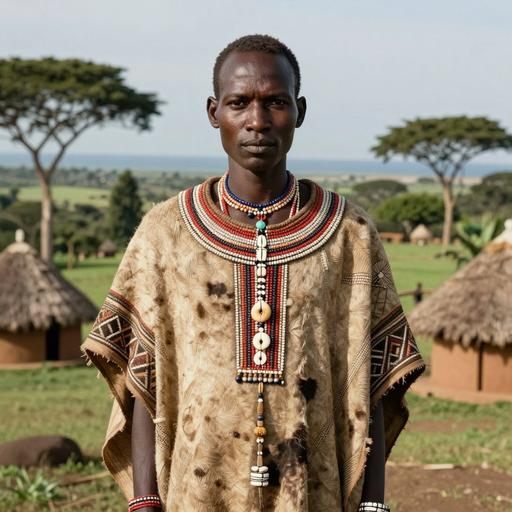
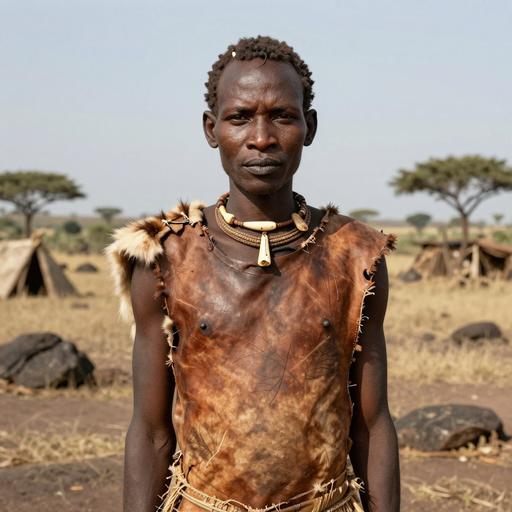
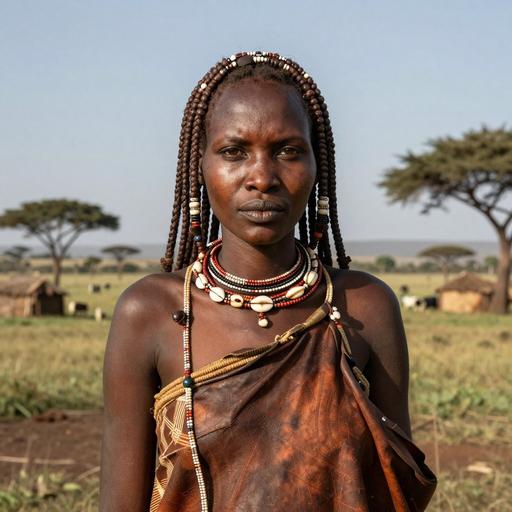
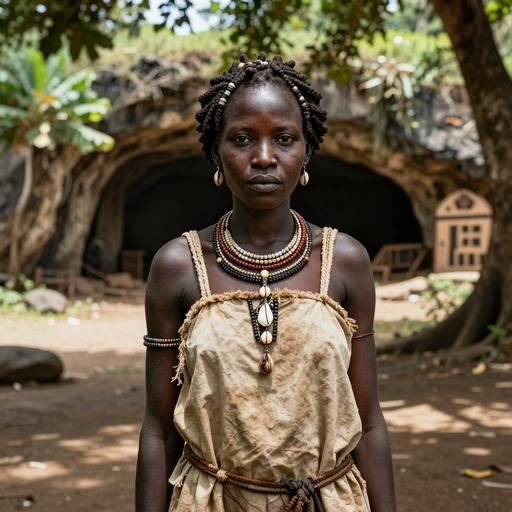
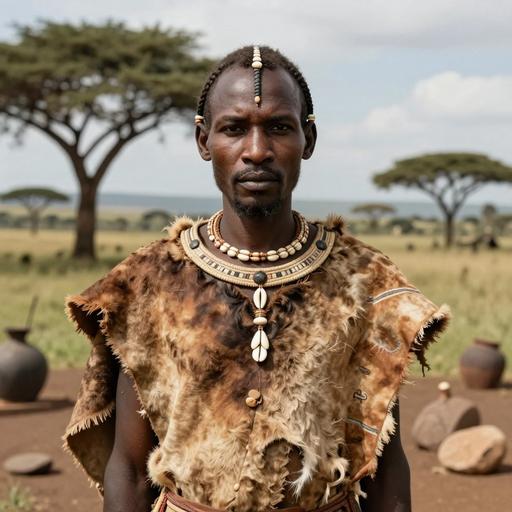
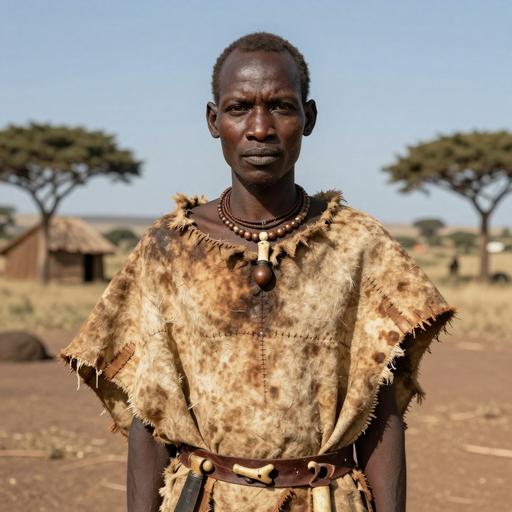
Les portraits sont des illustrations générées par IA. Les libellés d'échantillon et identifiants d'accès désignent les enregistrements de référence.

Portrait Échantillon Pays Époque Date Culture mtDNA Correspondance
Portrait illustratif généré par IA de Bantu individual, Kilifi. Panga ya Saidi, Kenya (1,445-1,626 BCE)
Identifiant d'échantillon : I0595
Kenya Kenya 400 Years Ago 1445 BCE - 1626 BCE Late Swahili L4b2a2 Direct
Portrait illustratif généré par IA de Africa East Ma individual, Kilifi. Panga ya Saidi, Kenya (1,445-1,626 BCE)
Identifiant d'échantillon : I0595
Kenya Medieval East Africa 1445 BCE - 1626 BCE L4b2a2 Direct
Portrait illustratif généré par IA de LSA individual, Victoria Nyanza. Kisumu. Jawuoyo Rockshelter, Kenya (84-211 BCE)
Identifiant d'échantillon : I8808
Kenya Kenya LSA 119-216 calCE (1895±15 BP, PSUAMS-4783) LSA Kenya L4b2a2c Sous-clade
Portrait illustratif généré par IA de Pastoral N individual, Nakuru. Naivasha Burial Groud, Kenya (541-402 BCE)
Identifiant d'échantillon : I8814
Kenya Kenya PastoralN 719-233 calBCE (2400±20 BP, PSUAMS-4784) Pastoral Neolithic L4b2a2b Sous-clade
Portrait illustratif généré par IA de Swahili Coast Civilization individual, Zanzibar. Kuumbi Cave, Tanzania (586-652 CE)
Identifiant d'échantillon : I0589
Tanzania Zanzibar 1300 Years Before Present in Tanzania 586 CE - 652 CE Zanzibar Culture L4b2a2c Sous-clade
Portrait illustratif généré par IA de Africa East Ancient individual, Zanzibar. Kuumbi Cave, Tanzania (586-652 BCE)
Identifiant d'échantillon : I0589
Tanzania Ancient East Africa 586 BCE - 652 BCE L4b2a2c Sous-clade
Portrait illustratif généré par IA de Africa East Ancient individual, Zanzibar. Kuumbi Cave, Tanzania (586-652 BCE)
Identifiant d'échantillon : I0589
Tanzania Ancient East Africa 586 BCE - 652 BCE L4b2a2c Sous-clade
Portrait illustratif généré par IA de Pastoral N Elmenteitan individual, Nakuru. Rigo Cave. GrJh3, Kenya (800-600 BCE)
Identifiant d'échantillon : I8922
Kenya Kenya PastoralN Elmenteitan 541-383 calBCE (2400±15 BP, PSUAMS-4725) Elmenteitan Culture L4b2a2c Sous-clade
Portrait illustratif généré par IA de Pastoral N individual, Lukenya Hill. GvJm 202, Kenya (1,622-1,534 BCE)
Identifiant d'échantillon : LUK001
Kenya Lukenya Hill Pastoral Neolithic in Kenya 1619-1464 calBCE (3320±17) [R_Combine: (3340±23 BP, OxA-37356), (3296±25 BP, OxA-37357)] Lukenya Hill Culture L4b2a2b Sous-clade
LIGNÉE MATERNELLE · ADN ANTIQUE

Carte des preuves de lignées antiques

Suivez les clades parents jusqu'à cette branche et explorez où des porteurs antiques ont été identifiés.

Chargement des observations antiques…

Les marqueurs indiquent des lieux de découvertes archéologiques. Un trait pointillé représente une transition géographique proposée et incertaine entre branches consécutives, appuyée sur plusieurs observations datées ; ce n'est pas un itinéraire exact, un lieu de naissance ni une preuve de descendance directe. Des échantillons de clades parents peuvent appartenir à d'autres branches descendantes. Des lacunes subsistent lorsque les preuves sont insuffisantes. Les dates d'échantillon diffèrent des dates de formation des haplogroupes.

Profil de référence

Carte de répartition des porteurs

Répartition géographique de 9 échantillons d'ADN ancien (porteurs directs et de sous-clade de L4B2A2)

Porteur direct Porteur de sous-clade
Filtre de période
Toutes les périodes
Affichage de tous les échantillons
Profil de référence

Répartition temporelle

Répartition des porteurs selon les périodes archéologiques

Profil de référence

Répartition géographique

Effectifs par pays d'échantillon consigné. Ils reflètent la sélection de référence disponible, pas des fréquences de population.

Profil de référence

Répartition pays × époque

Comparez les effectifs d'échantillons consignés selon les pays et les périodes archéologiques. Sélectionnez une cellule renseignée pour examiner un échantillon.

Données

Données et provenance

Informations sur les sources et qualité des données

Dernière mise à jour 2026-06-14
Score de confiance 50/100
Couverture Low

Source des données

La classification, les dates estimées et le contexte géographique reflètent les données de référence consignées et peuvent évoluer lorsque les éléments sont révisés. La couverture d'échantillons est inégale ; les lieux consignés et les associations archéologiques n'établissent pas une origine personnelle ni une identité culturelle.