Menu
Currency
Ancestry
mtDNA Haplogroup • Maternal Lineage

B4B

mtDNA Haplogroup B4B

~15,000 years ago
East and Southeast Asia
3 subclades
Scroll to explore
Chapter I

The Story

The journey of mtDNA haplogroup B4B

Origins and Evolution

Haplogroup B4B sits as a subclade within mtDNA haplogroup B4, itself a descendant of macro-haplogroup B (a branch of R). Haplogroup B likely arose in East Asia during the Late Pleistocene, and many B4 sublineages diversified during the Late Glacial and early Holocene. As an intermediate clade, B4B represents a branching event in the B4 phylogeny that likely dates to the Last Glacial Maximum or the early post-glacial period (a plausible estimate around ~15 kya), although direct molecular-clock estimates for B4B require targeted whole-mitochondrial sequencing and calibration.

Because B4B is an intermediate and relatively understudied designation in public phylogenies (often reported as part of larger composite labels in databases), its precise defining mutations, age, and internal structure remain incompletely resolved. The best-supported inference from the phylogenetic position is that B4B predates or is contemporaneous with regional Holocene demographic events that shaped East and Southeast Asian maternal diversity.

Subclades (if applicable)

As currently represented in reference trees, B4B may encompass or be ancestral to more derived local lineages that require further characterization. In many mtDNA phylogenies, intermediate nodes such as B4B are observed because sampled complete mitogenomes reveal branching order not apparent from control-region data alone. Where complete mitogenomes have been reported, B4 sublineages (including B4a, B4b, B4c, etc.) show regional specificity; B4B likely behaves similarly, splitting into geographically restricted daughter clades detectable only after denser sequencing of East and Southeast Asian populations.

Geographical Distribution

Based on the broader distribution of haplogroup B4 and published population genetics studies of related subclades, B4B is most plausibly concentrated in East Asia and Mainland/Southeast Asia, with occasional representation among Austronesian-associated island populations. Frequencies are expected to be low to moderate and patchy, reflecting localized maternal lineages rather than continent-wide prevalence. Reported occurrences of nearby B4 subclades in southern China, Taiwan (indigenous groups), the Philippines, and parts of Island Southeast Asia suggest probable hotspots for sampling B4B.

Historical and Cultural Significance

While B4B itself has not been robustly tied to specific archaeological cultures in the way some Y-DNA or well-sampled mtDNA lineages have, reasonable inferences can be made from the distribution of parent and sibling clades:

  • Austronesian expansion (Holocene, ~4–5 kya): several B4 subclades were carried into Island Southeast Asia and Oceania with Austronesian-speaking populations; B4B could represent either a pre-expansion lineage in mainland or insular East Asia or a lineage that contributed to these dispersals at low frequency.
  • Jomon and pre-Neolithic East Asian hunter-gatherers: some B4 derivatives appear in Japanese prehistoric contexts; if B4B or close relatives are found in ancient samples, they can inform on continuity or admixture between Jomon and later arrivals.
  • Neolithic farmer expansions in Southeast Asia: the spread of agriculture and associated demography during the Holocene reshaped maternal gene pools; intermediate clades like B4B may reflect surviving lineages from early Holocene populations or localized founder effects.

Overall, the cultural importance of B4B will become clearer as more ancient and modern complete-mitogenome data are published from targeted regions.

Conclusion

B4B is a phylogenetically informative, but currently understudied, intermediate branch of the B4 maternal lineage. Its likely origin in East to Southeast Asia during the late Pleistocene–early Holocene places it within the time frame of major regional demographic changes (post-glacial recolonization, the Neolithic transition, and later Austronesian dispersals). Definitive statements about its age, distribution, and substructure require expanded sampling and high-quality complete mitogenome sequencing in East and Southeast Asian and Pacific populations.

Key Points

  • Origins and Evolution
  • Subclades (if applicable)
  • Geographical Distribution
  • Historical and Cultural Significance
  • Conclusion
Chapter II

Tree & Relationships

Phylogenetic context and subclades

Evolution Path

This haplogroup's evolutionary journey from its earliest ancestor to the present.

Steps Haplogroup Age Estimate Archaeology Era Time Passed Immediate Descendants Tested Modern Descendants Ancient Connections
1 B4B Current ~15,000 years ago 🏹 Mesolithic 15,000 years 3 832 0
2 B4B'D'E'J 3 853 0
3 B4 ~28,000 years ago 🦴 Paleolithic 28,000 years 4 972 7
4 B4'5 ~40,000 years ago 🦴 Paleolithic 40,000 years 2 1,279 0
5 RA 3 1,296 0
6 R ~55,000 years ago 🦴 Paleolithic 55,000 years 17 17,854 57
7 NA 1 17,854 0
8 N ~60,000 years ago 🦴 Paleolithic 60,000 years 16 20,371 13
9 L3 ~70,000 years ago 🦴 Paleolithic 70,000 years 7 23,542 6
10 L3'4 2 23,581 0
11 L3'4'6 2 23,584 0
12 L2'3'4'6 2 24,475 0
13 L2'3'4'5'6'7 2 24,488 0
14 L1'2'3'4'5'6'7 2 24,903 0
15 L ~160,000 years ago 🦴 Paleolithic 160,000 years 2 25,205 5

Siblings (2)

Other branches from the same parent haplogroup

Chapter III

Where in the World

Geographic distribution and modern presence

Place of Origin

East and Southeast Asia

Modern Distribution

The populations where mtDNA haplogroup B4B'D'E'J is found include:

  1. Southern and coastal East Asian groups (e.g., Han Chinese regional samples)
  2. Indigenous Taiwanese and other Austronesian-speaking groups
  3. Populations in the Philippines and Island Southeast Asia (Indonesia, Malaysia)
  4. Japanese and Koreans (sporadic occurrences in published datasets)
  5. Pacific island populations at low frequency (Micronesia/Polynesia) — where related B4 lineages are present
CHAPTER IV

When in Time

Your haplogroup in the context of human history

~20k years ago

Last Glacial Maximum

Peak of the last ice age, populations isolated

~15k years ago

Haplogroup B4B

Your mtDNA haplogroup emerged in East and Southeast Asia

East and Southeast Asia
~10k years ago

Neolithic Revolution

Agriculture begins, settled communities form

~5k years ago

Bronze Age

Metalworking, writing, and early civilizations

~3k years ago

Iron Age

Iron tools, expanded trade networks

~2k years ago

Classical Antiquity

Greek and Roman civilizations flourish

Present

Present Day

Modern era

Your Haplogroup
Historical Era
Chapter IV-B

Linked Cultures

Ancient cultures associated with mtDNA haplogroup B4B

Cultural Heritage

These ancient cultures have been linked to haplogroup B4B based on matching ancient DNA samples from archaeological excavations. The presence of this haplogroup in these cultures provides insights into the migrations and population movements of populations carrying this haplogroup.

Ancient Beringian Austria_Avar Chinese Paleolithic Lapa do Santo Mesolithic British Mongol Period Tianyuan Culture Trail Creek Culture Umungobi Medieval
Culture assignments are based on archaeological context of ancient DNA samples and may represent regional associations during specific time periods.
Chapter V

Sample Catalog

1 direct carrier and 23 subclade carriers of haplogroup B4B

24 / 24 samples
Portrait Sample Country Era Date Culture mtDNA Match
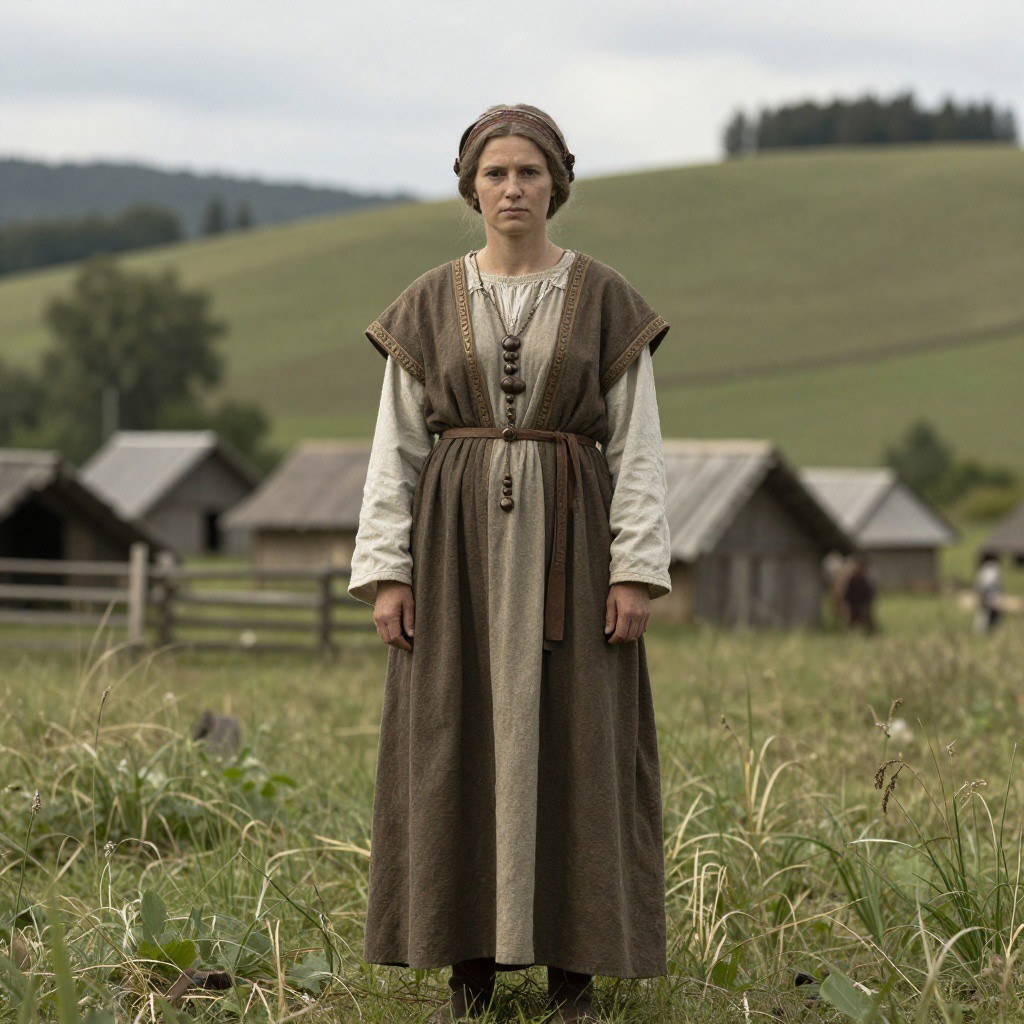
Portrait of ancient individual LEO061 from Austria, dated 650-800 CE
LEO061
Austria Austria Avar 650-800 CE Austria_Avar B4b Direct
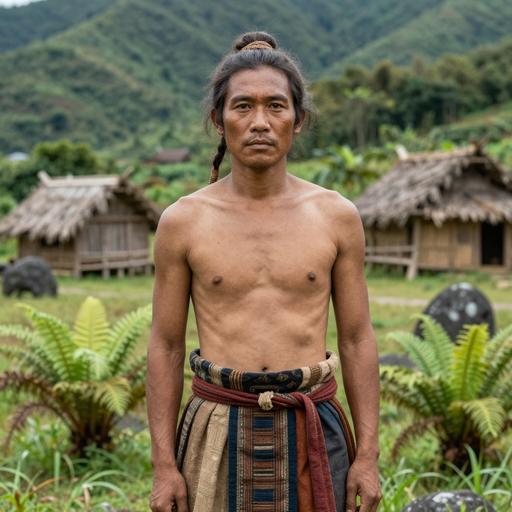
Portrait of ancient individual I15158 from Taiwan, dated 1-800 CE
I15158
Taiwan Iron Age Taiwan 1-800 CE Taiwanese Iron B4b1a2f Downstream
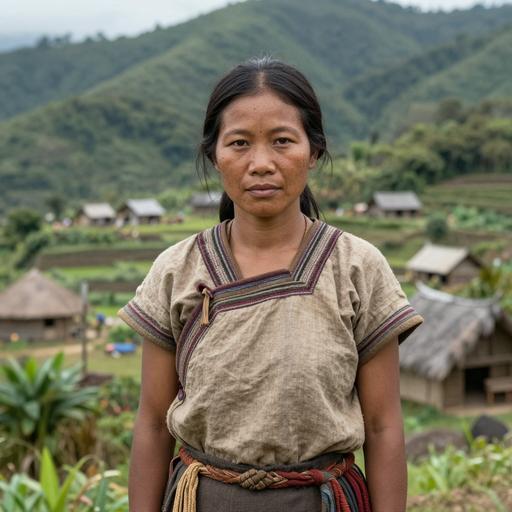
Portrait of ancient individual I3616 from Taiwan, dated 245-378 calCE (1745±20 BP, PSUAMS-7911)
I3616
Taiwan Iron Age Taiwan 245-378 calCE (1745±20 BP, PSUAMS-7911) Taiwanese Iron B4b1a2 Downstream
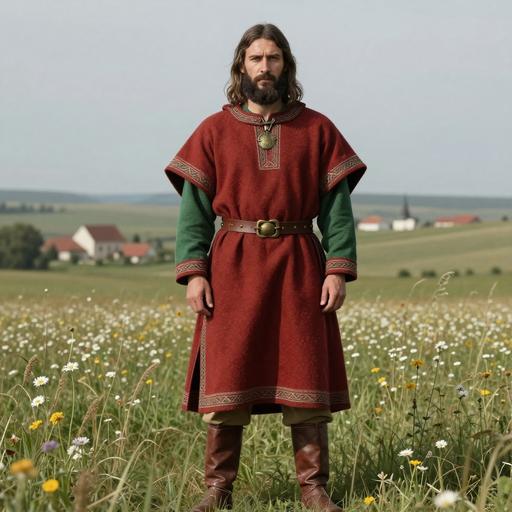
Portrait of ancient individual FGD-4 from Hungary, dated 550-636 calCE (1492±19 BP, DeA-26541)
FGD-4
Hungary Hungary EarlyAvar 550-636 calCE (1492±19 BP, DeA-26541) Early Avar B4b1a3a Downstream
Portrait of ancient individual KUP025 from Hungary, dated 580 CE - 670 CE
KUP025
Hungary Hungary EarlyAvar 580 CE - 670 CE Early Avar B4b1a3a Downstream
Portrait of ancient individual KFP-30a from Hungary, dated 630 CE - 660 CE
KFP-30a
Hungary Hungary EarlyAvar 630 CE - 660 CE Early Avar B4b1a3a Downstream
Portrait of ancient individual LEO081 from Austria, dated 650-800 CE
LEO081
Austria Austria Avar 650-800 CE Austria_Avar B4b1a3a Downstream
Portrait of ancient individual LEO103 from Austria, dated 650-800 CE
LEO103
Austria Austria Avar 650-800 CE Austria_Avar B4b1a3a Downstream
Portrait of ancient individual LEO132 from Austria, dated 650-800 CE
LEO132
Austria Austria Avar 650-800 CE Austria_Avar B4b1a3a Downstream
Portrait of ancient individual LEO153 from Austria, dated 650-800 CE
LEO153
Austria Austria Avar 650-800 CE Austria_Avar B4b1a3a Downstream
Chapter VI

Carrier Distribution Map

Geographic distribution of 24 ancient DNA samples (direct and subclade carriers of B4B)

Direct carrier Subclade carrier
Time Period Filter
All Time Periods
Showing all samples
Chapter VII

Temporal Distribution

Distribution of carriers across archaeological periods

Chapter VIII

Geographic Distribution

Distribution by country of origin (direct and subclade carriers shown by default)

Chapter IX

Country × Era Distribution

Cross-tabulation of carrier countries and archaeological periods (direct and subclade carriers shown by default)

Data

Data & Provenance

Source information and data quality

Last Updated 2026-06-14
Confidence Score 50/100
Coverage Low
Data Source

We use the latest phylotree for MTDNA haplogroup classification and data.