Menu
mtDNA Haplogroup • Maternal Lineage

D4O2

mtDNA Haplogroup D4O2

~12,000 years ago
Northeast Asia
1 subclades
Scroll to explore
Chapter I

The Story

The journey of mtDNA haplogroup D4O2

Origins and Evolution

mtDNA haplogroup D4O2 is a downstream branch of haplogroup D4O, itself a rare offshoot of the widespread East Asian clade D4. Based on phylogenetic placement and available radiocarbon-linked ancient samples, D4O and its subclades likely diversified in Northeast Asia during the early Holocene (~12 kya) as populations recolonized and locally differentiated after the Last Glacial Maximum. D4O2 represents one of these localized maternal lineages that reflects microevolutionary processes — founder effects, drift, and limited migration — acting on small hunter-gatherer and coastal communities in the Russian Far East, northern Japan, and neighboring regions.

Subclades (if applicable)

At present, D4O2 is an intermediate and relatively rare clade, and published datasets contain only sparse, low-frequency occurrences. As a result, documented downstream substructure (named subclades such as D4O2a, etc.) is limited or sample-dependent; targeted sequencing and denser sampling in Northeast Asia may reveal additional internal branches. For now, D4O2 should be treated as a useful marker of local Holocene maternal diversification rather than a deeply split, widely distributed sub-haplogroup.

Geographical Distribution

D4O2 is found at low frequencies across a geographically coherent band of Northeast Asia and adjacent areas. Reported occurrences (modern and ancient) include low-level presence among Han Chinese, Japanese, and Korean samples in some datasets, several indigenous Siberian and Tungusic-speaking groups (e.g., Yakut and Evenk), Ainu and other populations with Jomon/Okhotsk-related ancestry, sporadic hits in Mongolic and Turkic-speaking populations of northeastern Mongolia and Central Asia, and limited ancient Holocene hunter-gatherer contexts from the Russian Far East and northern Japan. These records indicate that D4O2 is most strongly associated with northeastern coastal and inland hunter-gatherer genetic backgrounds but has also been transmitted into later, mixed populations at low frequency.

Historical and Cultural Significance

Although D4O2 is not common enough to be tied to large-scale migrations, it is valuable for reconstructing local demographic histories. Its presence among Ainu-related and Okhotsk-associated contexts supports a scenario of continuity or genetic contribution from early Holocene coastal foragers into later island and coastal groups. Low-frequency occurrences in more widespread East Asian and Central Asian populations reflect gene flow and assimilation of small northern maternal lineages into expanding agricultural and pastoral populations during the Neolithic and later periods. In sum, D4O2 is a marker of regional continuity and fine-scale population structure in Northeast Asia rather than a signature of broad transregional migration.

Conclusion

D4O2 exemplifies how minor mtDNA subclades can illuminate microevolutionary processes in the Holocene: local origin, limited diversification, and low-frequency persistence through admixture and drift. Further high-resolution mitogenome sequencing, especially from ancient remains across the Russian Far East, northern Japan, and neighboring regions, will clarify the internal structure and precise prehistoric movements associated with D4O2.

Key Points

  • Origins and Evolution
  • Subclades (if applicable)
  • Geographical Distribution
  • Historical and Cultural Significance
  • Conclusion
Chapter II

Tree & Relationships

Phylogenetic context and subclades

Evolution Path

This haplogroup's evolutionary journey from its earliest ancestor to the present.

Steps Haplogroup Age Estimate Archaeology Era Time Passed Immediate Descendants Tested Modern Descendants Ancient Connections
1 D4O2 Current ~12,000 years ago 🌾 Neolithic 12,000 years 1 1 0
2 D4O ~12,000 years ago 🌾 Neolithic 12,000 years 2 2 5
3 D4 ~25,000 years ago 🦴 Paleolithic 25,000 years 12 276 19
4 D ~45,000 years ago 🦴 Paleolithic 45,000 years 7 398 137
5 M ~60,000 years ago 🦴 Paleolithic 60,000 years 11 1,200 41
6 L3 ~70,000 years ago 🦴 Paleolithic 70,000 years 11 17,621 6
7 L ~160,000 years ago 🦴 Paleolithic 160,000 years 7 18,987 5

Siblings (1)

Other branches from the same parent haplogroup

Chapter III

Where in the World

Geographic distribution and modern presence

Place of Origin

Northeast Asia

Modern Distribution

The populations where MTDNA haplogroup D4O2 is found include:

  1. Han Chinese, Japanese and Korean populations (low frequency in some datasets)
  2. Indigenous Siberian groups (e.g., Yakut, Evenk and neighboring Tungusic-speaking groups)
  3. Northeast Asian island and coastal groups with Jomon/Okhotsk-related ancestry (e.g., Ainu and related ancient samples)
  4. Mongolic-speaking populations in northeastern Mongolia (low frequency)
  5. Turkic and other Central Asian groups at sporadic, low frequencies
  6. Ancient Holocene hunter-gatherer contexts in the Russian Far East and northern Japan (limited ancient occurrences)
  7. Scattered, low-frequency reports in peripheral East Asian datasets and mixed populations
CHAPTER IV

When in Time

Your haplogroup in the context of human history

~12k years ago

Haplogroup D4O2

Your mtDNA haplogroup emerged in Northeast Asia

Northeast Asia
~10k years ago

Neolithic Revolution

Agriculture begins, settled communities form

~5k years ago

Bronze Age

Metalworking, writing, and early civilizations

~3k years ago

Iron Age

Iron tools, expanded trade networks

~2k years ago

Classical Antiquity

Greek and Roman civilizations flourish

Present

Present Day

Modern era

Your Haplogroup
Historical Era
Chapter IV-B

Linked Cultures

Ancient cultures associated with mtDNA haplogroup D4O2

Cultural Heritage

These ancient cultures have been linked to haplogroup D4O2 based on matching ancient DNA samples from archaeological excavations. The presence of this haplogroup in these cultures provides insights into the migrations and population movements of populations carrying this haplogroup.

Boisman Chinese Neolithic Devil's Cave Culture Dongtalede Culture Late Medieval Mongolian Medieval Kazakh Turkic Nomadic Culture
Culture assignments are based on archaeological context of ancient DNA samples and may represent regional associations during specific time periods.
Chapter V

Sample Catalog

10 subclade carriers of haplogroup D4O2 (no exact D4O2 samples sequenced yet)

10 / 10 samples
Portrait Sample Country Era Date Culture mtDNA Match
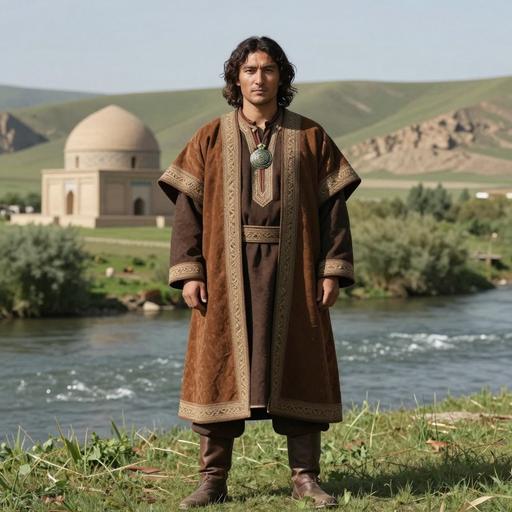
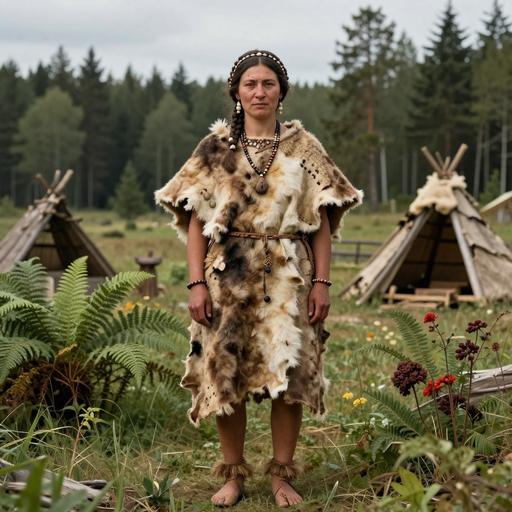
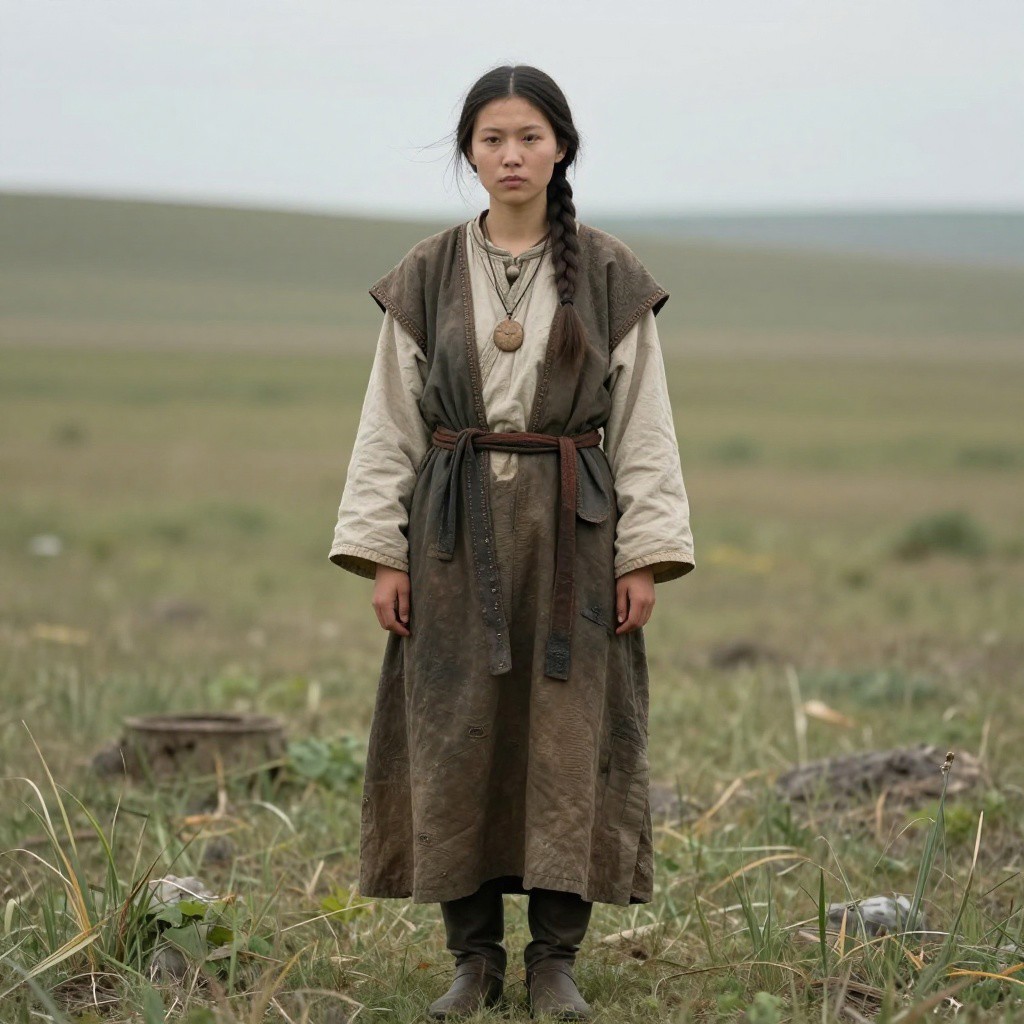
Portrait of ancient individual KLK002 from Kazakhstan, dated 700 CE - 1100 CE
KLK002
Kazakhstan Medieval Kazakhstan 700 CE - 1100 CE Medieval Kazakh D4o2a Downstream
Portrait of ancient individual C1710 from China, dated 755 BCE - 420 BCE
C1710
China Iron Age Dongtalede, Xinjiang, China 755 BCE - 420 BCE Dongtalede Culture D4o2a Downstream
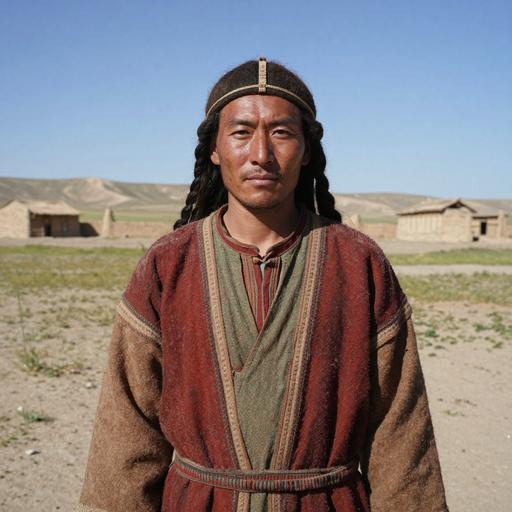
Portrait of ancient individual TSA002 from Mongolia, dated 1000 CE - 1500 CE
TSA002
Mongolia Late Medieval Mongolia 1000 CE - 1500 CE Late Medieval Mongolian D4o2a Downstream
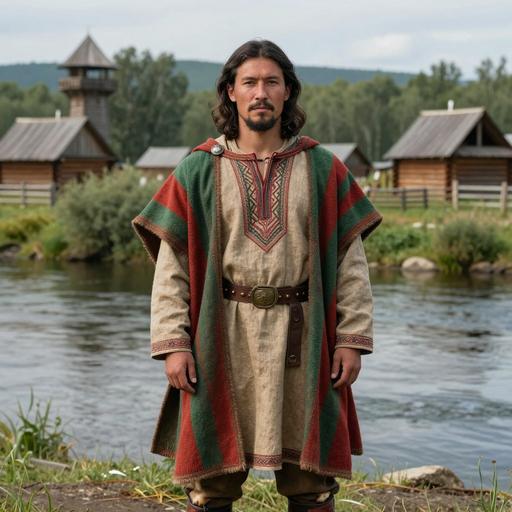
Portrait of ancient individual Yana_young from Russia, dated 1053 CE - 1259 CE
Yana_young
Russia Medieval Yana, Russia 1053 CE - 1259 CE Yana Culture D4o2a2a Downstream
Portrait of ancient individual Yana_young from Russia, dated 1053 CE - 1259 CE
Yana_young
Russia Medieval Yakutia 1053 CE - 1259 CE D4o2a2a Downstream
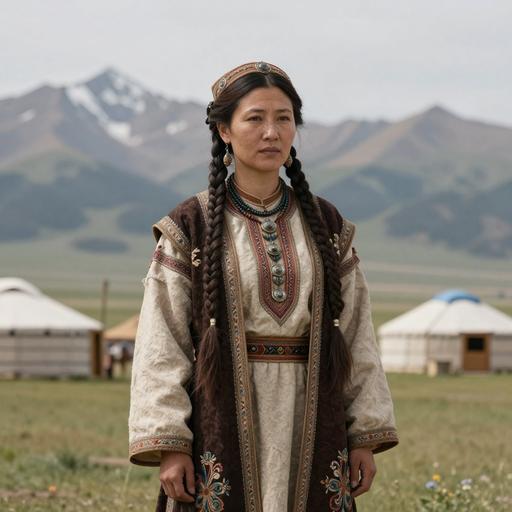
Portrait of ancient individual DA128 from Kazakhstan, dated 1224 CE - 1284 CE
DA128
Kazakhstan Medieval Nomad, Kazakhstan 1224 CE - 1284 CE Turkic Nomadic Culture D4o2a Downstream
Portrait of ancient individual DA128 from Kazakhstan, dated 1224 CE - 1284 CE
DA128
Kazakhstan Medieval Steppe Nomads 1224 CE - 1284 CE D4o2a Downstream
Portrait of ancient individual I14308 from Russia, dated 4841 BCE - 4706 BCE
I14308
Russia Boisman Culture in Russia's Middle Neolithic 4841 BCE - 4706 BCE Boisman D4o2a Downstream
Portrait of ancient individual I14308 from Russia, dated 4841 BCE - 4706 BCE
I14308
Russia Middle Neolithic Mongolia 4841 BCE - 4706 BCE D4o2a Downstream
Portrait of ancient individual I14307 from Russia, dated 4900 BCE - 4650 BCE
I14307
Russia Boisman Culture in Russia's Middle Neolithic 4900 BCE - 4650 BCE Boisman D4o2a Downstream
Chapter VI

Carrier Distribution Map

Geographic distribution of 10 ancient DNA samples (direct and subclade carriers of D4O2)

Subclade carrier
Time Period Filter
All Time Periods
Showing all samples
Chapter VII

Temporal Distribution

Distribution of carriers across archaeological periods

Chapter VIII

Geographic Distribution

Distribution by country of origin (direct and subclade carriers shown by default)

Chapter IX

Country × Era Distribution

Cross-tabulation of carrier countries and archaeological periods (direct and subclade carriers shown by default)

Data

Data & Provenance

Source information and data quality

Last Updated 2026-02-16
Confidence Score 50/100
Coverage Low
Data Source

We use the latest phylotree for MTDNA haplogroup classification and data.