Menu
mtDNA Haplogroup • Maternal Lineage

C1B41A1

mtDNA Haplogroup C1B41A1

~4,000 years ago
South America (Andean / western Amazonia)
0 subclades
Scroll to explore
Chapter I

The Story

The journey of mtDNA haplogroup C1B41A1

Origins and Evolution

mtDNA haplogroup C1B41A1 is a downstream subclade of the C1b-derived lineage C1B41A. Based on its phylogenetic position within the broader Native American mtDNA clade C1 and the geographic patterning of related subclades, C1B41A1 most likely arose in the Andean / western Amazonian interface during the late Holocene (estimated ~3.5 kya). This timing and location are consistent with regional demographic processes in South America where local differentiation of maternal lineages occurred after the initial peopling of the Americas.

Mutation-rate uncertainty and limited sampling of some populations mean that age estimates carry error margins; however, the derived status of C1B41A1 relative to other C1b branches and its concentration in Andean-related contexts support a relatively recent, regionally localized origin compared with deeper Native American founder haplogroups (e.g., A2, B2, C1, D1).

Subclades (if applicable)

As a downstream branch of C1B41A, C1B41A1 presently appears to be a low-diversity, regionally restricted lineage. Available data indicate few or no widely distributed further subclades; many observed instances represent private or locally restricted haplotypes. Where higher-resolution mitogenomes are available, private mutations distinguish local maternal lines, which is typical for late Holocene regional clades that expanded within relatively small, structured populations.

Geographical Distribution

C1B41A1 shows a clear concentration in the central and southern Andes and adjacent western Amazonian lowlands, reflecting both highland and foothill population structure. Modern and ancient DNA recoveries link the haplogroup to:

  • Highland Andean communities (central and southern Andes)
  • Western Amazonian indigenous groups adjacent to the Andes
  • Intermontane valleys and foothill populations that form ecological corridors between highlands and lowlands

Occurrences outside this core area are rare and typically at very low frequency; isolated reports from some northwestern coastal or sub-Arctic North American samples are likely the result of either recent gene flow, historical movements, or sampling artifacts rather than an indication of a primary ancestral distribution.

Historical and Cultural Significance

The regional age and distribution of C1B41A1 imply that it is associated with late Holocene demographic processes in Andean and adjacent Amazonian societies. The lineage may reflect maternal continuity in localized communities through prehistoric and historic periods, and thus is informative for studies of matrilineal continuity, population structure, and migrations within the central-southern Andes. Its identification in at least one archaeological sample supports use of C1B41A1 as a marker of precontact maternal ancestry in the region.

In modern admixed populations of South America, C1B41A1 functions as an indicator of Indigenous maternal ancestry, and in combination with other Native American haplogroups (A2, B2, D1, other C1 subclades) it helps reconstruct population histories including local persistence, upland–lowland interaction, and the effects of post-contact demographic change.

Conclusion

C1B41A1 is a regionally restricted, late-Holocene mtDNA subclade of C1b that highlights localized maternal differentiation in the Andean–western Amazonian interface. While currently low in overall diversity and frequency outside its core area, it is a valuable marker for reconstructing maternal line continuity and regional demographic events in central and southern Andean contexts. Continued mitogenome-level sampling across the Andes and adjacent lowlands will help refine its internal structure, chronology, and exact geographic limits.

Key Points

  • Origins and Evolution
  • Subclades (if applicable)
  • Geographical Distribution
  • Historical and Cultural Significance
  • Conclusion
Chapter II

Tree & Relationships

Phylogenetic context and subclades

Evolution Path

This haplogroup's evolutionary journey from its earliest ancestor to the present.

Steps Haplogroup Age Estimate Archaeology Era Time Passed Immediate Descendants Tested Modern Descendants Ancient Connections
1 C1B41A1 Current ~4,000 years ago 🔶 Bronze Age 3,500 years 0 0 0
2 C1B41A ~4,000 years ago 🔶 Bronze Age 3,500 years 1 0 1
3 C1B41 ~8,000 years ago 🌾 Neolithic 8,000 years 1 0 0
4 C1B4 ~12,000 years ago 🌾 Neolithic 12,000 years 3 24 0
5 C1B ~15,000 years ago 🏹 Mesolithic 15,000 years 5 114 198
6 C1 ~18,000 years ago 🏹 Mesolithic 18,000 years 5 562 5
7 C ~35,000 years ago 🦴 Paleolithic 35,000 years 5 617 75

Subclades (0)

Terminal branch - no known subclades

Chapter III

Where in the World

Geographic distribution and modern presence

Place of Origin

South America (Andean / western Amazonia)

Modern Distribution

The populations where mtDNA haplogroup C1B41A1 is found include:

  1. Indigenous peoples of the central and southern Andes (highland populations)
  2. Western Amazonian indigenous groups (adjacent lowland populations)
  3. Indigenous populations of Andean foothills and intermontane valleys
  4. Ancient precontact archaeological samples from Andean and adjacent western Amazonian contexts
  5. Modern admixed populations in South America retaining Indigenous maternal ancestry
  6. Selected Native North American groups (very rare/low frequency reports in northwest coastal and sub-Arctic samples)
  7. Small, localized communities showing maternal line continuity across prehistoric and historic periods
  8. Isolated or understudied populations where private or low-frequency maternal lineages persist
CHAPTER IV

When in Time

Your haplogroup in the context of human history

~10k years ago

Neolithic Revolution

Agriculture begins, settled communities form

~5k years ago

Bronze Age

Metalworking, writing, and early civilizations

~3k years ago

Haplogroup C1B41A1

Your mtDNA haplogroup emerged in South America (Andean / western Amazonia)

South America (Andean / western Amazonia)
~3k years ago

Iron Age

Iron tools, expanded trade networks

~2k years ago

Classical Antiquity

Greek and Roman civilizations flourish

Present

Present Day

Modern era

Your Haplogroup
Historical Era
Chapter IV-B

Linked Cultures

Ancient cultures associated with mtDNA haplogroup C1B41A1

Cultural Heritage

These ancient cultures have been linked to haplogroup C1B41A1 based on matching ancient DNA samples from archaeological excavations. The presence of this haplogroup in these cultures provides insights into the migrations and population movements of populations carrying this haplogroup.

Island Chumash La Jolla San Nicolas Island Culture
Culture assignments are based on archaeological context of ancient DNA samples and may represent regional associations during specific time periods.
Chapter V

Sample Catalog

1 direct carrier of haplogroup C1B41A1

1 / 1 samples
Portrait Sample Country Era Date Culture mtDNA Match
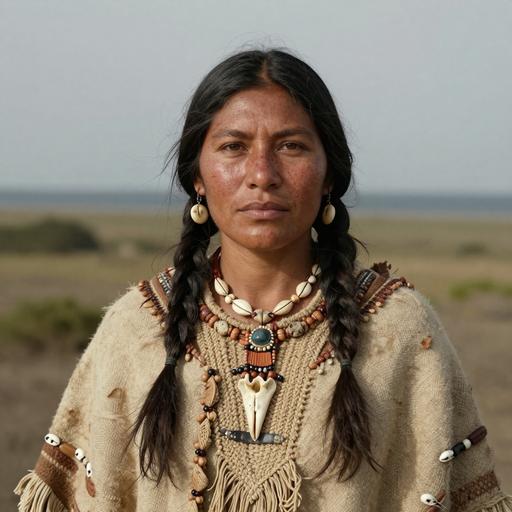
Portrait of ancient individual SN-50 from USA, dated 420 CE - 544 CE
SN-50
USA San Nicolas Island Native American 420 CE - 544 CE San Nicolas Island Culture C1b41a1 Direct
Chapter VI

Carrier Distribution Map

Geographic distribution of 1 ancient DNA sample (direct and subclade carriers of C1B41A1)

Direct carrier
Time Period Filter
All Time Periods
Showing all samples
Chapter VII

Temporal Distribution

Distribution of carriers across archaeological periods

Chapter VIII

Geographic Distribution

Distribution by country of origin (direct and subclade carriers shown by default)

Chapter IX

Country × Era Distribution

Cross-tabulation of carrier countries and archaeological periods (direct and subclade carriers shown by default)

Data

Data & Provenance

Source information and data quality

Last Updated 2026-02-16
Confidence Score 50/100
Coverage Low
Data Source

We use the latest phylotree for MTDNA haplogroup classification and data.