Who the Neanderthals Were
They were not primitive. They were not brutish. They were human—in every way that matters.
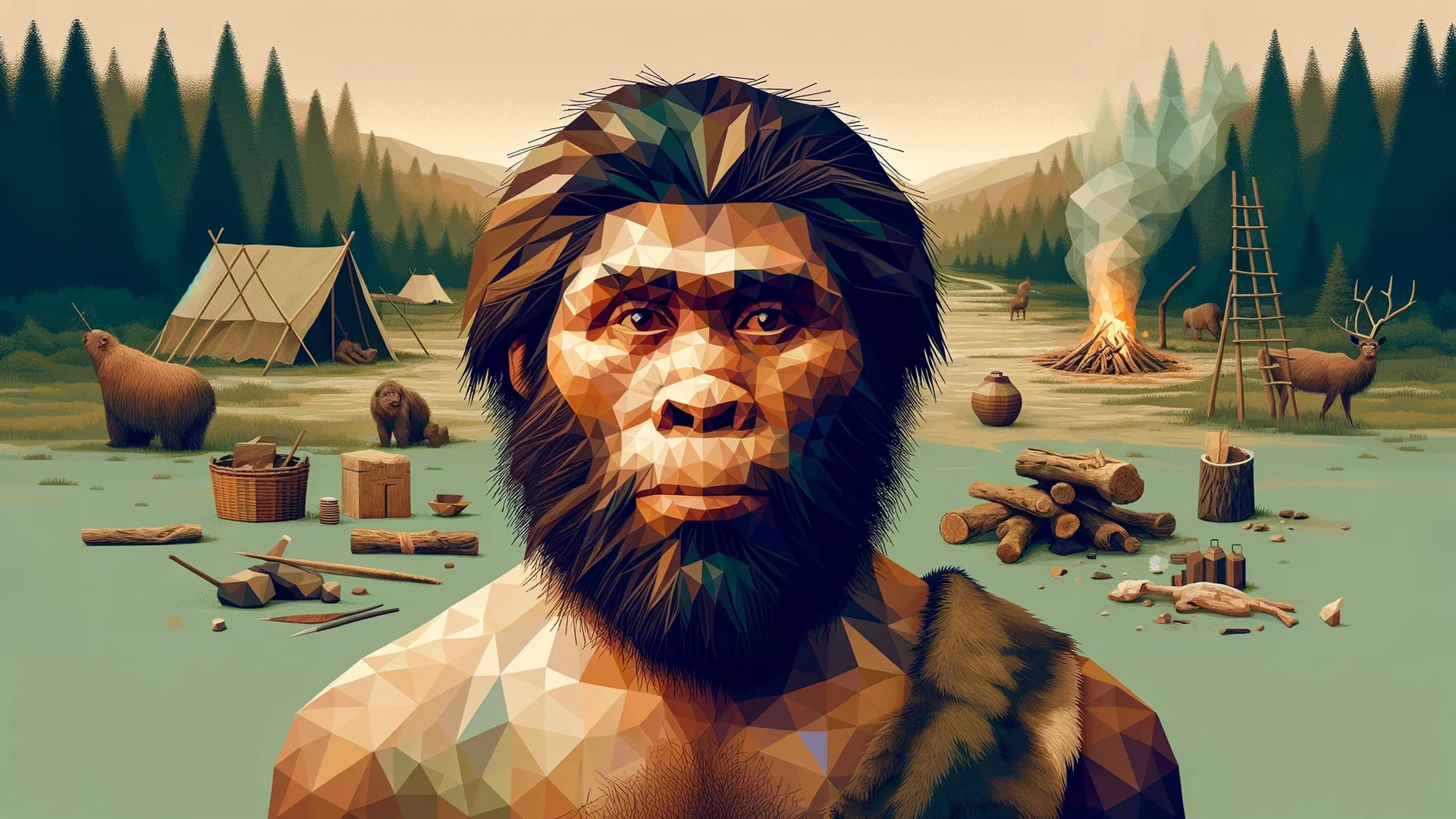
For over 300,000 years, Neanderthals inhabited the vast landscapes of Europe and western Asia. They endured ice ages that would have destroyed lesser beings. They built shelters, controlled fire, and crafted tools with precision that still astonishes archaeologists today.
They buried their dead with flowers. They cared for their sick and elderly—bones show individuals who survived severe injuries, healed and fed by their families for years. They made jewelry, painted caves, and likely spoke a language as complex as our own.
Their brains were larger than ours. Their bodies, shaped by millennia of adaptation, were built for survival in the harshest conditions on Earth. They were not our inferiors. They were our kin.
"They buried their dead. They cared for their sick. They were human."
Tool-Makers
Masters of stone and bone, Neanderthals created sophisticated tools and invented the first known adhesives—birch tar pitch—40,000 years before modern humans achieved the same.
Caregivers
Archaeological evidence shows Neanderthals who survived devastating injuries, cared for by their communities. This was not survival of the fittest—it was compassion that kept them alive.
Survivors
They thrived through ice ages that covered Europe in glaciers. Their bodies adapted to cold, their minds to scarcity. What they learned to survive, they passed on—to their children, and eventually, to ours.