Menu
Skip to main content

What Is Deep Ancestry?

Deep Ancestry explores ancestry at its deepest layers—the ancient populations, migrations, and genetic continuity that shaped humanity long before the emergence of modern nations or cultural identities.

This is not modern ethnicity. This is not recent genealogy. Deep Ancestry reconstructs the genetic inheritance that has been passed down across thousands of generations, connecting you to the foundational movements of human history.

Through advanced chromosomal segment analysis, we identify genetic similarities between your DNA and authenticated ancient samples spanning 12,000 years—from the earliest farmers to classical civilizations to the populations of the modern era.
A Different Way of Seeing Ancestry

Traditional ancestry asks where you come from. Deep Ancestry asks something different: how did humanity form, and what role do those ancient formations play in who you are today?

This shift in perspective moves beyond identity labels toward something more fundamental—the shared origins that connect all of us, regardless of where we live now or what we call ourselves.

Beyond Modern Borders

The populations that shaped your genome existed long before any modern nation-state. Their movements crossed territories that would not be named for thousands of years.

Before Cultural Identity

Deep Ancestry traces inheritance that predates the cultures, languages, and traditions we associate with ancestry today. It reveals the genetic substrate beneath all later developments.

What Deep Ancestry Reveals

  • Ancient population layers within you—the genetic signatures of hunter-gatherers, early farmers, Bronze Age migrants, and classical civilizations that contributed to your genome.
  • The time depth of your ancestry—connections that span not centuries but millennia, revealing how ancient your genetic inheritance truly is.
  • How migrations and mixing shaped your genome—the movements of populations across continents that combined to create the genetic patterns you carry today.
  • Shared human inheritance beneath surface differences—the common ancestry that connects people who may appear very different in the modern world.

"This is not a story of difference. It is a story of convergence."

The Deep Ancestry Reports

Deep Ancestry comprises three interconnected reports, each exploring a different layer of time. Together, they form a cohesive experience—designed to be read as a journey rather than consumed quickly.

Prehistoric
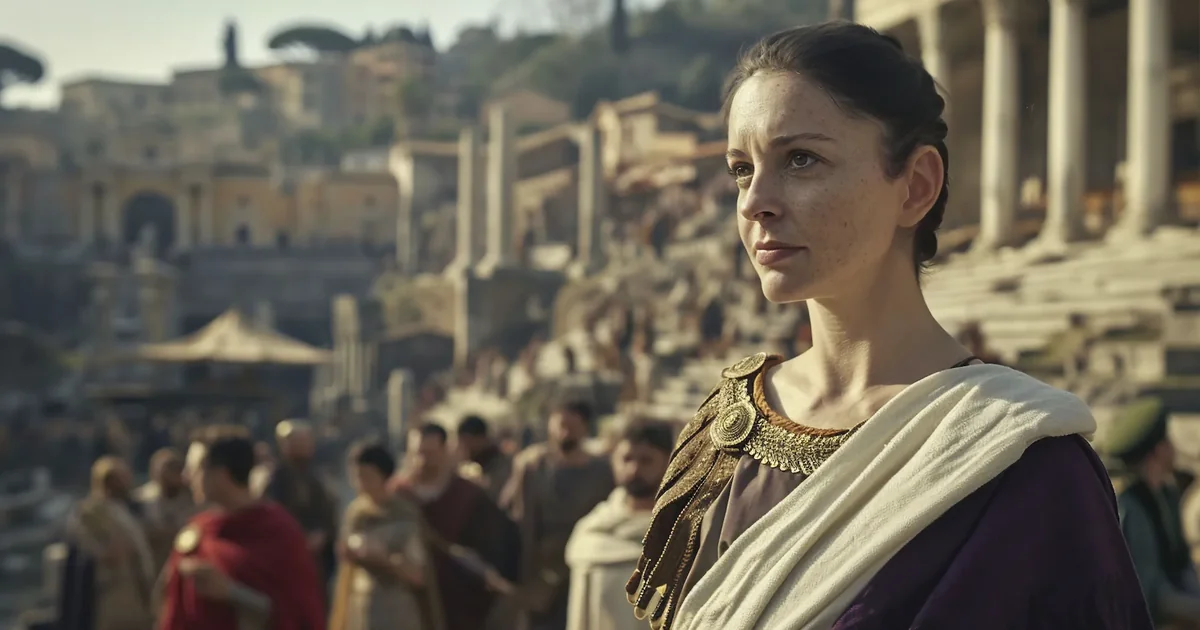
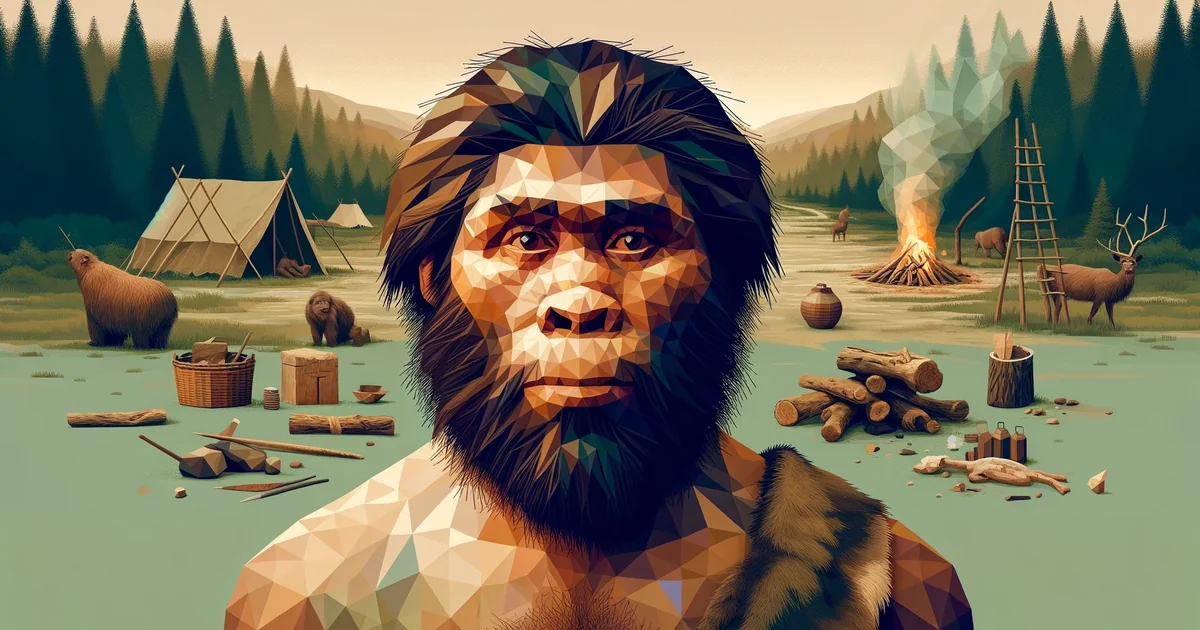
Deep Prehistoric Ancestry
10,000 BC – 0 AD
Ancient
Deep Ancient Ancestry
1 AD – 1,900 AD
Historic
Modern Genetic Connections
20th Century

Each report examines your genetic connections to authenticated ancient samples from that era, organized by time period, geographic region, and individual archaeological sample. The three reports work together to provide a complete perspective on your deep genetic history.

How to Read Deep Ancestry

Understanding deep ancestry requires a different mindset than traditional ancestry testing. These insights are best approached with patience and perspective.

  • Deep ancestry is probabilistic. Results reflect statistical similarities between your DNA segments and ancient samples—not direct lineage or precise percentages of ancestry.
  • Ancient populations are models, not identities. The populations referenced in your report are scientific reconstructions based on available archaeological evidence. They represent patterns, not fixed groups.
  • Results reflect shared human history. Connections to distant populations do not make you a member of those groups—they reveal the interconnected nature of human genetic history.
  • Updates may refine, not replace, understanding. As new ancient samples are discovered and methods improve, your results may evolve. This is the nature of ongoing scientific research.

How Chromosomal Segment Analysis Works

Deep Ancestry analyzes your DNA chromosome by chromosome, comparing short segments of your genome against ancient population signatures. Each segment is individually assessed, producing a granular map of your ancestral composition.

1

Phasing

Your DNA is separated into maternal and paternal components (haplotypes) using statistical phasing algorithms.

2

Segmentation

Each haplotype is divided into short overlapping segments for granular, region-by-region comparison.

3

Population Comparison

Every segment is individually compared to ancient population signatures, calculating the probability of similarity to each reference group.

4

Smoothing & Assignment

A smoothing algorithm optimizes segment assignments, reducing statistical noise to produce reliable ancestry proportions per chromosome region.

Chromosome Phasing & Segment Assignment
Raw DNA
Maternal
Paternal
Assigned
WHG EHG Farmer Steppe Other
Maternal + Paternal Haplotype Separation
Segment-Level Granular Resolution
Statistical Noise Reduction

Why Deep Ancestry Matters

In a world often defined by division, Deep Ancestry offers something different: perspective. It reveals that the boundaries we draw between peoples are recent inventions—that beneath the surface, we share far more than we realize.

Deep Ancestry is not about claiming membership in ancient groups. It is about understanding that identity is a long, continuous process—one that began long before any of us were born and will continue long after.

When you look deep enough, ancestry stops being about where you come from—and becomes about how we all came to be.

Perspectives

I expected to learn about my ancestors. Instead, I learned something about humanity. The connections run deeper than I imagined—we all carry traces of the same ancient journeys. — Reflection from a Deep Ancestry user

What struck me most was the humility it inspires. These results don't make me feel unique—they make me feel connected. Part of something much older and larger than myself. — Reflection from a Deep Ancestry user

Questions

Traditional ancestry tests typically estimate your connections to modern reference populations—people living today in specific regions. Deep Ancestry takes a fundamentally different approach: it compares your DNA directly to authenticated ancient samples from archaeological excavations, spanning 12,000 years of human history. This reveals genetic connections that predate modern populations entirely.
Not necessarily. The analysis identifies genetic similarities—shared DNA patterns between you and ancient populations. These similarities indicate that you share ancestry with populations similar to those ancient individuals, but do not prove direct descent from any specific person. Human genetic history is a vast interconnected web, not a simple family tree.
The percentages in Deep Ancestry reflect the proportion of your DNA segments that show statistical similarity to various ancient populations. They are not precise measures of ancestry—they are probabilistic estimates based on the available ancient DNA reference samples. As more ancient samples are discovered, these estimates may shift. This is the nature of scientific research in archaeogenetics.
Human populations have been migrating and mixing for tens of thousands of years. Genetic material from ancient populations has been dispersed globally through countless generations. You may share DNA with ancient Siberian populations even if your recent family history is entirely European, because ancient migrations carried that genetic material across continents long ago. These connections reflect shared deep ancestry, not recent family history.
Our methodology separates your DNA into its maternal and paternal components through a process called phasing. Each component is then divided into short segments, which are individually compared to our database of ancient samples. For each segment, we calculate the probability of similarity to various ancient populations. A smoothing algorithm then optimizes these assignments to reduce statistical noise and provide more reliable results.
Yes, they may. As new ancient DNA samples are discovered and published, our reference database grows. Methodological improvements also continue. When significant updates occur, your results are recalculated at no additional cost. This ongoing refinement is a feature, not a flaw—it reflects the living, evolving nature of scientific research.
Begin

When You Look Deep Enough, Ancestry Stops Being About Where You Come From—And Becomes About How We All Came to Be

Three comprehensive reports · 12,000 years of human history · Updated as science advances

Deep Ancestry Analysis 36.00€ One-time payment - Lifetime access
Three Comprehensive Reports
12,000 Years of Human History
2,500+ Ancient Sample Database
Chromosomal Segment Analysis
Updated as Science Advances
Lifetime Access & Free Updates
Priority Customer Support

One payment. Lifetime access. Free updates as new research becomes available.

Secure payment · GDPR compliant · Your data stays yours