The Story
The journey of mtDNA haplogroup C4A1A3
Origins and Evolution
mtDNA haplogroup C4A1A3 is a downstream subclade of C4A1A, itself a branch of the broader C4 lineage that has deep roots in northern Eurasia. The parent clade C4A1A is estimated to have arisen in northeastern Asia / Siberia during the early to mid-Holocene (on the order of ~9 kya). C4A1A3 represents a later, more regionally restricted split from that lineage, likely forming in the mid-to-late Holocene (roughly within the last ~3–6 kya) as populations in Siberia and adjacent steppe zones diversified.
As a downstream subclade, C4A1A3 is defined by one or more derived mutations nested within the diagnostic mutations of C4A1A. Its appearance and preservation in modern and ancient samples reflect local demographic histories in northern Asia, including continuity among hunter-gatherer groups, incorporation into Bronze Age steppe-related populations, and later spread with historic-era nomadic movements.
Subclades
C4A1A3 sits under C4A1A; sister subclades within C4A1A include other defined branches (e.g., C4A1A1, C4A1A2) that show similar northern Asian distributions but distinct geographic and temporal patterns. Because C4 lineages are relatively diverse across Siberia and adjacent regions, subclades like C4A1A3 often reflect fine-scale regional differentiation and founder effects in small, mobile populations.
Geographical Distribution
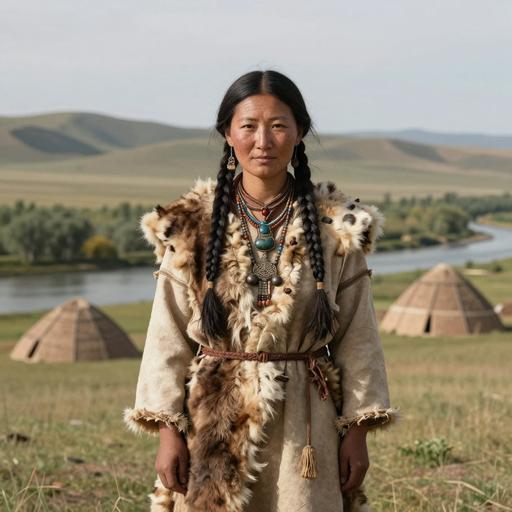
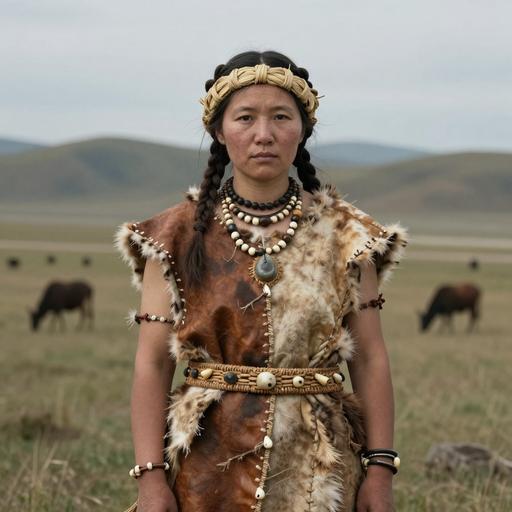
C4A1A3 is principally a northern Asian/Siberian lineage. Contemporary occurrences are concentrated among indigenous Siberian peoples (for example Yakut, Evenk, Even, and related groups) and among some Mongolic- and Tungusic-speaking populations (e.g., Buryat, some Mongolian groups). It is present at lower frequency or sporadically in neighboring Central Asian highland groups (Tuvan, Altaian) and occasionally observed in northeast Asian populations (northern Han, rare Korean or Japanese samples) and in Beringia-adjacent Arctic groups (Koryak, Chukchi). Ancient DNA studies identify C4-lineage continuity in Holocene Lake Baikal and other Siberian contexts, and C4A1A-derived lineages have been retrieved from multiple Holocene and Bronze Age archaeological samples, consistent with long-term regional persistence.
Historical and Cultural Significance
C4A1A3's pattern reflects demographic processes common to northern Eurasia: long-term survival of maternal lineages in small mobile populations, local diversification during the Holocene, and incorporation into broader movements across the Eurasian steppe during the Bronze and Iron Ages. The lineage is informative for studies of Siberian population continuity and for tracing maternal ancestry among Tungusic, Mongolic, Turkic, and some Paleo-Siberian groups. While not a marker of any single large-scale migration (unlike some steppe-associated lineages), its presence in Bronze Age and later contexts links it to the complex admixture and mobility that characterize prehistoric and historic northern Asia.
Conclusion
mtDNA haplogroup C4A1A3 is a regionally important maternal subclade of C4A1A, reflecting mid-to-late Holocene diversification in northeastern Asia and Siberia. Its concentration among Siberian, Mongolic and Tungusic-speaking populations and detection in Holocene archaeological contexts make it a useful marker for reconstructing local maternal demographic history and the continuity of northern Asian maternal lineages through the Holocene and into historical times.
Key Points
- Origins and Evolution
- Subclades
- Geographical Distribution
- Historical and Cultural Significance
- Conclusion