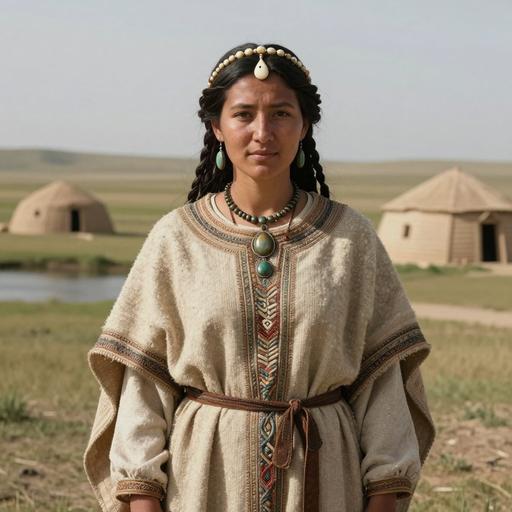
The Story
The journey of mtDNA haplogroup C4A1A4A
Origins and Evolution
mtDNA haplogroup C4A1A4A is a derived subclade nested within C4A1A4, itself part of the broader C4 branch of macro-haplogroup C. Haplogroup C4 and its subclades are broadly characteristic of northern Eurasia and Beringia; many C4 lineages have deep Holocene and Late Pleistocene histories in Siberia. C4A1A4A most likely differentiated from its parent C4A1A4 in northeastern Asia or the Lake Baikal–Sayan region during the late Holocene (roughly the last 3,000 years), reflecting local diversification of maternal lineages after Bronze Age population movements and regional demographic processes.
Because it is a relatively deep but regionally restricted subclade, C4A1A4A shows the pattern typical of many northern Asian mtDNA lineages: persistence at low to moderate frequency in multiple neighboring ethnolinguistic groups, with occasional spillover into adjacent East Asian and Beringian populations through contact and migration.
Subclades (if applicable)
At present, C4A1A4A is known as a terminal or near-terminal subclade in published and curated datasets and appears to have limited internal branching in available sample sets. Where further downstream diversity exists, it has been detected at very low frequency and has not yet been widely represented in public phylogenies. Future sampling in under-studied Siberian and adjacent populations may reveal additional sublineages, but current evidence indicates a small, regionally focused clade rather than a widely diverse haplogroup.
Geographical Distribution
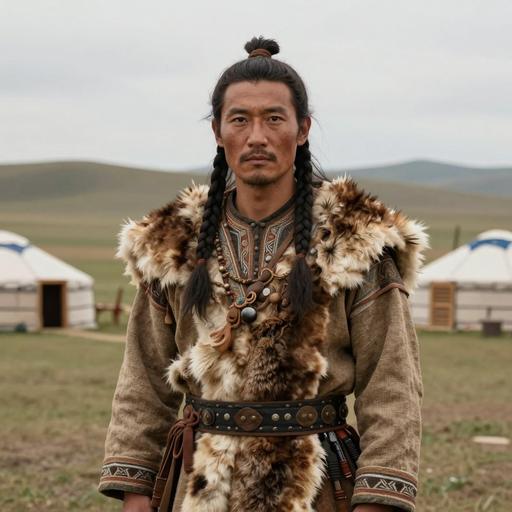
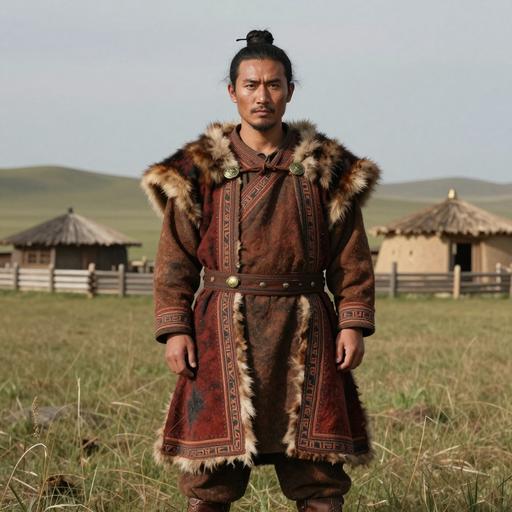
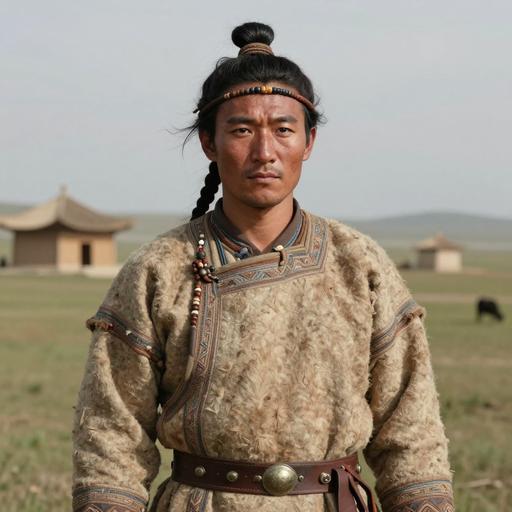
C4A1A4A is primarily a northeastern Asian/Siberian lineage in both modern and ancient DNA datasets. It is observed at low-to-moderate frequency among indigenous Siberian groups (Yakut, Evenk, Even, Nenets), in Mongolic and Tungusic-speaking populations (Buryat, Mongolian, Evens), and in some highland Central Asian groups (Tuvan, Altai). Occasional occurrences have been reported in northern East Asian samples (northern Han Chinese, rare Korean or Japanese samples) and among Beringia-adjacent peoples (Koryak, Chukchi, scattered Aleut or Alaskan Native samples). Archaeologically, related C4 lineages and some representatives of C4A1A4/C4A1A4A have been recovered from Late Holocene and Bronze–Iron Age contexts in the Lake Baikal region and other Siberian sites, supporting a multi-millennial presence in the region.
Historical and Cultural Significance
While mtDNA lineages alone cannot specify cultural identity, the distribution and timing of C4A1A4A are consistent with late Holocene regional continuity with episodes of contact and admixture. The clade's appearance and diversification coincides with periods of Bronze Age cultural change in southern Siberia (for example Okunevo and contemporaneous steppe interactions) and later Iron Age mobility (Xiongnu-era and later steppe expansions), suggesting that the lineage spread or persisted through a combination of local continuity and intergroup contact. In modern ethnolinguistic terms, C4A1A4A is most often found among populations with Tungusic, Mongolic, and Turkic affiliations, reflecting complex histories of marriage networks, female-mediated gene flow, and assimilation in northern and central Eurasia.
Co-occurrence patterns in population studies often show C4-derived maternal lineages pairing with paternal haplogroups common in northern Eurasia, such as Y-DNA N1c and C2 (C-M217), but these are population-level patterns rather than lineage-level dependencies.
Conclusion
C4A1A4A represents a regionally focused maternal lineage that arose in northeastern Asia / Siberia during the late Holocene and has persisted at low to moderate frequency among several Siberian, Mongolic, Tungusic, and adjacent populations. Its distribution in both modern and ancient samples highlights long-term maternal continuity in northern Asia combined with pulses of contact and migration during the Bronze and Iron Ages. Continued sampling of both modern populations and archaeological remains in under-sampled parts of Siberia and northeastern Asia will refine the phylogeny and clarify the substructure and demographic history of C4A1A4A.
Key Points
- Origins and Evolution
- Subclades (if applicable)
- Geographical Distribution
- Historical and Cultural Significance
- Conclusion