The Story
The journey of mtDNA haplogroup K1a4
Origins and Evolution
mtDNA haplogroup K1a4 is a downstream branch of K1a, itself a lineage within haplogroup K (which derives from U8b). Haplogroup K is strongly associated with early Neolithic expansions from the Near East into Europe, and K1a4 fits that broader pattern: phylogenetic placement and coalescence estimates place K1a4 as a mid-Holocene lineage that most likely originated in the Near East or Anatolia roughly ~6–9 kya (we use ~7 kya as a central estimate). Its emergence postdates the Last Glacial Maximum and coincides with the period of Neolithic demic diffusion when Early Farmers moved into Europe and mixed with local hunter-gatherer groups.
Ancient DNA studies that investigate Neolithic farmer remains and later European contexts regularly recover multiple K-derived lineages, and K1a4-like haplotypes have been observed in both ancient and modern datasets. These observations support a scenario where K1a4 branched from the K1a stem within the farming-associated mitochondrial gene pool and subsequently dispersed with human migrations and local demographic processes.
Subclades
As an intermediate clade, K1a4 can itself give rise to smaller, geographically restricted sub-branches. In modern and ancient sequencing datasets K1a4 sometimes subdivides into minor lineages (reported in the literature as K1a4a, K1a4b, etc., in community phylogenies), but these daughter clades are typically low-frequency and regionally localized. The resolution and naming of those subclades depends on sampling density and full mitochondrial genome data; many reported branches remain rare and are best interpreted as population-specific lineages derived from the K1a4 root.
Geographical Distribution
K1a4 is most frequently observed in Southern Europe and the Near East, with lower frequencies extending into Western and parts of Eastern Europe. Modern occurrences are recorded among a variety of populations: southern European groups (Italian, Iberian, Greek, Balkan), some Anatolian and Levantine groups, and sporadically in Ashkenazi and other Jewish maternal lineages. The distribution pattern is consistent with a Near Eastern origin followed by Neolithic dispersal into Europe and subsequent local drift and founder effects.
K1a4 also appears at low frequencies in later archaeological contexts (Bronze Age and later) and in modern populations outside Eurasia as a result of historical migrations (e.g., into the Americas in historical periods).
Historical and Cultural Significance
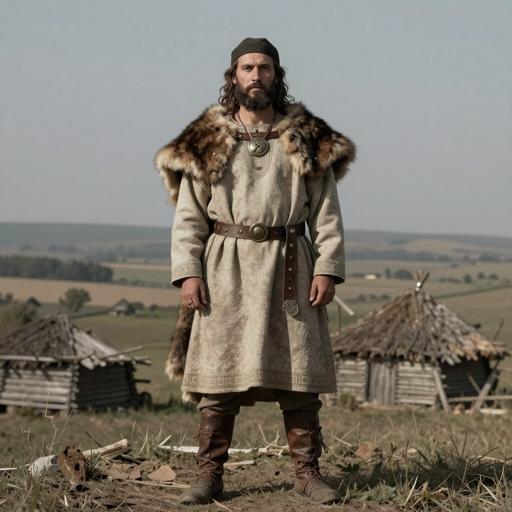
Because of its timing and phylogenetic associations, K1a4 is best interpreted as part of the maternal signature of Neolithic farming populations that transformed the demographic landscape of Europe. It is not exclusive to any single archaeological culture, but it occurs within contexts tied to early farming expansions (e.g., LBK-related and Cardial/Impressed Ware horizons) and persists into later cultural complexes. K1a4 is sometimes found in individuals associated with post-Neolithic phenomena (for example, Bell Beaker-associated burials), reflecting the long-term survival and geographic movement of maternal lineages.
In modern population genetics, K1a4 contributes to reconstruction of maternal ancestry, helping differentiate lineages of Near Eastern farmer origin from indigenous European hunter-gatherer mtDNA (such as U5). Its presence in some Jewish communities is part of the broader observation that multiple distinct mtDNA lineages of Near Eastern origin are present among Jewish maternal pools, though K1a4 is not among the highest-frequency founder clades in those populations.
Conclusion
mtDNA K1a4 is an informative intermediate maternal lineage that connects the Neolithic-era expansion of haplogroup K from the Near East into diverse European contexts. It is generally low-to-moderate in frequency, regionally variable, and most useful when combined with higher-resolution mitogenome data and archaeological context for tracing maternal ancestry and migration patterns. Continued sampling of whole mitochondrial genomes in underrepresented regions will refine the internal branching of K1a4 and improve geographic and temporal resolution of its dispersal history.
Key Points
- Origins and Evolution
- Subclades
- Geographical Distribution
- Historical and Cultural Significance
- Conclusion