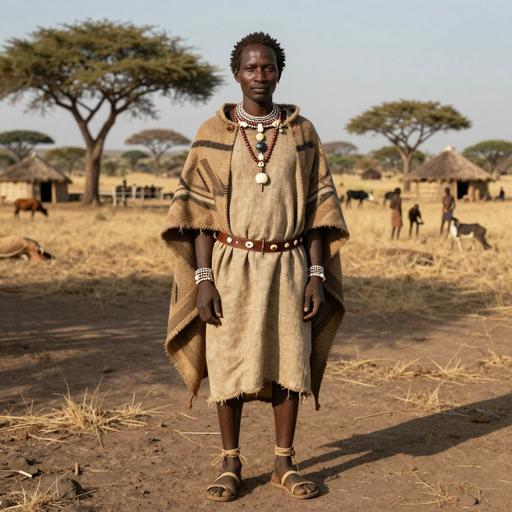
The Story
The journey of mtDNA haplogroup L0K1A2
Origins and Evolution
mtDNA haplogroup L0K1A2 is a downstream branch of L0K1A, itself part of the broader L0-K clade that includes some of the deepest maternal lineages found in southern African forager populations. Given the parent haplogroup L0K1A has been estimated to arise around ~35 kya in southern Africa, L0K1A2 is best interpreted as a later splitting lineage that most likely diversified locally during the terminal Pleistocene to early Holocene (order of ~10–15 kya). This time frame is consistent with continuing regional differentiation among Later Stone Age hunter‑gatherer groups following climatic and ecological shifts at the Pleistocene–Holocene transition.
Genetically, L0K1A2 carries the defining mutations of L0K1A together with additional private substitutions that define the A2 subbranch. Like many L0 clades, it shows deep coalescence times and low levels of hyperexpansion, indicating long‑term persistence in relatively small, structured forager populations rather than a rapid continent‑wide spread.
Subclades (if applicable)
At present, published data and public mtDNA databases show limited internal resolution for L0K1A2; a few sequence clusters have been reported as distinct haplotypes within L0K1A2 but formal and widely adopted subclade labels (for example L0K1A2a, L0K1A2b) are not yet well established in the literature. Future ancient DNA sampling and deeper full mitogenome sequencing of contemporary Khoe‑San and neighboring groups will be necessary to resolve internal structure, estimate subclade ages more precisely, and map microgeographic differentiation.
Geographical Distribution
The principal geographic center of L0K1A2 is southern Africa, where the haplogroup reaches its highest frequencies among Khoe‑San and other Later Stone Age forager communities. Outside that core area, L0K1A2 is observed at low to very low frequency in nearby populations due to gene flow and historical admixture:
- Present at low to moderate frequencies in some Bantu‑speaking groups of southern Africa as a result of interaction and maternal admixture over the last few thousand years.
- Occasional low‑frequency reports from East and Central African forager groups, consistent with episodic contact or shared deep ancestry among eastern and southern African hunter‑gatherers.
- Very rare occurrences in African‑descended populations in the Americas, reflecting transatlantic admixture from southern African lineages in the historical era.
- Sporadic, low‑frequency detections in North Africa and the Near East that likely reflect historical movements and recent admixture rather than primary range.
Ancient DNA evidence presently includes at least one archaeological individual assigned to the broader L0K1A clade or sublineages, supporting continuity of related maternal lineages in southern African Later Stone Age contexts.
Historical and Cultural Significance
L0K1A2 is primarily informative for studies of southern African population history. Its distribution and antiquity underscore long‑term maternal continuity among Khoe‑San and associated forager groups through the Late Pleistocene and Holocene. Because it remains largely localized, L0K1A2 is a useful marker for identifying maternal ancestry components tied to indigenous southern African foragers in both modern and ancient individuals.
The haplogroup also documents the demographic impacts of later processes: low‑level introgression into expanding Bantu agro‑pastoralist populations during the last few millennia, and the forced movements of peoples during the transatlantic slave trade that have left traces of African maternal lineages in the Americas. However, L0K1A2 does not show the geographic breadth seen in some later, expanding maternal clades and therefore acts as a tracer of regional continuity rather than pan‑African migration.
Conclusion
L0K1A2 represents a regional, deep‑branching maternal lineage centered on southern Africa with a time depth in the terminal Pleistocene to early Holocene. It is most characteristic of Khoe‑San and Later Stone Age forager groups, with limited dispersal into neighboring populations through historical admixture. Improved mitogenome sampling and ancient DNA from southern African archaeological contexts will refine its internal structure and provide tighter age estimates, but current evidence positions L0K1A2 as an important marker of long‑term maternal ancestry in southern Africa.
Key Points
- Origins and Evolution
- Subclades (if applicable)
- Geographical Distribution
- Historical and Cultural Significance
- Conclusion