Menu
mtDNA Haplogroup • Maternal Lineage

T1A1

mtDNA Haplogroup T1A1

~7,000 years ago
Near East
10 subclades
Scroll to explore
Chapter I

The Story

The journey of mtDNA haplogroup T1A1

Origins and Evolution

T1A1 is a subclade of mtDNA haplogroup T1A, which itself derives from haplogroup T1. The parent clade T1A has been associated with early Neolithic expansions out of the Near East; T1A1 most likely arose after the initial T1A diversification, plausibly in the Near East or adjacent regions during the later part of the early Neolithic (several thousand years after the initial farmer dispersals). Its time depth is therefore expected to be younger than the estimated ~9 kya origin of T1A and is consistent with a mid- to late-Neolithic age for a daughter lineage.

Mitochondrial lineages like T1A1 spread primarily through female-mediated demographic processes — migration of farming communities, local admixture with hunter-gatherers, and later historical population movements (trade, imperial expansions, diaspora communities). Ancient DNA recoveries and modern population surveys place T1A1 within that broader Near Eastern–Mediterranean maternal genetic landscape.

Subclades (if applicable)

T1A1 may contain further internal branches identifiable by specific control-region and coding-region mutations in full mitogenome analyses. Some published mitogenomes and aDNA samples show micro-structure within T1A1 reflecting local founder events and drift (for example, island or coastal populations showing private lineages). High-resolution phylogenies based on whole mitogenomes are needed to resolve named downstream subclades clearly; such work often reveals geographically restricted sub-branches tied to regional demographic histories.

Geographical Distribution

T1A1 is most frequent in regions historically connected to Neolithic and post-Neolithic movement from the Near East. The haplogroup occurs at moderate frequencies in parts of the Near East and Southern Europe, with lower but measurable frequencies along the Mediterranean coast of North Africa and sporadic occurrences in Eastern Europe and Central Asia. Modern and ancient DNA datasets together indicate the lineage has a strong Mediterranean/Levantine signal, reflecting transmission via maritime and overland Neolithic farmer networks and later historical population flows (including trade and religious diasporas).

Historical and Cultural Significance

Because T1A1 derives from a Neolithic-rooted clade, its historical significance is tied to the spread of agriculture and associated demographic shifts. The presence of T1A1 in archaeological and modern contexts in southern Europe and the Levant is consistent with female-line ancestry within farming communities, coastal exchanges in the Mediterranean, and later connectivity such as Phoenician, Greek, Roman, Byzantine, and medieval networks.

T1A1 is also observed among some Jewish maternal lineages (notably in some Ashkenazi and other Jewish collections), reflecting complex historical migrations and founder events in diasporic communities. In many cases the lineage's presence in Jewish or coastal Mediterranean populations represents layering of Neolithic substrate with later cultural-specific demographic events.

Conclusion

T1A1 is a Neolithic-descended maternal lineage that illustrates how maternal genetic diversity of the Near East was exported into Europe, North Africa, and parts of Asia with early farmers and maintained through subsequent historical processes. Its identification in both ancient and modern mitogenomes makes T1A1 a useful marker for tracing maternal connections between the Near East and Mediterranean Europe and for studying localized founder effects in particular populations.

Key Points

  • Origins and Evolution
  • Subclades (if applicable)
  • Geographical Distribution
  • Historical and Cultural Significance
  • Conclusion

Chapter II

Tree & Relationships

Phylogenetic context and subclades

Evolution Path

This haplogroup's evolutionary journey from its earliest ancestor to the present.

Steps Haplogroup Age Estimate Archaeology Era Time Passed Immediate Descendants Tested Modern Descendants Ancient Connections
1 T1A1 Current ~7,000 years ago 🌾 Neolithic 7,000 years 10 173 0
2 T1A ~9,000 years ago 🌾 Neolithic 9,000 years 7 196 175
3 T1 ~10,000 years ago 🌾 Neolithic 10,000 years 3 200 28
4 T ~27,000 years ago 🦴 Paleolithic 27,000 years 2 1,615 84
5 JT ~45,000 years ago 🦴 Paleolithic 45,000 years 2 3,237 1
6 N ~60,000 years ago 🦴 Paleolithic 60,000 years 15 15,452 13
7 L3 ~70,000 years ago 🦴 Paleolithic 70,000 years 11 17,621 6
8 L ~160,000 years ago 🦴 Paleolithic 160,000 years 7 18,987 5

Siblings (6)

Other branches from the same parent haplogroup

Chapter III

Where in the World

Geographic distribution and modern presence
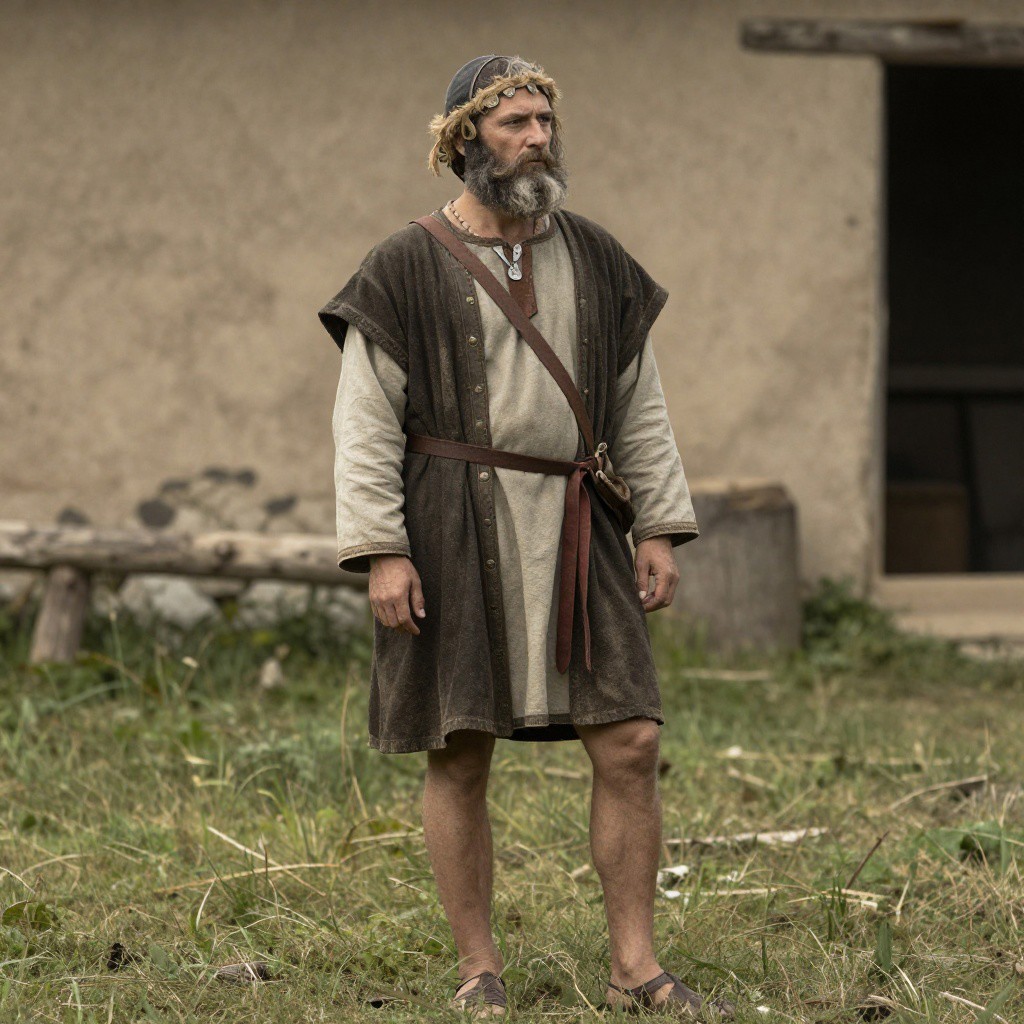

Place of Origin

Near East

Modern Distribution

The populations where mtDNA haplogroup T1A1 is found include:

  1. Middle Eastern populations
  2. North African populations (Mediterranean coast)
  3. Southern European populations (Italy, Greece, Iberia)
  4. Eastern European populations (Balkans, parts of the Black Sea region)
  5. Central Asian populations (sporadic occurrence)
  6. Jewish populations, notably some Ashkenazi maternal lineages
CHAPTER IV

When in Time

Your haplogroup in the context of human history

~10k years ago

Neolithic Revolution

Agriculture begins, settled communities form

~7k years ago

Haplogroup T1A1

Your mtDNA haplogroup emerged in Near East

Near East
~5k years ago

Bronze Age

Metalworking, writing, and early civilizations

~3k years ago

Iron Age

Iron tools, expanded trade networks

~2k years ago

Classical Antiquity

Greek and Roman civilizations flourish

Present

Present Day

Modern era

Your Haplogroup
Historical Era
Chapter IV-B

Linked Cultures

Ancient cultures associated with mtDNA haplogroup T1A1

Cultural Heritage

These ancient cultures have been linked to haplogroup T1A1 based on matching ancient DNA samples from archaeological excavations. The presence of this haplogroup in these cultures provides insights into the migrations and population movements of populations carrying this haplogroup.

Afanasievo Bell Beaker Chemurchek Culture Corded Ware Karsdorf Culture Lech Valley Bronze Age Yamnaya Culture
Culture assignments are based on archaeological context of ancient DNA samples and may represent regional associations during specific time periods.
Chapter V

Sample Catalog

64 direct carriers and 36 subclade carriers of haplogroup T1A1

50 / 50 samples
Portrait Sample Country Era Date Culture mtDNA Match
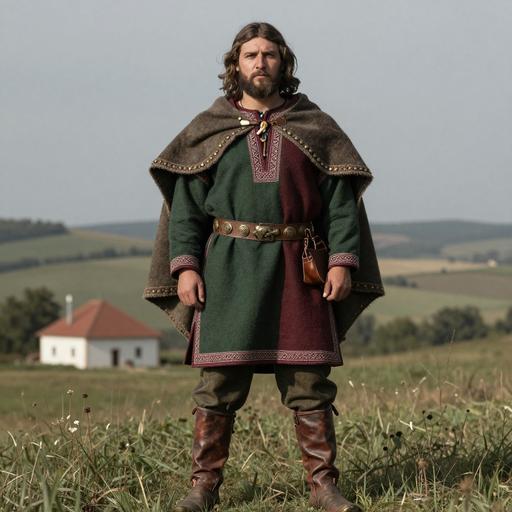
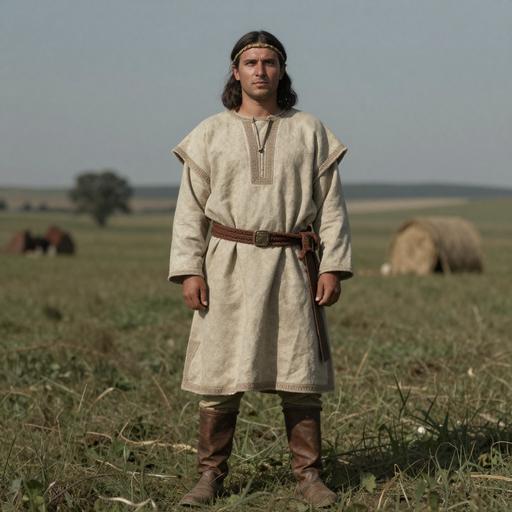
Portrait of ancient individual chy002 from Russia, dated 81 CE - 236 CE
chy002
Russia Late Sarmatian Culture, Russia 81 CE - 236 CE Sarmatian Culture T1a1 Direct
Portrait of ancient individual chy002 from Russia, dated 81 CE - 236 CE
chy002
Russia The Sarmatian Culture 81 CE - 236 CE T1a1 Direct
Portrait of ancient individual L8622 from Uzbekistan, dated 150 BCE - 50 CE
L8622
Uzbekistan Iron Age Rabat Culture of Surxondaryo 150 BCE - 50 CE Rabat Culture T1a1 Direct
Portrait of ancient individual I19869 from United Kingdom, dated 175 BCE - 8 BCE
I19869
United Kingdom Late Iron Age England 175 BCE - 8 BCE British Late Iron Age T1a1 Direct
Portrait of ancient individual I19870 from United Kingdom, dated 200 BCE - 1 BCE
I19870
United Kingdom Late Iron Age England 200 BCE - 1 BCE British Late Iron Age T1a1 Direct
Portrait of ancient individual C393 from China, dated 223 CE - 375 CE
C393
China Historical Period Hetian, Xinjiang, China 223 CE - 375 CE Hetian Culture T1a1 Direct
Portrait of ancient individual I16386 from United Kingdom, dated 300 BCE - 100 CE
I16386
United Kingdom Middle to Late Iron Age England 300 BCE - 100 CE Late Iron Age British T1a1 Direct
Portrait of ancient individual I16450 from United Kingdom, dated 300 BCE - 100 CE
I16450
United Kingdom Middle to Late Iron Age England 300 BCE - 100 CE Late Iron Age British T1a1 Direct
Portrait of ancient individual I16457 from United Kingdom, dated 300 BCE - 100 CE
I16457
United Kingdom Middle to Late Iron Age England 300 BCE - 100 CE Late Iron Age British T1a1 Direct
Portrait of ancient individual I14987 from Czech Republic, dated 330 BCE - 280 BCE
I14987
Czech Republic Iron Age La Tène Culture, Czech Republic 330 BCE - 280 BCE La Tène Culture T1a1 Direct
Chapter VI

Carrier Distribution Map

Geographic distribution of 100 ancient DNA samples (direct and subclade carriers of T1A1)

Direct carrier Subclade carrier
Time Period Filter
All Time Periods
Showing all samples
Chapter VII

Temporal Distribution

Distribution of carriers across archaeological periods

Chapter VIII

Geographic Distribution

Distribution by country of origin (direct and subclade carriers shown by default)

Chapter IX

Country × Era Distribution

Cross-tabulation of carrier countries and archaeological periods (direct and subclade carriers shown by default)

Data

Data & Provenance

Source information and data quality

Last Updated 2026-02-16
Confidence Score 50/100
Coverage Low
Data Source

We use the latest phylotree for MTDNA haplogroup classification and data.