Menu
mtDNA Haplogroup • Maternal Lineage

T2B21

mtDNA Haplogroup T2B21

~8,000 years ago
Near East / Mediterranean fringe
0 subclades
Scroll to explore
Chapter I

The Story

The journey of mtDNA haplogroup T2B21

Origins and Evolution

mtDNA haplogroup T2B21 is a downstream lineage of T2B2, itself part of the broader T2 clade associated with maternal lineages that expanded from the Near East into Europe after the Last Glacial Maximum. Based on the position of T2B21 within the T2 phylogeny and the estimated age of its parent clade (T2B2 ≈ 11 kya), T2B21 most plausibly originated in the Near Eastern / eastern Mediterranean margin in the early Holocene (roughly 8 kya by molecular-clock inference). Its emergence is consistent with population movements tied to the spread of farming and post-glacial resettlement of the Mediterranean and southern Europe.

Subclades

As a relatively specific subclade, T2B21 currently appears to be a modestly rare lineage with a limited number of downstream branches reported in modern and ancient sampling. Where denser mtDNA sequencing has been done, researchers sometimes find private or regionally restricted sub-branches within T2B21, but broad, well-sampled subclade structure for T2B21 is not yet as well resolved as for some major haplogroups. Continued mitogenome sequencing in Southern Europe, Anatolia and the Levant will clarify internal structure and divergence times.

Geographical Distribution

The modern geographic footprint of T2B21 mirrors that of many T2B derivatives but is more localized and lower in frequency. It is found at low-to-moderate frequencies across Southern and Central Europe (notably Italy, Iberia and parts of the Balkans), in the Near East (Anatolia and the Levant), and sporadically in North Africa, the Caucasus and Central Asia. The lineage also appears in some Jewish communities (both Ashkenazi and Sephardi lineages are known to carry a variety of T-derived mtDNAs). In ancient DNA datasets, T2B21-like sequences are most likely to appear in Neolithic farmer-associated contexts and later in some Bronze Age and historical-era samples, consistent with continuity and regional movement of maternal lineages.

Historical and Cultural Significance

Because T2B21 is nested within the T2B2/T2B family that is prominent among early farmers, it is most strongly associated with the Neolithic expansion of agriculture from Anatolia into Europe. In archaeological genetics, T2 variants are commonly found in Early European Farmer (EEF) assemblages such as Cardial/Impressa and Linearbandkeramik-related groups. T2B21 itself, while not necessarily a hallmark lineage of any single archaeological culture, fits the broader pattern of Near Eastern maternal ancestry contributing substantially to the maternal gene pool of Neolithic and post-Neolithic Europe. Later cultural horizons (Bronze Age, Iron Age) redistributed many maternal lineages across Europe and the Mediterranean, which accounts for the patchy but persistent presence of T2B21 in modern populations.

Conclusion

T2B21 represents a regionally focused, derived maternal lineage within the T2 family that likely arose on the Near Eastern / Mediterranean fringe in the early Holocene and spread into Europe primarily with Neolithic and post-Neolithic movements. It is best interpreted as part of the maternal signature of early farmers and their descendants, with a modern distribution concentrated in southern and parts of central Europe, the Near East, and neighboring regions. Improved mitogenome sampling and ancient DNA recovery will refine its age and subclade architecture, but current evidence places it among the Neolithic-associated T2 lineages that helped shape the maternal ancestry of Europe.

Key Points

  • Origins and Evolution
  • Subclades
  • Geographical Distribution
  • Historical and Cultural Significance
  • Conclusion
Chapter II

Tree & Relationships

Phylogenetic context and subclades

Evolution Path

This haplogroup's evolutionary journey from its earliest ancestor to the present.

Steps Haplogroup Age Estimate Archaeology Era Time Passed Immediate Descendants Tested Modern Descendants Ancient Connections
1 T2B21 Current ~8,000 years ago 🌾 Neolithic 8,000 years 0 0 0
2 T2B2 ~11,000 years ago 🌾 Neolithic 11,000 years 6 22 0
3 T2B ~14,000 years ago 🏹 Mesolithic 14,000 years 9 275 413
4 T2 ~21,000 years ago 🏹 Mesolithic 21,000 years 11 918 70
5 T ~27,000 years ago 🦴 Paleolithic 27,000 years 2 1,615 84
6 JT ~45,000 years ago 🦴 Paleolithic 45,000 years 2 3,237 1
7 N ~60,000 years ago 🦴 Paleolithic 60,000 years 15 15,452 13
8 L3 ~70,000 years ago 🦴 Paleolithic 70,000 years 11 17,621 6
9 L ~160,000 years ago 🦴 Paleolithic 160,000 years 7 18,987 5

Subclades (0)

Terminal branch - no known subclades

Siblings (5)

Other branches from the same parent haplogroup

Chapter III

Where in the World

Geographic distribution and modern presence

Place of Origin

Near East / Mediterranean fringe

Modern Distribution

The populations where mtDNA haplogroup T2B21 is found include:

  1. Southern and Central European populations (Italy, Iberia, Balkans)
  2. Eastern European populations
  3. Near Eastern populations (Anatolia, Levant)
  4. North African populations (at lower frequencies)
  5. Caucasus populations (sporadic occurrences)
  6. Central Asian populations (low frequencies)
  7. Jewish populations (including some Ashkenazi and Sephardi lineages)
  8. Ancient European farmer contexts (Neolithic archaeological samples)
CHAPTER IV

When in Time

Your haplogroup in the context of human history

~10k years ago

Neolithic Revolution

Agriculture begins, settled communities form

~8k years ago

Haplogroup T2B21

Your mtDNA haplogroup emerged in Near East / Mediterranean fringe

Near East / Mediterranean fringe
~5k years ago

Bronze Age

Metalworking, writing, and early civilizations

~3k years ago

Iron Age

Iron tools, expanded trade networks

~2k years ago

Classical Antiquity

Greek and Roman civilizations flourish

Present

Present Day

Modern era

Your Haplogroup
Historical Era
Chapter IV-B

Linked Cultures

Ancient cultures associated with mtDNA haplogroup T2B21

Cultural Heritage

These ancient cultures have been linked to haplogroup T2B21 based on matching ancient DNA samples from archaeological excavations. The presence of this haplogroup in these cultures provides insights into the migrations and population movements of populations carrying this haplogroup.

Bell Beaker British Middle Bronze Age El Argar Lech Valley Culture Norse Greenland Orcadian Bronze Age Popova Culture Viking
Culture assignments are based on archaeological context of ancient DNA samples and may represent regional associations during specific time periods.
Chapter V

Sample Catalog

9 direct carriers of haplogroup T2B21

9 / 9 samples
Portrait Sample Country Era Date Culture mtDNA Match
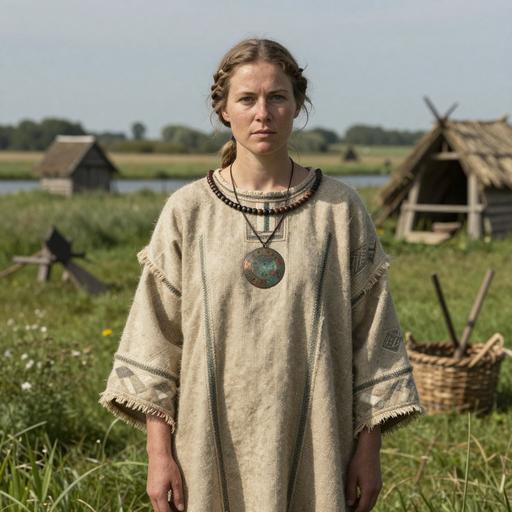
Portrait of ancient individual VK183 from Greenland, dated 900 CE - 1200 CE
VK183
Greenland Early Norse Greenland 900 CE - 1200 CE Norse Greenland T2b21 Direct
Portrait of ancient individual VK183 from Greenland, dated 900 CE - 1200 CE
VK183
Greenland The Viking Age 900 CE - 1200 CE T2b21 Direct
Portrait of ancient individual I19860 from United Kingdom, dated 1503 BCE - 1401 BCE
I19860
United Kingdom Middle Bronze Age England 1503 BCE - 1401 BCE British Middle Bronze Age T2b21 Direct
Portrait of ancient individual OTTM_81 from Germany, dated 1620 BCE - 1457 BCE
OTTM_81
Germany Middle Bronze Age Lech Valley, Germany 1620 BCE - 1457 BCE Lech Valley Culture T2b21 Direct
Portrait of ancient individual KD059 from United Kingdom, dated 1620 BCE - 1462 BCE
KD059
United Kingdom Middle Bronze Age Orkney, Scotland 1620 BCE - 1462 BCE Orcadian Bronze Age T2b21 Direct
Portrait of ancient individual KD064 from United Kingdom, dated 1650 BCE - 1300 BCE
KD064
United Kingdom Middle Bronze Age Orkney, Scotland 1650 BCE - 1300 BCE Orcadian Bronze Age T2b21 Direct
Portrait of ancient individual ALM017 from Spain, dated 1882 BCE - 1698 BCE
ALM017
Spain The Argaric Culture of Spain 1882 BCE - 1698 BCE El Argar T2b21 Direct
Portrait of ancient individual I13027 from Netherlands, dated 2197 BCE - 1983 BCE
I13027
Netherlands Late Neolithic B to Early Bronze Age Bell Beaker Culture, Netherlands 2197 BCE - 1983 BCE Bell Beaker T2b21 Direct
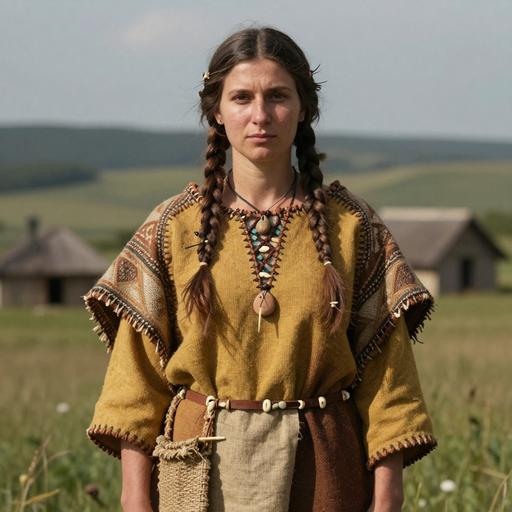
Portrait of ancient individual POP27 from Croatia, dated 4700 BCE - 4300 BCE
POP27
Croatia Middle Neolithic Popova Culture 4700 BCE - 4300 BCE Popova Culture T2b21 Direct
Chapter VI

Carrier Distribution Map

Geographic distribution of 9 ancient DNA samples (direct and subclade carriers of T2B21)

Direct carrier
Time Period Filter
All Time Periods
Showing all samples
Chapter VII

Temporal Distribution

Distribution of carriers across archaeological periods

Chapter VIII

Geographic Distribution

Distribution by country of origin (direct and subclade carriers shown by default)

Chapter IX

Country × Era Distribution

Cross-tabulation of carrier countries and archaeological periods (direct and subclade carriers shown by default)

Data

Data & Provenance

Source information and data quality

Last Updated 2026-02-16
Confidence Score 50/100
Coverage Low
Data Source

We use the latest phylotree for MTDNA haplogroup classification and data.