Menu
mtDNA Haplogroup • Maternal Lineage

T2C2

mtDNA Haplogroup T2C2

~9,000 years ago
Near East / Eastern Mediterranean
0 subclades
Scroll to explore
Chapter I

The Story

The journey of mtDNA haplogroup T2C2

Origins and Evolution

mtDNA T2C2 sits within the broader T2 lineage, itself a branch of haplogroup T, and derives from the T2C node. Based on the phylogenetic position of T2C and observed geographic patterning, T2C2 most plausibly arose in the Near East or eastern Mediterranean during the early Holocene (roughly ~9 kya). Its emergence follows the Late Glacial and early postglacial diversification of maternal lineages in West Asia, a period that set the stage for the spread of farmer-associated lineages into Europe during the Neolithic.

Because T2C2 is a subclade of T2C, its shallow time depth relative to T2 and T2C is consistent with a geographic origin close to the parent node and subsequent dispersal with demographic events that moved people and genes westward into Mediterranean and continental Europe and eastward into adjacent parts of Asia and North Africa.

Subclades

T2C2 is recognized as a distinct branch below T2C. In public phylogenies and sequence databases it is sometimes split into minor internal sublineages (reported in some databases as T2C2a, T2C2b, etc.), reflecting further diversification after the initial split from T2C. Those downstream subclades tend to be rare and geographically patchy; as with many low-frequency maternal lineages, classification and naming can vary between datasets as new complete mitogenomes are added.

Geographical Distribution

T2C2 has a patchy but trans-regional distribution. It is most often observed at low to moderate frequencies across Mediterranean southern Europe (coastal Italy, Iberia, the Balkans), parts of Central and Eastern Europe, and in the Near East/Anatolia. Lower-frequency occurrences appear in North Africa, the Caucasus, and sporadically in Central Asia. The lineage is also reported in some Jewish diasporic communities, reflecting historical population movement and founder effects. Ancient DNA records include a small number of archaeological samples (4 in the referenced database), confirming that T2C2 has been present in human populations in archaeological contexts over the last several thousand years.

Historical and Cultural Significance

The distribution and timing of T2C2 make it most plausibly associated with Neolithic dispersals from the Near East into Europe — the movement of early farmers who carried a mix of Near Eastern maternal lineages into Mediterranean and continental Europe. T2C2's presence in later archaeological and modern contexts indicates persistence through subsequent cultural transitions rather than a single, large-scale replacement event. It is not primarily associated with steppe-derived Bronze Age expansions (e.g., Yamnaya-driven turnovers) but may have been carried in smaller numbers by later prehistoric and historic movements (trade, local migrations, and diasporas).

For genealogical and population studies, the low frequency and regional patchiness mean that finding T2C2 in a modern individual most strongly signals a maternal connection to Near Eastern / Mediterranean ancestry at deep time scales, with potential localization to coastal or Anatolian-influenced regions depending on accompanying genealogical and autosomal evidence.

Conclusion

T2C2 is a relatively rare maternal lineage derived from the T2C node, originating in the Near East / eastern Mediterranean in the early Holocene and spreading into Europe with Neolithic and postglacial movements. Its limited but persistent presence across Mediterranean Europe, the Near East, parts of North Africa, the Caucasus, and in some diasporic groups makes it useful for tracing maternal ancestry tied to those regions, while its low frequency and fine-scale substructure mean regional assignment often requires additional genetic or historical data.

Key Points

  • Origins and Evolution
  • Subclades
  • Geographical Distribution
  • Historical and Cultural Significance
  • Conclusion
Chapter II

Tree & Relationships

Phylogenetic context and subclades

Evolution Path

This haplogroup's evolutionary journey from its earliest ancestor to the present.

Steps Haplogroup Age Estimate Archaeology Era Time Passed Immediate Descendants Tested Modern Descendants Ancient Connections
1 T2C2 Current ~9,000 years ago 🌾 Neolithic 9,000 years 0 0 0
2 T2C ~11,000 years ago 🌾 Neolithic 11,000 years 2 56 30
3 T2 ~21,000 years ago 🏹 Mesolithic 21,000 years 11 918 70
4 T ~27,000 years ago 🦴 Paleolithic 27,000 years 2 1,615 84
5 JT ~45,000 years ago 🦴 Paleolithic 45,000 years 2 3,237 1
6 N ~60,000 years ago 🦴 Paleolithic 60,000 years 15 15,452 13
7 L3 ~70,000 years ago 🦴 Paleolithic 70,000 years 11 17,621 6
8 L ~160,000 years ago 🦴 Paleolithic 160,000 years 7 18,987 5

Subclades (0)

Terminal branch - no known subclades

Siblings (1)

Other branches from the same parent haplogroup

Chapter III

Where in the World

Geographic distribution and modern presence

Place of Origin

Near East / Eastern Mediterranean

Modern Distribution

The populations where mtDNA haplogroup T2C2 is found include:

  1. Southern European populations (Mediterranean coastal groups)
  2. Central European populations
  3. Eastern European populations
  4. Near Eastern / Anatolian populations
  5. North African populations (at lower frequencies)
  6. Caucasus populations (low frequency)
  7. Central Asian groups (sporadic occurrences)
  8. Jewish populations (including some Ashkenazi and other diasporic groups)
CHAPTER IV

When in Time

Your haplogroup in the context of human history

~10k years ago

Neolithic Revolution

Agriculture begins, settled communities form

~9k years ago

Haplogroup T2C2

Your mtDNA haplogroup emerged in Near East / Eastern Mediterranean

Near East / Eastern Mediterranean
~5k years ago

Bronze Age

Metalworking, writing, and early civilizations

~3k years ago

Iron Age

Iron tools, expanded trade networks

~2k years ago

Classical Antiquity

Greek and Roman civilizations flourish

Present

Present Day

Modern era

Your Haplogroup
Historical Era
Chapter IV-B

Linked Cultures

Ancient cultures associated with mtDNA haplogroup T2C2

Cultural Heritage

These ancient cultures have been linked to haplogroup T2C2 based on matching ancient DNA samples from archaeological excavations. The presence of this haplogroup in these cultures provides insights into the migrations and population movements of populations carrying this haplogroup.

Abdul Hosein Culture Anatolian Neolithic Baden Culture Bustan Culture Körös Culture Nevalı Çori Culture Pottery Neolithic Romanian Neolithic Ukrainian Neolithic Vučedol Culture
Culture assignments are based on archaeological context of ancient DNA samples and may represent regional associations during specific time periods.
Chapter V

Sample Catalog

4 direct carriers of haplogroup T2C2

4 / 4 samples
Portrait Sample Country Era Date Culture mtDNA Match
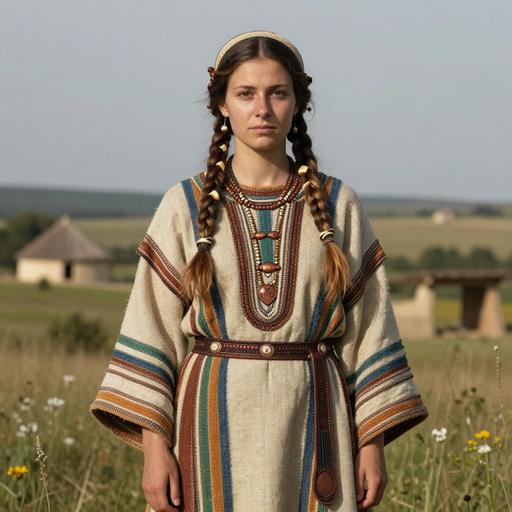
Portrait of ancient individual I2792 from Croatia, dated 2872 BCE - 2580 BCE
I2792
Croatia Vucedol Culture, Croatia 2872 BCE - 2580 BCE Vučedol Culture T2c2 Direct
Portrait of ancient individual I2785 from Hungary, dated 3600 BCE - 2850 BCE
I2785
Hungary Late Chalcolithic Baden Culture, Hungary 3600 BCE - 2850 BCE Baden Culture T2c2 Direct
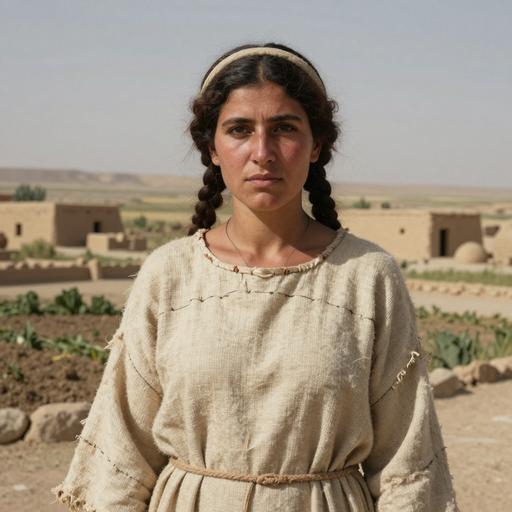
Portrait of ancient individual AH4 from Iran, dated 8201 BCE - 7751 BCE
AH4
Iran Neolithic Tepe Abdul Hosein, Iran 8201 BCE - 7751 BCE Abdul Hosein Culture T2c2 Direct
Portrait of ancient individual AH4 from Iran, dated 8201 BCE - 7751 BCE
AH4
Iran Neolithic Iran 8201 BCE - 7751 BCE T2c2 Direct
Chapter VI

Carrier Distribution Map

Geographic distribution of 4 ancient DNA samples (direct and subclade carriers of T2C2)

Direct carrier
Time Period Filter
All Time Periods
Showing all samples
Chapter VII

Temporal Distribution

Distribution of carriers across archaeological periods

Chapter VIII

Geographic Distribution

Distribution by country of origin (direct and subclade carriers shown by default)

Chapter IX

Country × Era Distribution

Cross-tabulation of carrier countries and archaeological periods (direct and subclade carriers shown by default)

Data

Data & Provenance

Source information and data quality

Last Updated 2026-02-16
Confidence Score 50/100
Coverage Low
Data Source

We use the latest phylotree for MTDNA haplogroup classification and data.