Menu
mtDNA Haplogroup • Maternal Lineage

U2E1F1

mtDNA Haplogroup U2E1F1

~6,000 years ago
South Asia
0 subclades
Scroll to explore
Chapter I

The Story

The journey of mtDNA haplogroup U2E1F1

Origins and Evolution

mtDNA haplogroup U2E1F1 is a downstream lineage of U2E1F, itself part of the broader U2 branch of haplogroup U. Based on the phylogenetic position of U2E1F1 beneath U2E1F and age estimates for its parent clade, U2E1F1 most likely arose in South Asia during the early to mid-Holocene (several thousand years after the Last Glacial Maximum). The emergence of U2E1F1 likely reflects local differentiation within maternally inherited lineages that had become established in the subcontinent during the postglacial and Neolithic periods.

Genetic drift, founder effects and population structure (for example, differentiation between caste and tribal groups) have probably contributed to the low but persistent presence of U2E1F1 in specific communities. Its sparse distribution outside South Asia is consistent with episodic female-mediated gene flow across the Iranian plateau and into Central and West Eurasia at multiple times during the Holocene.

Subclades (if applicable)

At present U2E1F1 is documented as a defined subclade under U2E1F with limited internal diversity in published datasets and sequence repositories. Because the lineage is low-frequency, available samples show few well-supported downstream subbranches; additional sampling of diverse South Asian and adjacent populations (and deeper mitogenome sequencing) could reveal further substructure. Reported ancient DNA hits assigned to U2E1F1 or closely related motifs indicate that the clade has been present in archaeological contexts though not at high prevalence.

Geographical Distribution

The modern distribution of U2E1F1 is strongly centered on South Asia, where it appears in a range of caste and tribal groups at low-to-moderate local frequencies. Secondary occurrences are recorded in Pakistan (Punjabi, Sindhi, Pashtun, Baloch and related groups) and in parts of Central Asia (Kazakh, Uzbek, Tajik and adjacent peoples), reflecting historical connectivity across the Iranian plateau and steppe-silkroad corridors. Sporadic detections in West Eurasia (including low-frequency finds in parts of Eastern and Central Europe) and in North Africa (notably among some Berber-associated samples) are rare and probably reflect long-distance dispersal events or isolated gene flow episodes. A handful of ancient DNA assignments to U2E1F1 or closely related U2E1 branches across South Asia and West Eurasia show that the lineage has an archaeological footprint, albeit limited, through the Holocene.

Historical and Cultural Significance

Because U2E1F1 is not a high-frequency lineage, its historical signal is best interpreted as reflecting localized maternal continuity and occasional female-mediated movement rather than continent-scale demographic sweeps. In South Asia it may mark maternal ancestry that persisted through the Neolithic and into Bronze Age cultural horizons, and it can appear in both tribal and caste contexts, illustrating how maternal lineages cross social boundaries. The secondary presence in Central Asia and West Eurasia is consistent with known routes of trade, migration and cultural exchange (e.g., through the Iranian plateau and later Silk Road-era contacts), but the low frequency makes it a minor component of broader prehistoric migrations.

Conclusion

U2E1F1 is a geographically focused mtDNA subclade whose primary significance lies in illuminating maternal population structure in South Asia and episodic connections between South Asia and neighboring regions. Its low frequency, limited substructure in current datasets, and sporadic ancient DNA occurrences mean that additional dense mitogenome sampling and targeted ancient DNA recovery are required to refine its age, internal branching, and specific migration episodes.

Key Points

  • Origins and Evolution
  • Subclades (if applicable)
  • Geographical Distribution
  • Historical and Cultural Significance
  • Conclusion
Chapter II

Tree & Relationships

Phylogenetic context and subclades

Evolution Path

This haplogroup's evolutionary journey from its earliest ancestor to the present.

Steps Haplogroup Age Estimate Archaeology Era Time Passed Immediate Descendants Tested Modern Descendants Ancient Connections
1 U2E1F1 Current ~6,000 years ago 🪨 Chalcolithic 5,500 years 0 5 0
2 U2E1F ~7,000 years ago 🌾 Neolithic 7,000 years 1 22 5
3 U2E1 ~12,000 years ago 🌾 Neolithic 12,000 years 6 99 0
4 U2E ~18,000 years ago 🏹 Mesolithic 18,000 years 3 194 45
5 U2 ~38,000 years ago 🦴 Paleolithic 38,000 years 5 757 37
6 U ~46,000 years ago 🦴 Paleolithic 46,000 years 12 2,835 110
7 R ~60,000 years ago 🦴 Paleolithic 60,000 years 12 10,987 57
8 N ~60,000 years ago 🦴 Paleolithic 60,000 years 15 15,452 13
9 L3 ~70,000 years ago 🦴 Paleolithic 70,000 years 11 17,621 6
10 L ~160,000 years ago 🦴 Paleolithic 160,000 years 7 18,987 5

Subclades (0)

Terminal branch - no known subclades

Chapter III

Where in the World

Geographic distribution and modern presence

Place of Origin

South Asia

Modern Distribution

The populations where mtDNA haplogroup U2E1F1 is found include:

  1. Various Indian caste and tribal groups (India)
  2. Pakistani populations (Punjabi, Sindhi, Pashtun, Baloch groups)
  3. Central Asian populations (Kazakh, Uzbek, Tajik and related groups)
  4. Near Eastern populations on the Iranian Plateau and adjacent areas
  5. European populations at very low frequency (sporadic detections in Eastern/Central Europe)
  6. North African groups at low frequency (reported in some Berber-adjacent samples)
  7. Indigenous northern European groups in rare cases (reported in limited studies)
  8. Ancient Mesolithic/Neolithic and Bronze Age archaeological samples in West Eurasia and South Asia (sporadic ancient DNA occurrences)
CHAPTER IV

When in Time

Your haplogroup in the context of human history

~10k years ago

Neolithic Revolution

Agriculture begins, settled communities form

~5k years ago

Haplogroup U2E1F1

Your mtDNA haplogroup emerged in South Asia

South Asia
~5k years ago

Bronze Age

Metalworking, writing, and early civilizations

~3k years ago

Iron Age

Iron tools, expanded trade networks

~2k years ago

Classical Antiquity

Greek and Roman civilizations flourish

Present

Present Day

Modern era

Your Haplogroup
Historical Era
Chapter IV-B

Linked Cultures

Ancient cultures associated with mtDNA haplogroup U2E1F1

Cultural Heritage

These ancient cultures have been linked to haplogroup U2E1F1 based on matching ancient DNA samples from archaeological excavations. The presence of this haplogroup in these cultures provides insights into the migrations and population movements of populations carrying this haplogroup.

Baltic Hunter-Gatherer Dnieper Mesolithic Late Iron Age British Motala Culture Unetice Viking Yuzhny Oleny Ostrov
Culture assignments are based on archaeological context of ancient DNA samples and may represent regional associations during specific time periods.
Chapter V

Sample Catalog

5 direct carriers of haplogroup U2E1F1

5 / 5 samples
Portrait Sample Country Era Date Culture mtDNA Match
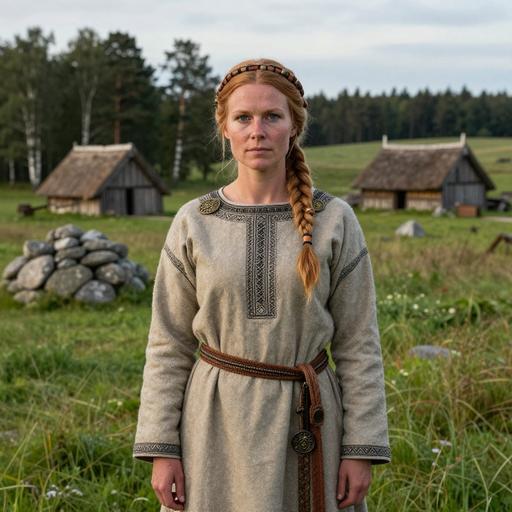
Portrait of ancient individual I17264 from United Kingdom, dated 450 BCE - 100 BCE
I17264
United Kingdom Middle to Late Iron Age England 450 BCE - 100 BCE Late Iron Age British U2e1f1 Direct
Portrait of ancient individual VK442 from Sweden, dated 706 CE - 987 CE
VK442
Sweden Viking Age Sweden 706 CE - 987 CE Viking U2e1f1 Direct
Portrait of ancient individual VK442 from Sweden, dated 706 CE - 987 CE
VK442
Sweden The Viking Age 706 CE - 987 CE U2e1f1 Direct
Portrait of ancient individual RISE139 from Poland, dated 2137 BCE - 1926 BCE
RISE139
Poland Early Bronze Age Unetice Culture, Poland 2137 BCE - 1926 BCE Unetice U2e1f1 Direct
Portrait of ancient individual RISE139 from Poland, dated 2137 BCE - 1926 BCE
RISE139
Poland The Unetice Culture 2137 BCE - 1926 BCE U2e1f1 Direct
Chapter VI

Carrier Distribution Map

Geographic distribution of 5 ancient DNA samples (direct and subclade carriers of U2E1F1)

Direct carrier
Time Period Filter
All Time Periods
Showing all samples
Chapter VII

Temporal Distribution

Distribution of carriers across archaeological periods

Chapter VIII

Geographic Distribution

Distribution by country of origin (direct and subclade carriers shown by default)

Chapter IX

Country × Era Distribution

Cross-tabulation of carrier countries and archaeological periods (direct and subclade carriers shown by default)

Data

Data & Provenance

Source information and data quality

Last Updated 2026-02-16
Confidence Score 50/100
Coverage Low
Data Source

We use the latest phylotree for MTDNA haplogroup classification and data.