Menu
mtDNA Haplogroup • Maternal Lineage

U3A3

mtDNA Haplogroup U3A3

~6,000 years ago
Near East / Caucasus
0 subclades
Scroll to explore
Chapter I

The Story

The journey of mtDNA haplogroup U3A3

Origins and Evolution

mtDNA haplogroup U3A3 is a downstream subclade of U3A, itself a branch of haplogroup U3 within the larger haplogroup U clade. Given the parent clade U3A has an estimated origin in the Near East/Caucasus in the early Holocene (~12 kya), U3A3 is best interpreted as a later split within that regional maternal lineage. Coalescence time estimates for U3A3 are more recent than its parent and likely fall in the mid-to-late Holocene (several thousand years after the emergence of U3A), consistent with modest sublineage diversity and its low-frequency, patchy modern distribution.

U3 lineages as a whole have been associated with populations of the Near East, the Caucasus and (through later migrations) parts of North Africa and southern Europe; U3A3 fits that broader pattern but appears to represent a more geographically restricted and less common maternal branch.

Subclades (if applicable)

As of current datasets U3A3 appears to be a relatively narrowly defined subclade with limited internal diversity reported in modern sampling. Few well-differentiated downstream branches have been reported for U3A3 in public databases, which is consistent with a more recent origin or limited population expansion. Continued deep mtDNA sequencing and ancient DNA sampling across the Near East and adjacent regions could reveal additional substructure or previously unsampled sister branches.

Geographical Distribution

U3A3 is observed at low-to-moderate frequencies in populations centered on the Near East and Caucasus, with sporadic occurrences farther afield. Modern occurrences are most commonly reported in:

  • Levantine populations (Lebanon, Syria, Palestinian groups) at low frequencies
  • Caucasus populations (Armenians, Georgians and some Azerbaijani samples) as sporadic lineages
  • Anatolia / Turkish populations at low frequencies
  • Select North African groups (notably some Berber and coastal communities) in isolated instances
  • Southern European populations (Italy, Greece, Iberia) at very low frequencies, consistent with historical gene flow from the Near East
  • Jewish maternal lineages (certain Ashkenazi and Sephardic samples) where Near Eastern maternal ancestry components are preserved
  • Occasional low-frequency detections in parts of South and Central Asia consistent with long-distance or medieval-period gene flow

Ancient DNA evidence for U3A3 is currently limited but the haplogroup has been identified in at least one archaeological sample in public databases, supporting its Holocene antiquity and regional presence in archaeological contexts.

Historical and Cultural Significance

While U3A3 is not a high-frequency lineage associated with any single large prehistoric migration event, its pattern is informative about regional maternal continuity and localized expansions:

  • The concentration in the Near East/Caucasus indicates a likely origin and long-term presence in that area.
  • Low-level occurrences in North Africa and southern Europe are consistent with episodic gene flow from Near Eastern source populations during the Neolithic, Bronze Age and later historical periods (trade, population movements, and diaspora communities).
  • Presence in some Jewish communities reflects the complex maternal ancestry of these groups, which includes Near Eastern and Mediterranean lineages.

Because U3A3 is comparatively rare, it is less likely to mark broad population replacements; instead it is a useful tracer of more localized maternal histories, founder events and genealogical connections linking the Near East/Caucasus to neighboring regions.

Conclusion

U3A3 is a downstream, low-frequency mtDNA lineage derived from U3A with an origin in the Near East/Caucasus during the Holocene (several thousand years after the parent U3A). Its modern distribution — concentrated but rare in the Near East and Caucasus with sporadic occurrences in North Africa, southern Europe and parts of South/Central Asia — reflects localized demographic processes, limited expansions, and historical connectivity across the Mediterranean and Near Eastern world. Additional sampling and ancient DNA recovery could clarify its internal structure and finer-scale chronology.

Key Points

  • Origins and Evolution
  • Subclades (if applicable)
  • Geographical Distribution
  • Historical and Cultural Significance
  • Conclusion
Chapter II

Tree & Relationships

Phylogenetic context and subclades

Evolution Path

This haplogroup's evolutionary journey from its earliest ancestor to the present.

Steps Haplogroup Age Estimate Archaeology Era Time Passed Immediate Descendants Tested Modern Descendants Ancient Connections
1 U3A3 Current ~6,000 years ago 🪨 Chalcolithic 6,000 years 0 3 0
2 U3A ~12,000 years ago 🌾 Neolithic 12,000 years 3 101 40
3 U3 ~25,000 years ago 🦴 Paleolithic 25,000 years 3 183 10
4 U ~46,000 years ago 🦴 Paleolithic 46,000 years 12 2,835 110
5 R ~60,000 years ago 🦴 Paleolithic 60,000 years 12 10,987 57
6 N ~60,000 years ago 🦴 Paleolithic 60,000 years 15 15,452 13
7 L3 ~70,000 years ago 🦴 Paleolithic 70,000 years 11 17,621 6
8 L ~160,000 years ago 🦴 Paleolithic 160,000 years 7 18,987 5

Subclades (0)

Terminal branch - no known subclades

Siblings (2)

Other branches from the same parent haplogroup

Chapter III

Where in the World

Geographic distribution and modern presence

Place of Origin

Near East / Caucasus

Modern Distribution

The populations where MTDNA haplogroup U3A3 is found include:

  1. Levantine populations (Lebanese, Syrians, Palestinians)
  2. Caucasus groups (Armenians, Georgians, some Azerbaijanis)
  3. Anatolian / Turkish populations
  4. North African populations (notably some Berber and coastal groups)
  5. Southern European populations (Italy, Greece, Iberia at low frequencies)
  6. Jewish communities (certain Ashkenazi and Sephardic maternal lineages)
  7. South Asian populations (sporadic, low frequency in parts of India and Pakistan)
  8. Central Asian populations (sporadic occurrences)
CHAPTER IV

When in Time

Your haplogroup in the context of human history

~10k years ago

Neolithic Revolution

Agriculture begins, settled communities form

~6k years ago

Haplogroup U3A3

Your mtDNA haplogroup emerged in Near East / Caucasus

Near East / Caucasus
~5k years ago

Bronze Age

Metalworking, writing, and early civilizations

~3k years ago

Iron Age

Iron tools, expanded trade networks

~2k years ago

Classical Antiquity

Greek and Roman civilizations flourish

Present

Present Day

Modern era

Your Haplogroup
Historical Era
Chapter IV-B

Linked Cultures

Ancient cultures associated with mtDNA haplogroup U3A3

Cultural Heritage

These ancient cultures have been linked to haplogroup U3A3 based on matching ancient DNA samples from archaeological excavations. The presence of this haplogroup in these cultures provides insights into the migrations and population movements of populations carrying this haplogroup.

Anatolian Iron Age Anatolian Neolithic Byzantine Anatolia Canaanite Corded Ware Dzharkutan Iranian Chalcolithic Late Bronze Jordan Multi Cordoned Ware Culture Ostrów Lednicki Culture San Giovanni Culture Sicilian Iron Age Xiongnu
Culture assignments are based on archaeological context of ancient DNA samples and may represent regional associations during specific time periods.
Chapter V

Sample Catalog

1 direct carrier of haplogroup U3A3

1 / 1 samples
Portrait Sample Country Era Date Culture mtDNA Match
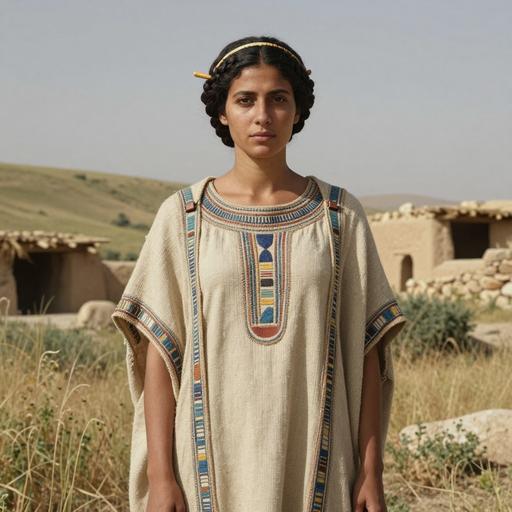
Portrait of ancient individual I6462 from Jordan, dated 1550 BCE - 1150 BCE
I6462
Jordan Late Bronze Age Jordan 1550 BCE - 1150 BCE Late Bronze Jordan U3a3 Direct
Chapter VI

Carrier Distribution Map

Geographic distribution of 1 ancient DNA sample (direct and subclade carriers of U3A3)

Direct carrier
Time Period Filter
All Time Periods
Showing all samples
Chapter VII

Temporal Distribution

Distribution of carriers across archaeological periods

Chapter VIII

Geographic Distribution

Distribution by country of origin (direct and subclade carriers shown by default)

Chapter IX

Country × Era Distribution

Cross-tabulation of carrier countries and archaeological periods (direct and subclade carriers shown by default)

Data

Data & Provenance

Source information and data quality

Last Updated 2026-02-16
Confidence Score 50/100
Coverage Low
Data Source

We use the latest phylotree for MTDNA haplogroup classification and data.