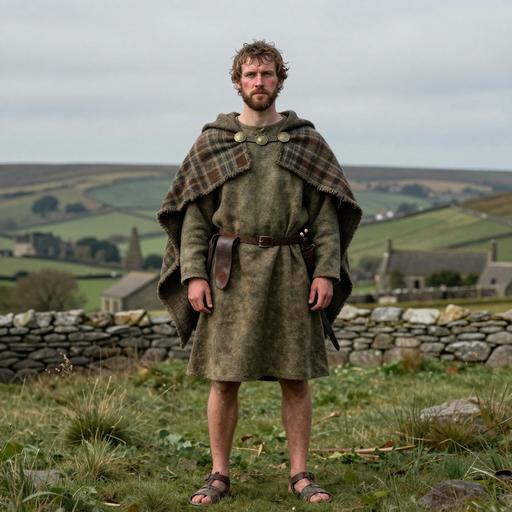
The Story
The journey of Y-DNA haplogroup I2A1B1B
Origins and Evolution
Y-DNA haplogroup I2a1b1b is a downstream subclade of I2a1b1, part of the broader I2 lineage that is widely regarded as one of the major paternal lineages of ancient European hunter-gatherers. Its deepest roots trace back to postglacial European populations, with the parent branch I2a1b1 showing strong continuity in Southeastern Europe, especially the Balkans.
As an intermediate subclade, I2a1b1b likely reflects regional differentiation within post-Mesolithic European paternal ancestry, formed during the Holocene as populations became more structured after the Last Glacial Maximum. Its age is plausibly in the range of the early Holocene, around 12 kya, though precise branch ages depend on the phylogenetic resolution and available ancient DNA samples.
Subclades
I2a1b1b is an intermediate branch and may contain additional downstream lineages that are unequally represented in modern samples. In general, substructure within I2a lineages often reflects localized founder effects, Balkan refugial continuity, and later demographic expansions into adjacent regions.
Geographical Distribution
This haplogroup is most often found in Southeastern Europe, particularly among Balkan populations, where I2 lineages are among the most characteristic Y-chromosome components. From there, it has also appeared in Central Europe, Eastern Europe, Northern Europe, and the British Isles, usually at lower frequencies, consistent with historical gene flow from the Balkans and broader European demographic mixing.
Its presence in German, Austrian, Scandinavian, Baltic, East Slavic, British, and Irish populations likely reflects a combination of prehistoric dispersals, medieval migrations, and more recent population mobility rather than a single expansion event.
Historical and Cultural Significance
Although Y-DNA haplogroups cannot be assigned to a single archaeological culture with certainty, I2a1b1b is part of a lineage complex often associated with postglacial European continuity and later Balkan Neolithic to Bronze Age population structure. Broader I2 subclades are frequently discussed in relation to Mesolithic hunter-gatherers, Balkan continuity, and subsequent interactions with early farming and steppe-derived populations.
In historical contexts, carriers of I2 lineages in the Balkans and surrounding regions likely participated in the demographic processes that shaped Slavic expansions, Iron Age regional populations, and later medieval European population movements. Its distribution today reflects a deep-time European paternal legacy layered with historical admixture.
Conclusion
Y-DNA haplogroup I2a1b1b is a rare but informative branch of the ancient European I2 paternal tree. Its strongest signal is in the Balkans and Southeastern Europe, while its wider European presence demonstrates the long-term mobility, local continuity, and repeated demographic reshaping that characterize the history of European Y-chromosome diversity.
Key Points
- Origins and Evolution
- Subclades
- Geographical Distribution
- Historical and Cultural Significance
- Conclusion