Menu
Y-DNA Haplogroup • Paternal Lineage

Q1A1B

Y-DNA Haplogroup Q1A1B

~9,000 years ago
Central Asia / southern Siberia
1 subclades
1 ancient samples
Scroll to explore
Chapter I

The Story

The journey of Y-DNA haplogroup Q1A1B

Origins and Evolution

Y-DNA haplogroup Q1A1B is a derived branch of Q1A1 and probably arose after the initial diversification of Q1A1 in Central Asia / southern Siberia. Based on its phylogenetic position beneath Q1A1 and comparisons with coalescence estimates for neighboring Q subclades, a conservative estimate places the origin of Q1A1B in the early Holocene (around ~9 kya), reflecting population processes after the Last Glacial Maximum when human groups in northern Eurasia re-expanded and diversified.

Q1A1B should be viewed as part of the broader Q1A1 radiation that supplied paternal lineages across Siberia, Central Asia, and into the Americas. Its emergence likely reflects local differentiation within northern Eurasian groups followed by demographic events (metal-age steppe movements, late Holocene expansions) that redistributed derived lineages across adjacent regions.

Subclades (if applicable)

At present, published data for Q1A1B indicates limited downstream resolution in many public datasets; documented diversity suggests one or more internal branches identifiable by additional SNPs in high-resolution sequencing projects. As more whole Y-chromosome sequences become available from Central Asian and Siberian populations, Q1A1B is expected to split into geographically informative subclades that will clarify local expansions (for example, lineages associated more strongly with Turkic-speaking groups versus those found in Tungusic or Paleo-Siberian-speaking peoples).

Geographical Distribution

Empirical observations and reasonable phylogeographic inference place Q1A1B primarily in Central Asia and southern/northern Siberia, with lower-frequency occurrences in neighboring regions. Modern and ancient DNA records show the clade in:

  • Central Asian populations (Kazakh, Kyrgyz, Turkmen and neighboring groups), often at moderate frequencies depending on local founder effects.
  • Northern Eurasian Siberian groups (Yakut, Evenks, Nenets and other Arctic/sub-Arctic populations), where Q-derived lineages are common overall.
  • Scattered occurrences in eastern parts of Europe and the Eurasian steppe where steppe-mediated gene flow has occurred.
  • Low-frequency, localized finds in parts of East Asia (northern China/Tungusic populations) and in small pockets of South Asia likely from historical movements.
  • Very limited representation in the Americas relative to deeper Q lineages that founded indigenous American paternal diversity; Q1A1B appears to be primarily Eurasian with only sporadic presence in the Americas if present at all.

Historical and Cultural Significance

Because Q1A1B sits within a broader Q1A1 background that contributed to many northern Eurasian groups, its historical significance is linked to several demographic processes:

  • Bronze Age and Iron Age steppe interactions: Q1A1B could have been carried and redistributed by steppe pastoralist networks (Andronovo-related and later eastern steppe cultures), producing the low-to-moderate presence in regions of the Eurasian steppe and adjacent Central Asia.
  • Turkic and later medieval expansions: The modern distribution pattern, with concentrations in some Turkic-speaking groups, suggests a role for medieval-era population movements (e.g., early Turkic and Mongolic expansions) in amplifying specific Q1A1B branches locally.
  • Siberian continuity: Persistence of Q-derived lineages among Arctic and sub-Arctic peoples indicates long-term continuity of male lineages in high-latitude Eurasia; Q1A1B may represent one such continuity or later influx depending on local histories.

Archaeogenetic sampling remains limited, but as more ancient samples from the Central Asian steppe, Siberia, and medieval contexts are sequenced, the association of Q1A1B with particular archaeological complexes (e.g., Andronovo-related horizons, Xiongnu-affiliated groups, Turkic period cemeteries) should become clearer.

Conclusion

Q1A1B is a regional subclade of Q1A1 that likely formed in Central Asia / southern Siberia in the early Holocene and today marks paternal ancestry primarily among northern Eurasian, Central Asian, and some steppe-associated populations. Its relatively restricted and patchy modern distribution—combined with sparse ancient sampling—means that continued high-resolution Y-chromosome sequencing and targeted ancient DNA will be required to fully resolve its substructure, movements, and historical associations.

Key Points

  • Origins and Evolution
  • Subclades (if applicable)
  • Geographical Distribution
  • Historical and Cultural Significance
  • Conclusion
Chapter II

Tree & Relationships

Phylogenetic context and subclades

Evolution Path

This haplogroup's evolutionary journey from its earliest ancestor to the present.

Steps Haplogroup Age Estimate Archaeology Era Time Passed Immediate Descendants Tested Modern Descendants Ancient Connections
1 Q1A1B Current ~9,000 years ago 🌾 Neolithic 9,000 years 1 0 1

Siblings (1)

Other branches from the same parent haplogroup

Chapter III

Where in the World

Geographic distribution and modern presence

Place of Origin

Central Asia / southern Siberia

Modern Distribution

The populations where Y-DNA haplogroup Q1A1B is found include:

  1. Siberian indigenous groups (e.g., Yakut, Evenk, Nenets)
  2. Central Asian populations (e.g., Kazakh, Kyrgyz, Mongolian groups)
  3. Turkic-speaking populations of the Eurasian steppe
  4. Some northern Chinese / Tungusic-speaking groups (low frequencies)
  5. Scattered populations in Eastern Europe (low frequencies)
  6. Localized pockets in South Asia (low frequencies, likely historical)
  7. Very limited or sporadic occurrences among Indigenous peoples of the Americas (if present at all)
  8. Samples from medieval and Iron Age steppe-associated archaeological contexts

Regional Presence

Central Asia High
Northern Asia / Siberia Moderate
East Asia Low
Eastern Europe Low
South Asia Low
Northern Americas Low
CHAPTER IV

When in Time

Your haplogroup in the context of human history

~10k years ago

Neolithic Revolution

Agriculture begins, settled communities form

~9k years ago

Haplogroup Q1A1B

Your Y-DNA haplogroup emerged in Central Asia / southern Siberia

Central Asia / southern Siberia
~5k years ago

Bronze Age

Metalworking, writing, and early civilizations

~3k years ago

Iron Age

Iron tools, expanded trade networks

~2k years ago

Classical Antiquity

Greek and Roman civilizations flourish

Present

Present Day

Modern era

Your Haplogroup
Historical Era
Chapter IV-B

Linked Cultures

Ancient cultures associated with Y-DNA haplogroup Q1A1B

Cultural Heritage

These ancient cultures have been linked to haplogroup Q1A1B based on matching ancient DNA samples from archaeological excavations. The presence of this haplogroup in these cultures provides insights into the migrations and population movements of populations carrying this haplogroup.

Abusanteer Culture Angara River Culture Avar Culture Caishichang Culture Center West 4 Lena River Culture Liushui Culture Murzikha Sidelkino Slab Grave Culture Ulaanzukh Culture Yuzhny Oleny Ostrov
Culture assignments are based on archaeological context of ancient DNA samples and may represent regional associations during specific time periods.
Chapter V

Sample Catalog

1 subclade carrier of haplogroup Q1A1B (no exact Q1A1B samples sequenced yet)

1 / 1 samples
Portrait Sample Country Era Date Culture Y-DNA Match
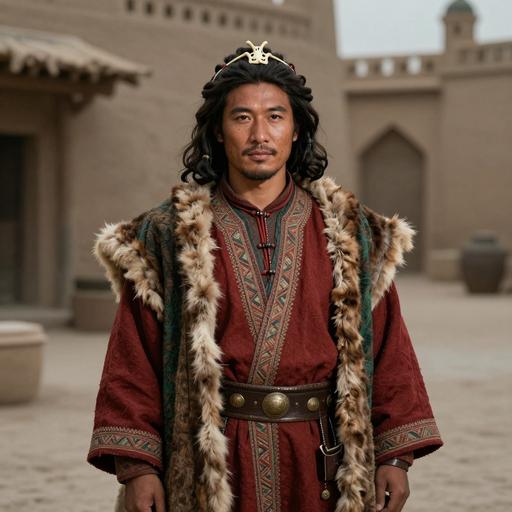
Portrait of ancient individual C4140 from China, dated 85 CE - 241 CE
C4140
China Historical Period Abusanteer, Xinjiang, China 85 CE - 241 CE Abusanteer Culture Q1a1b1 Downstream
Chapter VI

Carrier Distribution Map

Geographic distribution of 1 ancient DNA sample (direct and subclade carriers of Q1A1B)

Subclade carrier
Time Period Filter
All Time Periods
Showing all samples
Chapter VII

Temporal Distribution

Distribution of carriers across archaeological periods

Chapter VIII

Geographic Distribution

Distribution by country of origin (direct and subclade carriers shown by default)

Chapter IX

Country × Era Distribution

Cross-tabulation of carrier countries and archaeological periods (direct and subclade carriers shown by default)

Data

Data & Provenance

Source information and data quality

Last Updated 2026-02-16
Confidence Score 50/100
Coverage Low
Data Source

We use the latest phylotree for YDNA haplogroup classification and data.