Menu
Y-DNA Haplogroup • Paternal Lineage

R1A1A1B1A3A1A1A

Y-DNA Haplogroup R1A1A1B1A3A1A1A

~200 years ago
Eastern/Central Europe
0 subclades
1 ancient samples
Scroll to explore
Chapter I

The Story

The journey of Y-DNA haplogroup R1A1A1B1A3A1A1A

Origins and Evolution

Y‑DNA haplogroup R1A1A1B1A3A1A1A sits deep within the R1a‑M458 radiation, a branch traditionally associated with West and East Slavic populations in Central and Eastern Europe. As an extremely downstream terminal clade, it likely originated very recently — on the order of a few centuries ago — as a result of one or more founder events within a local Slavic population. Its phylogenetic placement inside the M458 subtree (R1a1a1b1a ...) links it to the broader R1a story (steppe‑derived expansions in the Bronze Age via Corded Ware/Yamnaya‑associated movements), but the specific terminal SNPs defining this clade denote a late, localized diversification long after those deeper Bronze Age demographic events.

Subclades (if applicable)

Because R1A1A1B1A3A1A1A is itself a very downstream terminal lineage in many user databases, it may have few or no widely recognized downstream subclades; when further splits are found they tend to be extremely recent and geographically restricted (e.g., single‑village or surname‑level branches). Where additional SNPs are discovered beneath this node, they typically reflect very recent family expansions rather than broad population movements.

Geographical Distribution

This haplogroup shows a strongly focal distribution concentrated in Eastern and Central Europe with highest frequencies in locales associated with medieval Slavic settlement and later demographic stability. Reported modern occurrences are most common in:

  • Poland, western Ukraine and Belarus (highest frequency and diversity)
  • Parts of western Russia and the Czech/Slovak regions (moderate frequency)
  • Baltic populations and some areas of northern Europe at low frequencies, often explained by historical contacts (trade, migration, Viking‑era movements)

Outside Europe, occurrences are typically rare and represent recent gene flow or individual migration (low‑frequency findings in Central Asia, the Caucasus, South Asia are usually introgressed or isolated).

Ancient DNA representation for such a recent terminal clade is limited to none or very few samples; when it appears in archaeological contexts it generally dates to the medieval period or later.

Historical and Cultural Significance

Because of its recent origin and tight geographic clustering, R1A1A1B1A3A1A1A is especially informative for micro‑historical questions: surname projects, local founder effects, and the reconstruction of medieval family genealogies. It is unlikely to mark large archaeological cultures (e.g., Bell Beaker or early Bronze Age steppe expansions) on its own, but it sits on a backbone (R1a) that is historically tied to steppe‑derived dispersals and later Neolithic/post‑Neolithic processes across Europe.

In social terms, the clade can reflect patrilineal expansions during the medieval period — for example, the demographic growth of a single lineage tied to a village, kin group or a regional elite — producing a pattern amenable to surname‑level correlation in modern genetic genealogy.

Conclusion

R1A1A1B1A3A1A1A is best understood as a very recent, geographically restricted descendant of the R1a‑M458 family. It carries limited deep historical signal by itself but provides high resolution for recent genealogical and micro‑demographic studies in Central and Eastern Europe. Its primary research value is in tracing localized medieval/modern lineage expansions and founder events rather than in reconstructing ancient migratory episodes.

Key Points

  • Origins and Evolution
  • Subclades (if applicable)
  • Geographical Distribution
  • Historical and Cultural Significance
  • Conclusion
Chapter II

Tree & Relationships

Phylogenetic context and subclades

Evolution Path

This haplogroup's evolutionary journey from its earliest ancestor to the present.

Steps Haplogroup Age Estimate Archaeology Era Time Passed Immediate Descendants Tested Modern Descendants Ancient Connections
1 R1A1A1B1A3A1A1A Current ~200 years ago 🏭 Modern 200 years 0 0 1

Subclades (0)

Terminal branch - no known subclades

Chapter III

Where in the World

Geographic distribution and modern presence

Place of Origin

Eastern/Central Europe

Modern Distribution

The populations where Y-DNA haplogroup R1A1A1B1A3A1A1A is found include:

  1. Eastern Europeans (especially Poland, Ukraine, Belarus, and western Russia)
  2. Central Europeans (Poland, Czech lands, Slovakia, Hungary)
  3. Baltic populations (Latvia, Lithuania, Estonia) at low frequency
  4. Slavic peoples broadly (notably West and East Slavs)
  5. Some Scandinavian populations (low frequency; areas with medieval/Viking contacts)
  6. Central Asians (rare, usually introgressed/isolated occurrences)
  7. South Asians (very rare/introgressed occurrences in NW India and Pakistan)
  8. Parts of the Caucasus and Near East (isolated, low‑frequency occurrences)

Regional Presence

Eastern Europe High
Central Europe Moderate
Baltic Low
Northern Europe (Scandinavia) Low
Central Asia Low
South Asia Low
CHAPTER IV

When in Time

Your haplogroup in the context of human history

~10k years ago

Neolithic Revolution

Agriculture begins, settled communities form

~5k years ago

Bronze Age

Metalworking, writing, and early civilizations

~3k years ago

Iron Age

Iron tools, expanded trade networks

~2k years ago

Classical Antiquity

Greek and Roman civilizations flourish

~200 years ago

Haplogroup R1A1A1B1A3A1A1A

Your Y-DNA haplogroup emerged in Eastern/Central Europe

Eastern/Central Europe
Present

Present Day

Modern era

Your Haplogroup
Historical Era
Chapter IV-B

Linked Cultures

Ancient cultures associated with Y-DNA haplogroup R1A1A1B1A3A1A1A

Cultural Heritage

These ancient cultures have been linked to haplogroup R1A1A1B1A3A1A1A based on matching ancient DNA samples from archaeological excavations. The presence of this haplogroup in these cultures provides insights into the migrations and population movements of populations carrying this haplogroup.

Faroese Norse Norse Greenland Norse Iron Age Norse Pagan Norse-Irish Viking Viking Culture Zealand Saxon
Culture assignments are based on archaeological context of ancient DNA samples and may represent regional associations during specific time periods.
Chapter V

Sample Catalog

1 direct carrier of haplogroup R1A1A1B1A3A1A1A

1 / 1 samples
Portrait Sample Country Era Date Culture Y-DNA Match
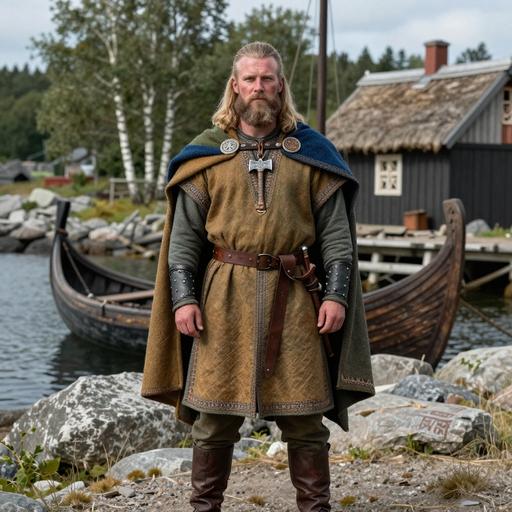
Portrait of ancient individual VK48 from Sweden, dated 900 CE - 1050 CE
VK48
Sweden Viking Age Sweden 900 CE - 1050 CE Viking R1a1a1b1a3a1a1a Direct
Chapter VI

Carrier Distribution Map

Geographic distribution of 1 ancient DNA sample (direct and subclade carriers of R1A1A1B1A3A1A1A)

Direct carrier
Time Period Filter
All Time Periods
Showing all samples
Chapter VII

Temporal Distribution

Distribution of carriers across archaeological periods

Chapter VIII

Geographic Distribution

Distribution by country of origin (direct and subclade carriers shown by default)

Chapter IX

Country × Era Distribution

Cross-tabulation of carrier countries and archaeological periods (direct and subclade carriers shown by default)

Data

Data & Provenance

Source information and data quality

Last Updated 2026-02-16
Confidence Score 50/100
Coverage Low
Data Source

We use the latest phylotree for YDNA haplogroup classification and data.