Menu
Y-DNA Haplogroup • Paternal Lineage

R1A1A1B1A3A2B

Y-DNA Haplogroup R1A1A1B1A3A2B

~400 years ago
Eastern/Central Europe
1 subclades
2 ancient samples
Scroll to explore
Chapter I

The Story

The journey of Y-DNA haplogroup R1A1A1B1A3A2B

Origins and Evolution

R1A1A1B1A3A2B is a downstream branch of the R1a-M458 lineage, itself a well-established marker of many Central and Eastern European paternal lineages associated with Slavic-speaking populations. Because it sits several nodes beneath M458, R1A1A1B1A3A2B is inferred to be very recent in time depth compared with basal R1a clades — most likely arising within the last few hundred years as a result of one or more localized male-line founder events. The wider R1a phylogeny ties back to Bronze Age and earlier R1a expansions in Europe (Corded Ware and related groups), but the specific mutations defining this terminal subclade are best interpreted in the context of medieval and post-medieval demographic processes (e.g., regional population growth, local social structure, and migration within Eastern/Central Europe).

Subclades (if applicable)

As a terminal or near-terminal subclade in many testing trees, R1A1A1B1A3A2B may itself contain a small number of private downstream SNPs or STR clusters visible in high-resolution testing (full Y-SNP sequencing or large SNP panels). At present this haplogroup is primarily identified in modern commercial and academic genotyping databases rather than in large numbers of ancient genomes; further targeted sequencing of carriers can reveal internal branching and help date sublineages with greater precision.

Geographical Distribution

The geographic concentration of R1A1A1B1A3A2B is centered on Eastern and Central Europe, with the highest frequencies and match densities reported among populations in Poland, Belarus and Ukraine. Secondary presence occurs across adjacent Central European regions (Czech lands, Slovakia, Hungary) and among Baltic groups at lower frequencies. Small numbers of matches are sometimes found in Scandinavia, reflecting medieval and early modern contacts (Viking-era movements, Hanseatic trade, later migrations), and occasional very low-frequency occurrences appear in Central and South Asia as rare, likely historical, introductions. Outside Europe, occurrences are primarily due to more recent diaspora movements.

Historical and Cultural Significance

Because the clade is so recent, R1A1A1B1A3A2B is best interpreted in the context of medieval and post-medieval social history in Eastern and Central Europe. Its pattern is consistent with patrilineal founder effects tied to small geographic areas, surnames, or clans that expanded locally — for example, during population recoveries, settlement of frontier zones, or within the multi-ethnic milieu of the Polish–Lithuanian Commonwealth. The deeper R1a background of the lineage connects it to the broader narrative of Indo-European-associated male-mediated expansions (Corded Ware/Central European Bronze Age), but the terminal SNPs reflect recent demographic events rather than those ancient processes.

From a practical perspective, R1A1A1B1A3A2B is often of interest to genetic genealogists and surname projects because it can identify recent common ancestry and provide high-resolution regional inference within Slavic-speaking areas. Its detection typically depends on targeted SNP testing or high-resolution Y-SEQ panels; standard low-resolution tests may report only the upstream M458 affiliation.

Conclusion

R1A1A1B1A3A2B is a recent, regionally concentrated branch of the R1a-M458 family that highlights the fine-scale structure formed by medieval and early modern demographic processes in Eastern and Central Europe. It illustrates how deep, ancient Y-chromosome backgrounds (R1a) can give rise to many very young, geographically localized lineages detectable today through dense SNP and STR analysis. Continued high-resolution sequencing of modern and — when available — archaeological samples will refine the internal structure, dating, and precise geographic origin of this subclade.

Key Points

  • Origins and Evolution
  • Subclades (if applicable)
  • Geographical Distribution
  • Historical and Cultural Significance
  • Conclusion
Chapter II

Tree & Relationships

Phylogenetic context and subclades

Evolution Path

This haplogroup's evolutionary journey from its earliest ancestor to the present.

Steps Haplogroup Age Estimate Archaeology Era Time Passed Immediate Descendants Tested Modern Descendants Ancient Connections
1 R1A1A1B1A3A2B Current ~400 years ago 🏭 Modern 400 years 1 0 2

Siblings (3)

Other branches from the same parent haplogroup

Chapter III

Where in the World

Geographic distribution and modern presence

Place of Origin

Eastern/Central Europe

Modern Distribution

The populations where Y-DNA haplogroup R1A1A1B1A3A2B is found include:

  1. Eastern Europeans (especially Poland, Ukraine, Belarus)
  2. Central Europeans (Czech Republic, Slovakia, Hungary, Poland)
  3. Baltic populations (Latvia, Lithuania, Estonia) at lower frequencies
  4. Broad Slavic-speaking groups across East and parts of Central Europe
  5. Some Scandinavian populations (areas with medieval and Viking-era contacts)
  6. Central Asia (rare/introgressed occurrences)
  7. South Asia (very rare, probable historical introductions)
  8. Diaspora populations in North America and Western Europe (low frequency)

Regional Presence

Eastern Europe High
Central Europe Moderate
Northern Europe (Scandinavia) Low
Central Asia Low
South Asia Low
North America (diaspora) Low
CHAPTER IV

When in Time

Your haplogroup in the context of human history

~10k years ago

Neolithic Revolution

Agriculture begins, settled communities form

~5k years ago

Bronze Age

Metalworking, writing, and early civilizations

~3k years ago

Iron Age

Iron tools, expanded trade networks

~2k years ago

Classical Antiquity

Greek and Roman civilizations flourish

~400 years ago

Haplogroup R1A1A1B1A3A2B

Your Y-DNA haplogroup emerged in Eastern/Central Europe

Eastern/Central Europe
Present

Present Day

Modern era

Your Haplogroup
Historical Era
Chapter IV-B

Linked Cultures

Ancient cultures associated with Y-DNA haplogroup R1A1A1B1A3A2B

Cultural Heritage

These ancient cultures have been linked to haplogroup R1A1A1B1A3A2B based on matching ancient DNA samples from archaeological excavations. The presence of this haplogroup in these cultures provides insights into the migrations and population movements of populations carrying this haplogroup.

Faroese Medieval Swedish Norse Viking Viking Culture
Culture assignments are based on archaeological context of ancient DNA samples and may represent regional associations during specific time periods.
Chapter V

Sample Catalog

2 direct carriers of haplogroup R1A1A1B1A3A2B

2 / 2 samples
Portrait Sample Country Era Date Culture Y-DNA Match
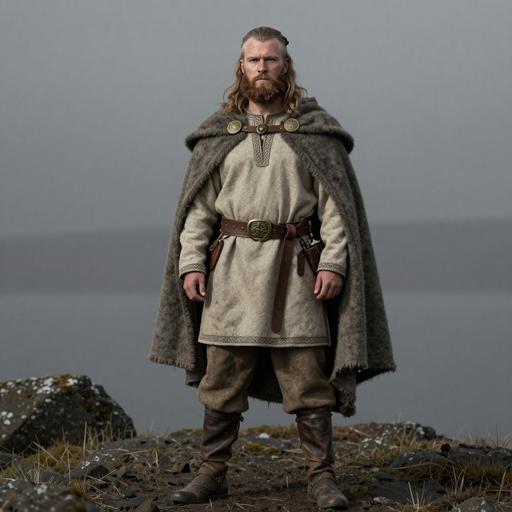
Portrait of ancient individual VK127 from Iceland, dated 900 CE - 1000 CE
VK127
Iceland Viking Age Iceland 900 CE - 1000 CE Norse R1a1a1b1a3a2b Direct
Portrait of ancient individual VK225 from Iceland, dated 900 CE - 1300 CE
VK225
Iceland Viking Age Iceland 900 CE - 1300 CE Norse R1a1a1b1a3a2b Direct
Chapter VI

Carrier Distribution Map

Geographic distribution of 2 ancient DNA samples (direct and subclade carriers of R1A1A1B1A3A2B)

Direct carrier
Time Period Filter
All Time Periods
Showing all samples
Chapter VII

Temporal Distribution

Distribution of carriers across archaeological periods

Chapter VIII

Geographic Distribution

Distribution by country of origin (direct and subclade carriers shown by default)

Chapter IX

Country × Era Distribution

Cross-tabulation of carrier countries and archaeological periods (direct and subclade carriers shown by default)

Data

Data & Provenance

Source information and data quality

Last Updated 2026-02-16
Confidence Score 50/100
Coverage Low
Data Source

We use the latest phylotree for YDNA haplogroup classification and data.