Menu
Y-DNA Haplogroup • Paternal Lineage

R1B1A1B1A1A1B

Y-DNA Haplogroup R1B1A1B1A1A1B

~2,000 years ago
Western/Central Europe
1 subclades
4 ancient samples
Scroll to explore
Chapter I

The Story

The journey of Y-DNA haplogroup R1B1A1B1A1A1B

Origins and Evolution

R1B1A1B1A1A1B is a terminal subclade emerging from the broader R1b-L51-derived radiation that dominated much of Western Europe after the Bronze Age. Its phylogenetic position indicates that it split off after the primary Bronze Age expansions associated with R1b subclades, and its estimated age (on the order of ~1.5–2.0 kya) places its differentiation in the late Iron Age to early Medieval timeframe. This timing is consistent with patterns of regionalization and local founder effects that are commonly observed in Y‑chromosome lineages during periods of increased social stratification and restricted male-mediated gene flow.

Genetically, the haplogroup is defined by one or more downstream SNPs nested beneath the R1B1A1B1A1A1 node. In practice, identification in modern and ancient samples often combines targeted SNP testing with STR clustering to recognize population-specific branches.

Subclades (if applicable)

As a relatively recent, regionally concentrated branch, R1B1A1B1A1A1B shows limited deep downstream diversity compared with older R1b subclades. Where denser sampling has been performed, researchers observe small local subbranches and private SNPs consistent with founder events in specific regions (for example, micro‑regional lineages in parts of the British Isles and western France). Further high-resolution sequencing (whole Y or long-read haplotyping) can reveal additional very recent splits that are typical of lineages that expanded during the Iron Age and Medieval periods.

Geographical Distribution

The geographic footprint of R1B1A1B1A1A1B is concentrated in north‑west Europe with lower-frequency occurrences beyond that core area. Modern distributions show the highest frequencies in parts of the British Isles and western France, with appreciable presence in northern Iberia (including Basque-adjacent regions) and trace occurrences in central and eastern Europe. Low-frequency detections in North Africa and the Near East are best explained by historical contact, trade, and later mobility rather than primary origin in those regions. The haplogroup is also present in colonial-era diasporas in the Americas and Oceania, mirroring the historical expansion of northwest European populations.

Ancient DNA finds attributed to this and closely related subclades typically come from late Iron Age, Roman, and early Medieval contexts, supporting a scenario of regional differentiation after the large Bronze Age R1b spread.

Historical and Cultural Significance

While R1B1A1B1A1A1B is not the driver of the Bronze Age R1b demographic events, its emergence and regional concentration correspond with historical phenomena that shaped north‑west Europe. These include the consolidation of Iron Age tribal groups (such as Celtic-language communities), Roman-era population structure and mobility, and the migrations and social reorganizations of the early Medieval period (including Anglo‑Saxon, Norse/Viking and other movements). Such socio-historical processes often produce localized Y‑chromosome founder effects visible today.

From an archaeological genetics perspective, the haplogroup helps to resolve finer-scale male lineage structure within regions otherwise dominated by R1b at broader scales. It is therefore useful for studies of regional continuity, post‑Bronze Age demographic shifts, and historical migrations within Western Europe.

Conclusion

R1B1A1B1A1A1B exemplifies a post‑Bronze Age, regionally concentrated R1b subclade that arose in Western/Central Europe roughly in the last two millennia. Its present-day and ancient distributions reflect local founder events and historical mobility in north‑west Europe, especially across the British Isles, western France, and northern Iberia. Continued high-resolution sampling and ancient DNA recovery will refine its internal topology and clarify its role in medieval and proto‑historic demographic processes.

Key Points

  • Origins and Evolution
  • Subclades (if applicable)
  • Geographical Distribution
  • Historical and Cultural Significance
  • Conclusion
Chapter II

Tree & Relationships

Phylogenetic context and subclades

Evolution Path

This haplogroup's evolutionary journey from its earliest ancestor to the present.

Steps Haplogroup Age Estimate Archaeology Era Time Passed Immediate Descendants Tested Modern Descendants Ancient Connections
1 R1B1A1B1A1A1B Current ~2,000 years ago 🏛️ Roman Period 1,800 years 1 0 4

Siblings (2)

Other branches from the same parent haplogroup

Chapter III

Where in the World

Geographic distribution and modern presence

Place of Origin

Western/Central Europe

Modern Distribution

The populations where Y-DNA haplogroup R1B1A1B1A1A1B is found include:

  1. Western Europeans (British Isles, western France)
  2. Northern Iberian populations (northern Spain, Portugal, Basque area at low-to-moderate frequencies)
  3. Central Europeans (Germany, Switzerland, Austria at low frequencies)
  4. Some populations in Eastern Europe (sporadic occurrences)
  5. Low frequencies in North Africa (coastal regions, historical contact zones)
  6. Small frequencies in the Near East and Caucasus (historical mobility)
  7. Scattered occurrences in parts of Central Asia (rare/isolated findings)
  8. Present-day populations with historic north-west European ancestry (colonial-era diaspora in the Americas and Oceania)

Regional Presence

Northern Europe (British Isles) High
Western Europe High
Southern Europe (Iberia) Moderate
Central Europe Low
Eastern Europe Low
North Africa Low
Near East / Caucasus Low
North America (diaspora) Low
CHAPTER IV

When in Time

Your haplogroup in the context of human history

~10k years ago

Neolithic Revolution

Agriculture begins, settled communities form

~5k years ago

Bronze Age

Metalworking, writing, and early civilizations

~3k years ago

Iron Age

Iron tools, expanded trade networks

~2k years ago

Classical Antiquity

Greek and Roman civilizations flourish

~1k years ago

Haplogroup R1B1A1B1A1A1B

Your Y-DNA haplogroup emerged in Western/Central Europe

Western/Central Europe
Present

Present Day

Modern era

Your Haplogroup
Historical Era
Chapter IV-B

Linked Cultures

Ancient cultures associated with Y-DNA haplogroup R1B1A1B1A1A1B

Cultural Heritage

These ancient cultures have been linked to haplogroup R1B1A1B1A1A1B based on matching ancient DNA samples from archaeological excavations. The presence of this haplogroup in these cultures provides insights into the migrations and population movements of populations carrying this haplogroup.

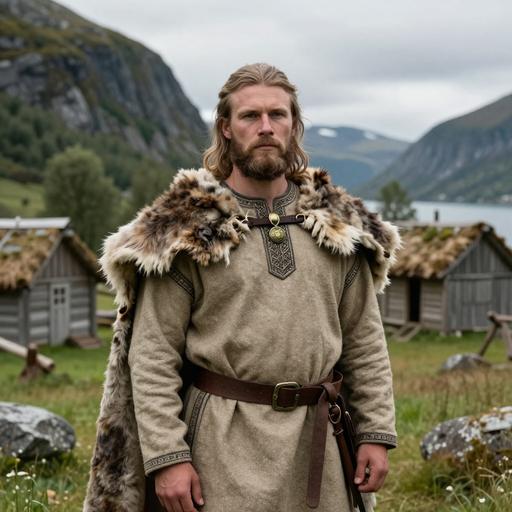
Corded Ware Danish Late Neolithic Norse Norse Iron Age Norse-Manx Viking Viking Denmark
Culture assignments are based on archaeological context of ancient DNA samples and may represent regional associations during specific time periods.
Chapter V

Sample Catalog

4 direct carriers of haplogroup R1B1A1B1A1A1B

4 / 4 samples
Portrait Sample Country Era Date Culture Y-DNA Match
Portrait of ancient individual VK418 from Norway, dated 300 CE - 400 CE
VK418
Norway Iron Age Norway 300 CE - 400 CE Norse Iron Age R1b1a1b1a1a1b Direct
Portrait of ancient individual VK170 from Isle of Man, dated 800 CE - 1000 CE
VK170
Isle of Man Viking Age Isle of Man 800 CE - 1000 CE Norse-Manx R1b1a1b1a1a1b Direct
Portrait of ancient individual VK168 from United Kingdom, dated 880 CE - 1000 CE
VK168
United Kingdom Viking Age England 880 CE - 1000 CE Viking R1b1a1b1a1a1b Direct
Portrait of ancient individual VK449 from United Kingdom, dated 970 CE - 1025 CE
VK449
United Kingdom Viking Age England 970 CE - 1025 CE Viking R1b1a1b1a1a1b Direct
Chapter VI

Carrier Distribution Map

Geographic distribution of 4 ancient DNA samples (direct and subclade carriers of R1B1A1B1A1A1B)

Direct carrier
Time Period Filter
All Time Periods
Showing all samples
Chapter VII

Temporal Distribution

Distribution of carriers across archaeological periods

Chapter VIII

Geographic Distribution

Distribution by country of origin (direct and subclade carriers shown by default)

Chapter IX

Country × Era Distribution

Cross-tabulation of carrier countries and archaeological periods (direct and subclade carriers shown by default)

Data

Data & Provenance

Source information and data quality

Last Updated 2026-02-16
Confidence Score 50/100
Coverage Low
Data Source

We use the latest phylotree for YDNA haplogroup classification and data.