Menu
Y-DNA Haplogroup • Paternal Lineage

R1B1A1B1A1A1C2B1A1A1

Y-DNA Haplogroup R1B1A1B1A1A1C2B1A1A1

~50 years ago
Western British Isles / Brittany
1 subclades
Scroll to explore
Chapter I

The Story

The journey of Y-DNA haplogroup R1B1A1B1A1A1C2B1A1A1

Origins and Evolution

Y-DNA haplogroup R1B1A1B1A1A1C2B1A1A1 sits deep within the R1b-L21 branch, a lineage long associated with the Atlantic façade of Western Europe. As an extremely downstream, genealogical-era subclade, this lineage represents a very recent split from its parent clade (R1B1A1B1A1A1C2B1A1A) and most likely derives from a single or a small number of male founders in the western British Isles or Brittany. Because it is so downstream, its diagnostic SNPs (or private variant pattern) are often used to identify close family-line relationships, surname clusters, or localized patrilineal lineages rather than broad prehistoric population movements.

Subclades

At this level of depth the haplogroup may contain very few or no well-differentiated child clades outside of private-marker variation visible only through high-resolution testing (whole Y sequencing or large SNP panels). Subclades, where present, typically reflect recent branching driven by pedigree events (e.g., 16th–20th century expansions) and may correspond to documented genealogical branches, local surnames, or island/peninsular founder effects.

Geographical Distribution

The geographic distribution of R1B1A1B1A1A1C2B1A1A1 is strongly localized. High concentrations are found in parts of the western British Isles and in Brittany, with scattered occurrences in adjacent Atlantic coastal regions and in diasporas derived from historic emigration. The pattern is typical of a recent founder effect: sharp local peaks (sometimes limited to parishes, islands, or surname groups) with low-frequency traces further afield through migration.

Historical and Cultural Significance

Although the subclade itself is too recent to be directly tied to prehistoric cultural complexes, it inherits the broader historical context of R1b-L21 lineages — notably strong representation among populations associated with Atlantic Bronze Age, later Celtic Iron Age societies, and medieval Celtic populations in Ireland, western Britain, and Armorica (Brittany). For this very downstream clade, documented cultural significance is usually genealogical or local-historical: associations with particular medieval or post-medieval family lines, local landholding groups, or island communities. In modern times, the haplogroup's distribution has been shaped by regional population continuity plus emigration to the Americas, Australia, and other destinations.

Practical Notes for Genetic Genealogy

  • This haplogroup is best resolved with high-resolution SNP testing or whole Y-chromosome sequencing; many matches will be at the level of recent common ancestors (centuries, not millennia).
  • Clustering analyses (STR and SNP combined) often reveal tight surname or parish clusters, useful for genealogical reconstruction.
  • Low-frequency occurrences in continental Europe or North Africa are typically attributable to historical contact (maritime trade, soldiering, or migration) rather than prehistoric dispersals.

Conclusion

R1B1A1B1A1A1C2B1A1A1 exemplifies a genealogical-era descendant of the R1b-L21 family: extremely recent, geographically focused, and valuable primarily for fine-scale paternal-line research. It reflects the interplay of deep Atlantic/British Isles ancestry (inherited from older L21 branches) with recent founder events that create highly localized genetic signatures useful to family historians and regional population studies.

Key Points

  • Origins and Evolution
  • Subclades
  • Geographical Distribution
  • Historical and Cultural Significance
  • Practical Notes for Genetic Genealogy
Chapter II

Tree & Relationships

Phylogenetic context and subclades

Evolution Path

This haplogroup's evolutionary journey from its earliest ancestor to the present.

Steps Haplogroup Age Estimate Archaeology Era Time Passed Immediate Descendants Tested Modern Descendants Ancient Connections
1 R1B1A1B1A1A1C2B1A1A1 Current ~50 years ago 🏭 Modern <100 years 1 0 0
Chapter III

Where in the World

Geographic distribution and modern presence

Place of Origin

Western British Isles / Brittany

Modern Distribution

The populations where Y-DNA haplogroup R1B1A1B1A1A1C2B1A1A1 is found include:

  1. Western British Isles (notably coastal Cornwall, western Wales, and parts of western England)
  2. Ireland (localized clusters in western and northern counties)
  3. Brittany and adjacent Atlantic coastal zones of western France
  4. Isle of Man and nearby Atlantic islands with long Celtic links
  5. Northern Iberia (Galicia and adjacent coastal areas) at low frequency
  6. Central and Western Europe (Germany, interior France, Switzerland) as sporadic low-frequency occurrences
  7. North Africa (very rare coastal occurrences linked to historical contact)
  8. Diaspora populations in North America, Australia/New Zealand reflecting historic emigration

Regional Presence

Western Europe Moderate
British Isles High
Northwestern Europe (Brittany/Atlantic France) Moderate
Southwestern Europe (Northern Iberia) Low
North America (diaspora) Low
Northern Africa Low
CHAPTER IV

When in Time

Your haplogroup in the context of human history

~10k years ago

Neolithic Revolution

Agriculture begins, settled communities form

~5k years ago

Bronze Age

Metalworking, writing, and early civilizations

~3k years ago

Iron Age

Iron tools, expanded trade networks

~2k years ago

Classical Antiquity

Greek and Roman civilizations flourish

~50 years ago

Haplogroup R1B1A1B1A1A1C2B1A1A1

Your Y-DNA haplogroup emerged in Western British Isles / Brittany

Western British Isles / Brittany
Present

Present Day

Modern era

Your Haplogroup
Historical Era
Chapter IV-B

Linked Cultures

Ancient cultures associated with Y-DNA haplogroup R1B1A1B1A1A1C2B1A1A1

Cultural Heritage

These ancient cultures have been linked to haplogroup R1B1A1B1A1A1C2B1A1A1 based on matching ancient DNA samples from archaeological excavations. The presence of this haplogroup in these cultures provides insights into the migrations and population movements of populations carrying this haplogroup.

Corded Ware Dutch Bronze Age Langobard Culture Norse Viking Viking Denmark
Culture assignments are based on archaeological context of ancient DNA samples and may represent regional associations during specific time periods.
Chapter V

Sample Catalog

1 subclade carrier of haplogroup R1B1A1B1A1A1C2B1A1A1 (no exact R1B1A1B1A1A1C2B1A1A1 samples sequenced yet)

1 / 1 samples
Portrait Sample Country Era Date Culture Y-DNA Match
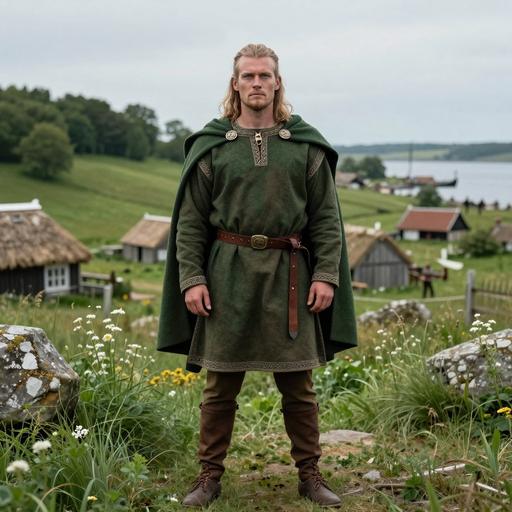
Portrait of ancient individual VK384 from Denmark, dated 850 CE - 900 CE
VK384
Denmark Viking Age Denmark 850 CE - 900 CE Viking Denmark R1b1a1b1a1a1c2b1a1a1a Downstream
Chapter VI

Carrier Distribution Map

Geographic distribution of 1 ancient DNA sample (direct and subclade carriers of R1B1A1B1A1A1C2B1A1A1)

Subclade carrier
Time Period Filter
All Time Periods
Showing all samples
Chapter VII

Temporal Distribution

Distribution of carriers across archaeological periods

Chapter VIII

Geographic Distribution

Distribution by country of origin (direct and subclade carriers shown by default)

Chapter IX

Country × Era Distribution

Cross-tabulation of carrier countries and archaeological periods (direct and subclade carriers shown by default)

Data

Data & Provenance

Source information and data quality

Last Updated 2026-02-16
Confidence Score 50/100
Coverage Low
Data Source

We use the latest phylotree for YDNA haplogroup classification and data.