Menu
Y-DNA Haplogroup • Paternal Lineage

R1B1A1B1A1A2A1A1A

Y-DNA Haplogroup R1B1A1B1A1A2A1A1A

~100 years ago
British Isles / Western France
2 subclades
1 ancient samples
Scroll to explore
Chapter I

The Story

The journey of Y-DNA haplogroup R1B1A1B1A1A2A1A1A

Origins and Evolution

Y‑DNA haplogroup R1B1A1B1A1A2A1A1A sits as a downstream branch of R1B1A1B1A1A2A1A1, itself described as a very recent, regionally restricted Western European R1b clade. Given its phylogenetic position and the low internal diversity observed among tested individuals, the most parsimonious interpretation is that R1B1A1B1A1A2A1A1A arose within the last few centuries (post‑medieval period) in the British Isles or adjacent coastal regions of western France. The pattern of short branch lengths and shared private SNPs/STR signatures is consistent with a single or a small number of male founders followed by rapid local proliferation, a pattern typical of surname-level or clan-level expansions in genealogical time depths.

Modern identification of this subclade generally comes from high-resolution SNP testing (including private/SNPs discovered in commercial or community-driven testing projects) and dense STR/SNP network analyses conducted by genetic genealogy projects focused on R1b substructure in Atlantic Europe.

Subclades (if applicable)

As a very recent terminal clade, R1B1A1B1A1A2A1A1A may have few or no reliably defined downstream subclades in public trees beyond private SNPs detectable in single families or surname groups. Where downstream variation exists it is typically reported initially as private SNPs or project-defined subgroups tied to a particular lineage or surname cluster; these require confirmation through broader SNP screening to become formalized in the international phylogeny.

Geographical Distribution

Geographically, the clade is highly localized. The highest concentration is within the British Isles — often in geographically restricted pockets consistent with parish- or county-level clusters — and in adjoining coastal parts of western France (Brittany, Normandy). Low-frequency occurrences appear sporadically in northern Iberia and central Europe, and extremely rare detections outside Atlantic Europe are best explained by recent historical movement (maritime travel, colonial migration, or modern mobility). Ancient DNA evidence directly assigning this precise terminal clade is effectively absent, which is expected for a lineage that likely formed in the last few hundred years.

Historical and Cultural Significance

Because of its very recent origin, large-scale prehistoric cultural associations (e.g., Bell Beaker or Bronze Age migrations) are indirect: the deeper R1b background of this terminal clade is historically connected to Atlantic European male lineages, but the terminal branch itself most plausibly reflects post‑medieval demographic processes. The observed distribution and genetic pattern are compatible with:

  • A surname or clan founder event, where a single male ancestor or closely related males carrying a private SNP spread their Y chromosome to many descendants in a small region.
  • Localized socio‑cultural expansion, such as a landholding family, a coastal/killick community, or an occupational group (fishermen, mariners) that maintained patrilineal continuity.

Reported modern detections in diaspora populations (North America, Australia, New Zealand) align with documented post‑medieval emigration from the British Isles.

Conclusion

R1B1A1B1A1A2A1A1A is best interpreted as a very recent, geographically focused terminal branch of western R1b formed by a small number of male founders within the British Isles or nearby western France. It is most relevant to genetic genealogy at the family, surname, or local‑history scale rather than to deep prehistoric population movements. Broader confirmation and further resolution depend on targeted SNP testing of candidates from the suspected core regions and continued data sharing through community and research databases.

Key Points

  • Origins and Evolution
  • Subclades (if applicable)
  • Geographical Distribution
  • Historical and Cultural Significance
  • Conclusion
Chapter II

Tree & Relationships

Phylogenetic context and subclades

Evolution Path

This haplogroup's evolutionary journey from its earliest ancestor to the present.

Steps Haplogroup Age Estimate Archaeology Era Time Passed Immediate Descendants Tested Modern Descendants Ancient Connections
1 R1B1A1B1A1A2A1A1A Current ~100 years ago 🏭 Modern 100 years 2 5 1
Chapter III

Where in the World

Geographic distribution and modern presence

Place of Origin

British Isles / Western France

Modern Distribution

The populations where Y-DNA haplogroup R1B1A1B1A1A2A1A1A is found include:

  1. British Isles (England, Ireland, Scotland, Wales) — concentrated regional clusters
  2. Western France (Brittany, Normandy and adjacent coastal areas)
  3. Northern Iberia (northern Spain, northern Portugal — low frequency)
  4. Central Europe (Germany, Switzerland, Austria — sporadic/low frequency)
  5. Coastal North Africa (very rare detections linked to historical contact)
  6. Near East and Caucasus (very rare/isolated findings, likely modern)
  7. Diaspora populations in the Americas and Oceania (post-medieval colonial migrations)
  8. Historic-period archaeological contexts in Atlantic Europe (rare/limited ancient-DNA evidence)

Regional Presence

British Isles High
Western France Moderate
Northern Iberia Low
Central Europe Low
Coastal North Africa Low
Near East / Caucasus Low
Diaspora (Americas/Oceania) Low
CHAPTER IV

When in Time

Your haplogroup in the context of human history

~10k years ago

Neolithic Revolution

Agriculture begins, settled communities form

~5k years ago

Bronze Age

Metalworking, writing, and early civilizations

~3k years ago

Iron Age

Iron tools, expanded trade networks

~2k years ago

Classical Antiquity

Greek and Roman civilizations flourish

~100 years ago

Haplogroup R1B1A1B1A1A2A1A1A

Your Y-DNA haplogroup emerged in British Isles / Western France

British Isles / Western France
Present

Present Day

Modern era

Your Haplogroup
Historical Era
Chapter IV-B

Linked Cultures

Ancient cultures associated with Y-DNA haplogroup R1B1A1B1A1A2A1A1A

Cultural Heritage

These ancient cultures have been linked to haplogroup R1B1A1B1A1A2A1A1A based on matching ancient DNA samples from archaeological excavations. The presence of this haplogroup in these cultures provides insights into the migrations and population movements of populations carrying this haplogroup.

Early Bronze Age Iberian El Argar Iberian Iron Age La Clape Culture Medieval Sardinian Sicilian Bronze Age Viking Denmark Visigothic Culture
Culture assignments are based on archaeological context of ancient DNA samples and may represent regional associations during specific time periods.
Chapter V

Sample Catalog

1 subclade carrier of haplogroup R1B1A1B1A1A2A1A1A (no exact R1B1A1B1A1A2A1A1A samples sequenced yet)

1 / 1 samples
Portrait Sample Country Era Date Culture Y-DNA Match
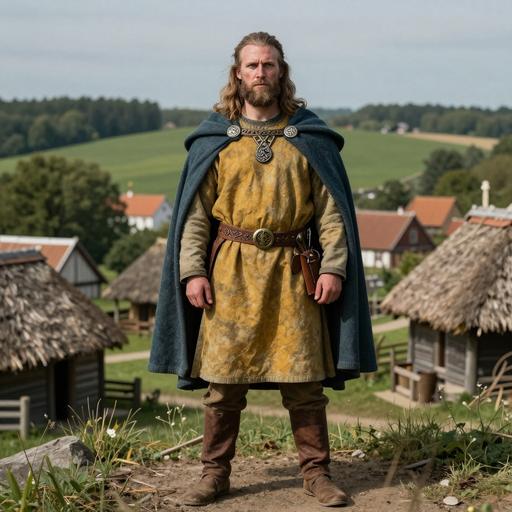
Portrait of ancient individual VK329 from Denmark, dated 678 CE - 878 CE
VK329
Denmark Viking Age Denmark 678 CE - 878 CE Viking Denmark R1b1a1b1a1a2a1a1a2 Downstream
Chapter VI

Carrier Distribution Map

Geographic distribution of 1 ancient DNA sample (direct and subclade carriers of R1B1A1B1A1A2A1A1A)

Subclade carrier
Time Period Filter
All Time Periods
Showing all samples
Chapter VII

Temporal Distribution

Distribution of carriers across archaeological periods

Chapter VIII

Geographic Distribution

Distribution by country of origin (direct and subclade carriers shown by default)

Chapter IX

Country × Era Distribution

Cross-tabulation of carrier countries and archaeological periods (direct and subclade carriers shown by default)

Data

Data & Provenance

Source information and data quality

Last Updated 2026-02-16
Confidence Score 50/100
Coverage Low
Data Source

We use the latest phylotree for YDNA haplogroup classification and data.