The Story
The journey of mtDNA haplogroup K1C1A
Origins and Evolution
mtDNA haplogroup K1C1A is a subclade of K1C1, itself part of the broader K1c branch of haplogroup K. The parent clade K1C1 is widely interpreted to have arisen in the Near East or Anatolia during the early Holocene (around 8 kya) and subsequently spread into Europe with the demic diffusion of early Neolithic farmers. K1C1A represents a later branching within that Near Eastern-derived pool, plausibly coalescing several thousand years after the initial K1C1 split (hence an estimated origin in the mid-Neolithic, ~6.5 kya). Its phylogenetic position and geographic pattern are consistent with a maternal lineage that accompanied population movements along the Anatolian-to-Europe route and persisted in certain regional and isolated contexts.
Subclades (if applicable)
As a named subclade (K1C1A), this lineage may include further downstream branches identifiable by private or rare mutations in complete mtGenome sequencing. Published datasets and public phylogenies show few deeply divergent sub-branches under K1C1A in modern samples, consistent with a modest effective population size and geographic patchiness; targeted mitogenome sequencing of additional ancient and modern samples may reveal more structure. K1C1 (the parent) has been split in some trees into sibling groups (e.g., K1C1B, other K1C1x branches) that together mark the Early/Mid-Holocene Anatolian-derived maternal diversity.
Geographical Distribution
K1C1A is best characterized as a Near Eastern/Anatolian-derived lineage that is now scattered at low-to-moderate frequencies across parts of Europe and the Near East. Highest relative concentrations tend to occur in regions with strong Neolithic farmer legacy or in populations with historical Near Eastern connections (e.g., some coastal and island Mediterranean groups). Detectable occurrences in the Caucasus and isolated cases farther afield (North Africa, parts of Central Asia) reflect both ancient movements and later historic contacts and gene flow. In modern population surveys it appears sporadically in Southern Europe (Iberia, Italy, Greece), in some Anatolian and Levantine samples, and at lower frequencies in western and northern Europe and select island populations (e.g., Sardinia and other Mediterranean islands).
Historical and Cultural Significance
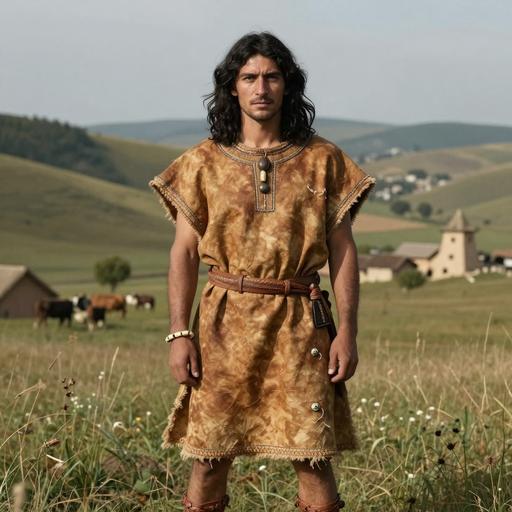
Because of its phylogenetic placement and age, K1C1A is most informative about Neolithic-era movements and the maternal component of farming communities expanding from Anatolia into Europe. It can serve as a marker for maternal ancestry associated with Early European Farmer-derived populations such as those connected with the Linearbandkeramik (LBK) and Cardial/Impressed Ware spread, though its presence in later cultures indicates continuity and admixture rather than exclusive association with any single archaeological horizon. In some modern Jewish communities (notably elements of Ashkenazi maternal lineages), related K and K1 subclades appear at elevated frequencies; K1C1A itself is observed at low-to-moderate levels in a subset of studies, suggesting either ancient shared ancestry or later incorporation.
Conclusion
K1C1A is a mid-Holocene maternal lineage that traces to the Near East/Anatolia and reflects the broader pattern of Neolithic farmer expansions into Europe. Its current distribution—sporadic but persistent across southern Europe, parts of the Near East, and some Mediterranean island populations—reflects both the initial spread of farming and subsequent demographic events (local drift, isolation, and later historical gene flow). Continued mitogenome sequencing of both ancient and modern samples will refine the internal structure, age estimates, and fine-scale geographic history of this haplogroup.
Key Points
- Origins and Evolution
- Subclades (if applicable)
- Geographical Distribution
- Historical and Cultural Significance
- Conclusion