Menu
mtDNA Haplogroup • Maternal Lineage

N1A1A1A1

mtDNA Haplogroup N1A1A1A1

~6,000 years ago
Near East / Anatolia
1 subclades
Scroll to explore
Chapter I

The Story

The journey of mtDNA haplogroup N1A1A1A1

Origins and Evolution

N1A1A1A1 is a fine-scale descendant of the N1a family, itself an important marker of Early Neolithic demography in West Eurasia. The broader N1a lineage expanded in association with early farming communities in the Near East and Anatolia and spread into Europe with the first farmers. Based on its placement downstream of N1A1A1A (parent clade estimated ~7 kya) and its presence in Neolithic contexts, N1A1A1A1 most likely formed in the Near East/Anatolia during the late Early Neolithic or the transition to the Middle Neolithic (on the order of ~6 kya), representing a regional diversification within farmer-associated maternal lineages.

Ancient DNA studies show that N1a and its subclades were relatively common in some Early Neolithic European farming groups (for example, LBK and Cardial-related assemblages) but declined in frequency in later periods and in many modern populations. The limited number of occurrences and the restricted geographic pattern of N1A1A1A1 indicate a demographic history of early expansion followed by dilution through subsequent migrations and population turnovers.

Subclades (if applicable)

At the current resolution, N1A1A1A1 is a terminal or near-terminal branch in many phylogenies used in population studies; some datasets also identify very minor private or local downstream variants (private mutations leading to sample-specific subbranches). Because this clade is rare in modern populations, robust naming of further downstream subclades depends on dense full-mitogenome sequencing of additional ancient and modern carriers. In practice, researchers treat N1A1A1A1 as a useful marker of Neolithic-associated maternal ancestry when detected in archaeological samples.

Geographical Distribution

N1A1A1A1 is concentrated in the area where early farming originated and radiated: Anatolia and the Levant. Ancient occurrences are best documented in Anatolian Neolithic sites and in Early European Neolithic contexts (e.g., LBK and Cardial-associated remains), reflecting migration routes along both the continental (Danubian/LBK) and Mediterranean (Cardial) corridors. In modern populations the haplogroup is uncommon but can be detected at low frequencies in parts of Southern Europe (Italy, Greece, fringe Iberia), in some populations of the Caucasus and Iran at low to moderate levels, and sporadically in North Africa and the Horn of Africa — the latter reflecting later gene flow between the Near East and northeastern Africa. There are occasional isolated observations in parts of Central Asia and steppe-adjacent groups, generally at very low frequency.

Historical and Cultural Significance

Because N1A1A1A1 is nested within an N1a subclade associated with the early Neolithic, its main significance is as a genetic marker of early farming demography. Its presence in LBK and Cardial contexts links it to the major cultural expansions that carried agriculture into Europe. The later rarity of N1A1A1A1 in many modern populations illustrates common patterns seen in ancient DNA: strong early demographic contributions by farmers that were subsequently reshaped by Bronze Age and later movements (steppe-associated expansions, subsequent Mediterranean and historic-era migrations). Where the haplogroup appears in North Africa or the Horn of Africa, it likely indicates episodic gene flow from the Near East across the Mediterranean or via the Red Sea rather than large-scale Neolithic settlements in those regions.

Archaeologically, associations with Anatolian Neolithic, Central European LBK, and Cardial-Impressed Ware contexts make N1A1A1A1 part of the genetic signature used to reconstruct the spread of agriculture and the accompanying demographic processes in the 7th–6th millennia BCE.

Conclusion

N1A1A1A1 is a rare but informative mtDNA lineage. Its phylogenetic position and ancient occurrences tie it to the Near Eastern origin of European farming and to the early Neolithic demographic expansions into Europe. Today it survives at low frequency in a scattered set of populations around the Mediterranean, the Caucasus, and parts of northeastern Africa, and its study benefits from full mitogenome sequencing and integration with archaeological context to clarify detailed migration and continuity patterns.

Key Points

  • Origins and Evolution
  • Subclades (if applicable)
  • Geographical Distribution
  • Historical and Cultural Significance
  • Conclusion

Chapter II

Tree & Relationships

Phylogenetic context and subclades

Evolution Path

This haplogroup's evolutionary journey from its earliest ancestor to the present.

Steps Haplogroup Age Estimate Archaeology Era Time Passed Immediate Descendants Tested Modern Descendants Ancient Connections
1 N1A1A1A1 Current ~6,000 years ago 🪨 Chalcolithic 6,000 years 1 5 0
2 N1A1A1A ~7,000 years ago 🌾 Neolithic 7,000 years 3 23 84
3 N1A1A1 ~8,000 years ago 🌾 Neolithic 8,000 years 2 24 0
4 N1A1A ~9,000 years ago 🌾 Neolithic 9,000 years 2 48 64
5 N1A1 ~11,000 years ago 🌾 Neolithic 11,000 years 2 80 0
6 N1A ~13,000 years ago 🏹 Mesolithic 13,000 years 3 100 6
7 N1 ~55,000 years ago 🦴 Paleolithic 55,000 years 2 276 21
8 N ~60,000 years ago 🦴 Paleolithic 60,000 years 15 15,452 13
9 L3 ~70,000 years ago 🦴 Paleolithic 70,000 years 11 17,621 6
10 L ~160,000 years ago 🦴 Paleolithic 160,000 years 7 18,987 5

Siblings (2)

Other branches from the same parent haplogroup

Chapter III

Where in the World

Geographic distribution and modern presence

Place of Origin

Near East / Anatolia

Modern Distribution

The populations where mtDNA haplogroup N1A1A1A1 is found include:

  1. Anatolian and Levantine Near Eastern populations
  2. Ancient Anatolian Neolithic assemblages
  3. Early European Neolithic farmers (e.g., LBK, Cardial-related groups)
  4. Modern Southern European populations (Italy, Greece, Iberian fringe) at low frequencies
  5. Central and Northern European populations in ancient contexts (now rare)
  6. North African coastal populations and the Maghreb at low frequencies
  7. Horn of Africa populations (Ethiopia, Somalia) in specific sublineages
  8. Caucasus and Iranian populations (moderate to low frequencies)
  9. Sporadic occurrences in parts of Central Asia and steppe-adjacent groups
  10. Ancient Cardial/Cardial-related and other early farmer assemblages in Europe
CHAPTER IV

When in Time

Your haplogroup in the context of human history

~10k years ago

Neolithic Revolution

Agriculture begins, settled communities form

~6k years ago

Haplogroup N1A1A1A1

Your mtDNA haplogroup emerged in Near East / Anatolia

Near East / Anatolia
~5k years ago

Bronze Age

Metalworking, writing, and early civilizations

~3k years ago

Iron Age

Iron tools, expanded trade networks

~2k years ago

Classical Antiquity

Greek and Roman civilizations flourish

Present

Present Day

Modern era

Your Haplogroup
Historical Era
Chapter IV-B

Linked Cultures

Ancient cultures associated with mtDNA haplogroup N1A1A1A1

Cultural Heritage

These ancient cultures have been linked to haplogroup N1A1A1A1 based on matching ancient DNA samples from archaeological excavations. The presence of this haplogroup in these cultures provides insights into the migrations and population movements of populations carrying this haplogroup.

Aktogai Culture Battle Axe Culture Danish Late Neolithic Georgievsky Kashkarchi Magyar Elite Culture Santok Culture Selenge Culture Sintashta Culture Srubnaya-Alakul Tagar Culture
Culture assignments are based on archaeological context of ancient DNA samples and may represent regional associations during specific time periods.
Chapter V

Sample Catalog

19 direct carriers and 7 subclade carriers of haplogroup N1A1A1A1

26 / 26 samples
Portrait Sample Country Era Date Culture mtDNA Match
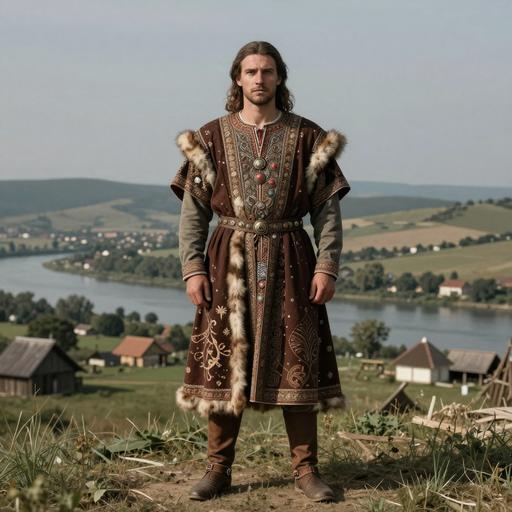
Portrait of ancient individual SZ27 from Hungary, dated 419 CE - 543 CE
SZ27
Hungary Langobard Period Hungary 419 CE - 543 CE Langobard Culture N1a1a1a1 Direct
Portrait of ancient individual C3674 from China, dated 541 BCE - 61 BCE
C3674
China Iron Age Zhagunluke, Xinjiang, China 541 BCE - 61 BCE Zhagunluke Culture N1a1a1a1 Direct
Portrait of ancient individual VK473 from Sweden, dated 900 CE - 1050 CE
VK473
Sweden Viking Age Sweden 900 CE - 1050 CE Viking N1a1a1a1 Direct
Portrait of ancient individual PCA0132 from Poland, dated 900 CE - 1000 CE
PCA0132
Poland Iron Age Niemcza Culture 900 CE - 1000 CE Niemcza Culture N1a1a1a1 Direct
Portrait of ancient individual DA2 from Russia, dated 925 BCE - 810 BCE
DA2
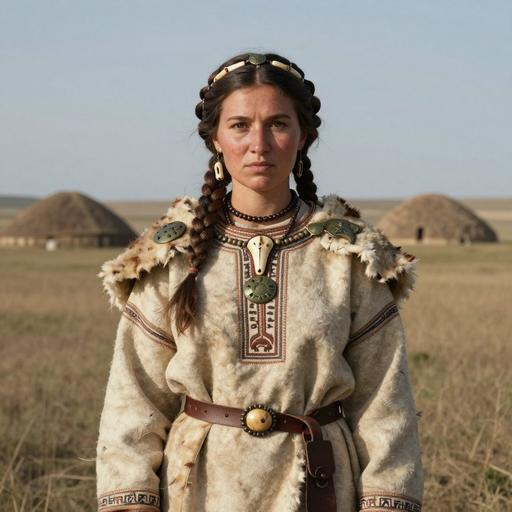
Russia Tagar Culture, Russia 925 BCE - 810 BCE Tagar Culture N1a1a1a1 Direct
Portrait of ancient individual DA2 from Russia, dated 925 BCE - 810 BCE
DA2
Russia Iron Age West Siberia 925 BCE - 810 BCE N1a1a1a1 Direct
Portrait of ancient individual KeF2-1045 from Hungary, dated 960 CE - 1000 CE
KeF2-1045
Hungary Conqueror Elite Hungary 960 CE - 1000 CE Magyar Elite Culture N1a1a1a1 Direct
Portrait of ancient individual PCA0407 from Poland, dated 1000 CE - 1200 CE
PCA0407
Poland Iron Age Santok Culture 1000 CE - 1200 CE Santok Culture N1a1a1a1 Direct
Portrait of ancient individual I4255 from Uzbekistan, dated 1200 BCE - 1000 BCE
I4255
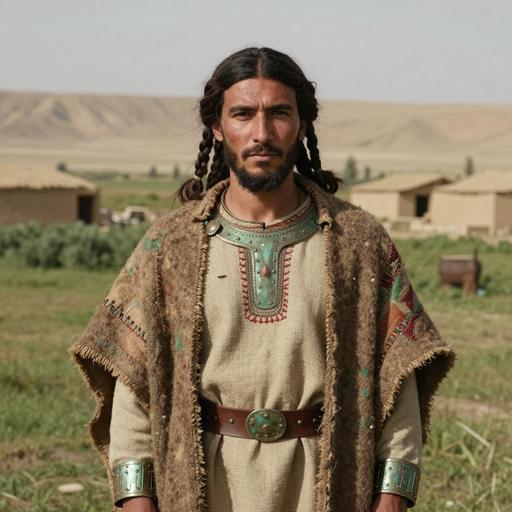
Uzbekistan Bronze Age Kashkarchi 1200 BCE - 1000 BCE Kashkarchi N1a1a1a1 Direct
Portrait of ancient individual BAU001 from Mongolia, dated 1305 CE - 1404 CE
BAU001
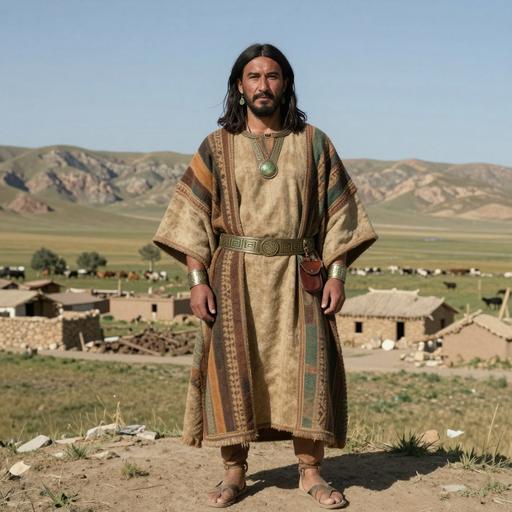
Mongolia Xiongnu to Late Medieval Selenge, Mongolia 1305 CE - 1404 CE Selenge Culture N1a1a1a1 Direct
Chapter VI

Carrier Distribution Map

Geographic distribution of 26 ancient DNA samples (direct and subclade carriers of N1A1A1A1)

Direct carrier Subclade carrier
Time Period Filter
All Time Periods
Showing all samples
Chapter VII

Temporal Distribution

Distribution of carriers across archaeological periods

Chapter VIII

Geographic Distribution

Distribution by country of origin (direct and subclade carriers shown by default)

Chapter IX

Country × Era Distribution

Cross-tabulation of carrier countries and archaeological periods (direct and subclade carriers shown by default)

Data

Data & Provenance

Source information and data quality

Last Updated 2026-02-16
Confidence Score 50/100
Coverage Low
Data Source

We use the latest phylotree for MTDNA haplogroup classification and data.