The Story
The journey of Y-DNA haplogroup I2A1B1A1A
Origins and Evolution
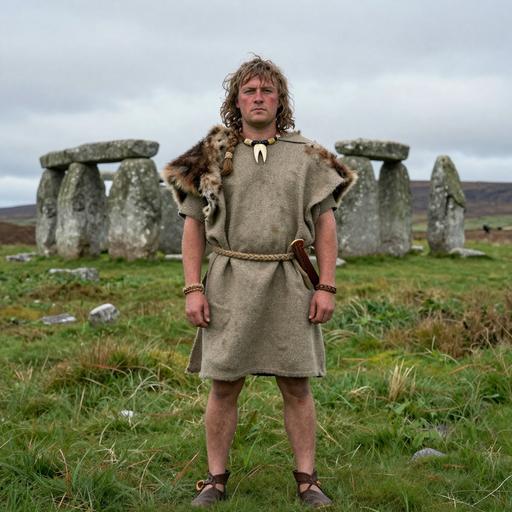
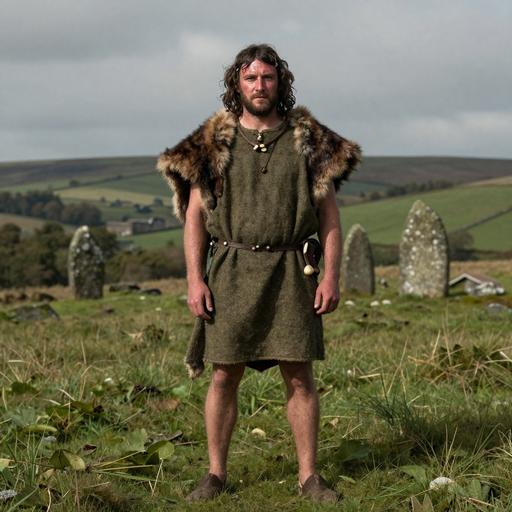
Y-DNA haplogroup I2a1b1a1a is a derived branch of the ancient European paternal macro-lineage I2, which is widely associated with Mesolithic hunter-gatherer ancestry in Europe. As a subclade of I2a1b1a1, it is best interpreted as a later postglacial offshoot that likely arose in or near southeastern Europe, where several deep European I2 lineages survived the Last Glacial Maximum and diversified during the early Holocene.
The estimated time depth for this branch is most plausibly in the range of the early to middle Holocene, roughly around 10 thousand years ago, though the exact age depends on the current phylogenetic resolution and future sequencing studies. Like many I2-derived lineages, its distribution today reflects a combination of ancient regional continuity and later demographic expansions, especially those connected with Balkan, Slavic, and broader European population history.
Subclades
As an intermediate-to-downstream branch within I2a1b1a1, this lineage may have several descendant branches not yet fully resolved in public summary datasets. In general, subclades of this type are often characterized by localized founder effects, especially in the Balkans and adjacent regions, followed by dispersal into other parts of Europe.
Because Y-DNA phylogenies are continually updated, the precise internal branching structure of I2a1b1a1a may change as additional high-resolution sequencing identifies new terminal subclades. However, its broader phylogenetic placement strongly suggests a relationship to other southeastern and central European I2 lineages.
Geographical Distribution
This haplogroup is found most often in southeastern Europe, especially among Balkan populations, where I2 lineages have some of their strongest modern frequencies. It is also observed in East Slavic, Central European, Baltic, and Scandinavian populations, consistent with historical population movements across Europe.
Lower-frequency occurrences in German, Austrian, British, Irish, and diaspora populations likely reflect a mixture of prehistoric spread, medieval migrations, and more recent population mobility. In some regions, the lineage may appear at low to moderate frequency but can be locally enriched due to founder effects.
Historical and Cultural Significance
Haplogroup I2a1b1a1a is significant because it belongs to one of the oldest surviving paternal lineages in Europe. Its deeper ancestry is often linked to European hunter-gatherers, while its later distribution reflects the reshaping of Europe during the Neolithic, Bronze Age, Iron Age, and medieval periods.
In the Balkans, I2-derived lineages are frequently discussed in the context of population continuity from pre-Neolithic and postglacial groups, later interacting with incoming farming, steppe-related, and Slavic-associated populations. This makes the haplogroup useful for studying male-mediated continuity and admixture in southeastern and central Europe.
Conclusion
I2a1b1a1a is a downstream branch of the ancient European I2 paternal lineage, most likely originating in southeastern Europe during the postglacial Holocene. Its present distribution across the Balkans and much of Europe reflects both deep local ancestry and later demographic expansions, making it an informative marker for reconstructing the genetic history of European populations.
Key Points
- Origins and Evolution
- Subclades
- Geographical Distribution
- Historical and Cultural Significance
- Conclusion