The Story
The journey of Y-DNA haplogroup I2A1B1A1A2
Origins and Evolution
Y-DNA haplogroup I2a1b1a1a2 is a derived subclade within the wider I2 paternal lineage, one of the major European Y-chromosome branches with deep roots in prehistoric Europe. Its broader ancestral background is associated with European hunter-gatherer populations, especially those that survived and later expanded from refugial areas in southeastern Europe after the Last Glacial Maximum.
At this level of the phylogenetic tree, I2a1b1a1a2 likely represents a relatively recent Bronze Age or late Neolithic-era diversification within the southeastern European sphere, though the exact coalescence time can vary depending on the phylogenetic resolution used. Because it is nested within an already regionally structured Balkan lineage, its origin is best understood as part of the complex paternal continuity and reshaping of populations in the Balkans and adjacent areas during the transition from prehistory to history.
Subclades
As a downstream intermediate clade, I2a1b1a1a2 may contain or connect to more terminal branches that are not always widely reported in public datasets. In general, subclades of this lineage are expected to show strong founder effects, geographic clustering, and lineage expansion within patrilineal communities. This pattern is typical of many Balkan-associated I2 branches, where localized continuity and repeated bottlenecks produced fine-scale Y-DNA structure.
Geographical Distribution
The distribution of I2a1b1a1a2 is expected to be highest in southeastern Europe, especially in the Balkans, with secondary presence in surrounding regions that received historical migration from Balkan and Slavic source populations. Like many descendants of the I2 macrolineage, it may be found at lower frequencies across Central Europe, Eastern Europe, the Baltic region, and parts of Northern Europe due to medieval and post-medieval dispersals.
In modern datasets, such lineages are often detected among populations with known historical ties to Balkan, Slavic, Germanic, and broader European mixed ancestry. Its broader pattern suggests both deep regional continuity and later secondary dispersal.
Historical and Cultural Significance
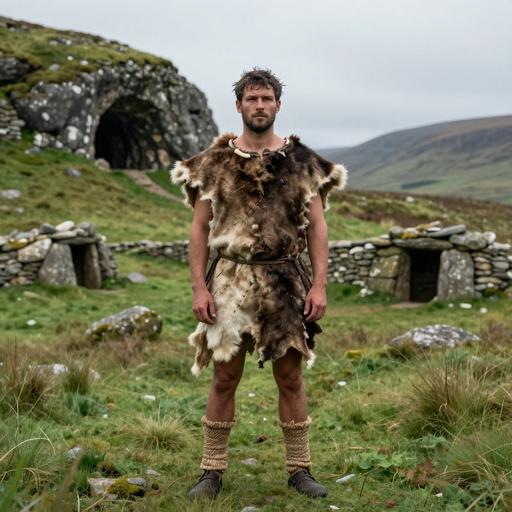
The paternal history of I2a1b1a1a2 is tied to the long demographic history of Europe, especially the postglacial re-expansion of hunter-gatherer lineages and their later integration into farming and post-farming societies. While this subclade itself cannot be assigned with certainty to a single archaeological culture, its broader I2 background is often discussed in relation to Mesolithic European hunter-gatherers, Neolithic Balkan communities, and later Bronze Age and Iron Age population turnovers.
In the Balkans, lineages within I2 became especially important due to long-term regional continuity and the persistence of indigenous paternal lines through later migrations and state formations. Some descendant branches spread beyond the Balkans during the Slavic expansions, medieval population shifts, and modern diaspora movements, contributing to its presence in multiple parts of Europe and overseas.
Relationship to Other Haplogroups
I2a1b1a1a2 belongs to a paternal clade that is often contrasted with other major European Y-DNA lineages such as R1a, R1b, E1b1b, and J2. These lineages reflect different layers of European population history, including hunter-gatherer continuity, Neolithic farmer expansion, and later steppe-related demographic processes.
Within the broader I2 tree, this branch is genealogically closest to other southeastern and central European I2 subclades. These related lineages often show overlapping geographic distributions, especially in the Balkans, Carpathian Basin, and parts of East-Central Europe.
Conclusion
Y-DNA haplogroup I2a1b1a1a2 is a European paternal subclade with southeastern origins, best interpreted as part of the deep and layered genetic history of the Balkans. Its distribution reflects a combination of ancient regional continuity, founder effects, and later expansions into surrounding European regions.
Key Points
- Origins and Evolution
- Subclades
- Geographical Distribution
- Historical and Cultural Significance
- Relationship to Other Haplogroups