


Genetic identification of Árpád Dynasty members from the ossuary of the Royal Basilica at Székesfehérvár
Kovács Bence, B Olasz, Judit J et al.
Visual Summary
A visual snapshot of this publication's key findings at a glance
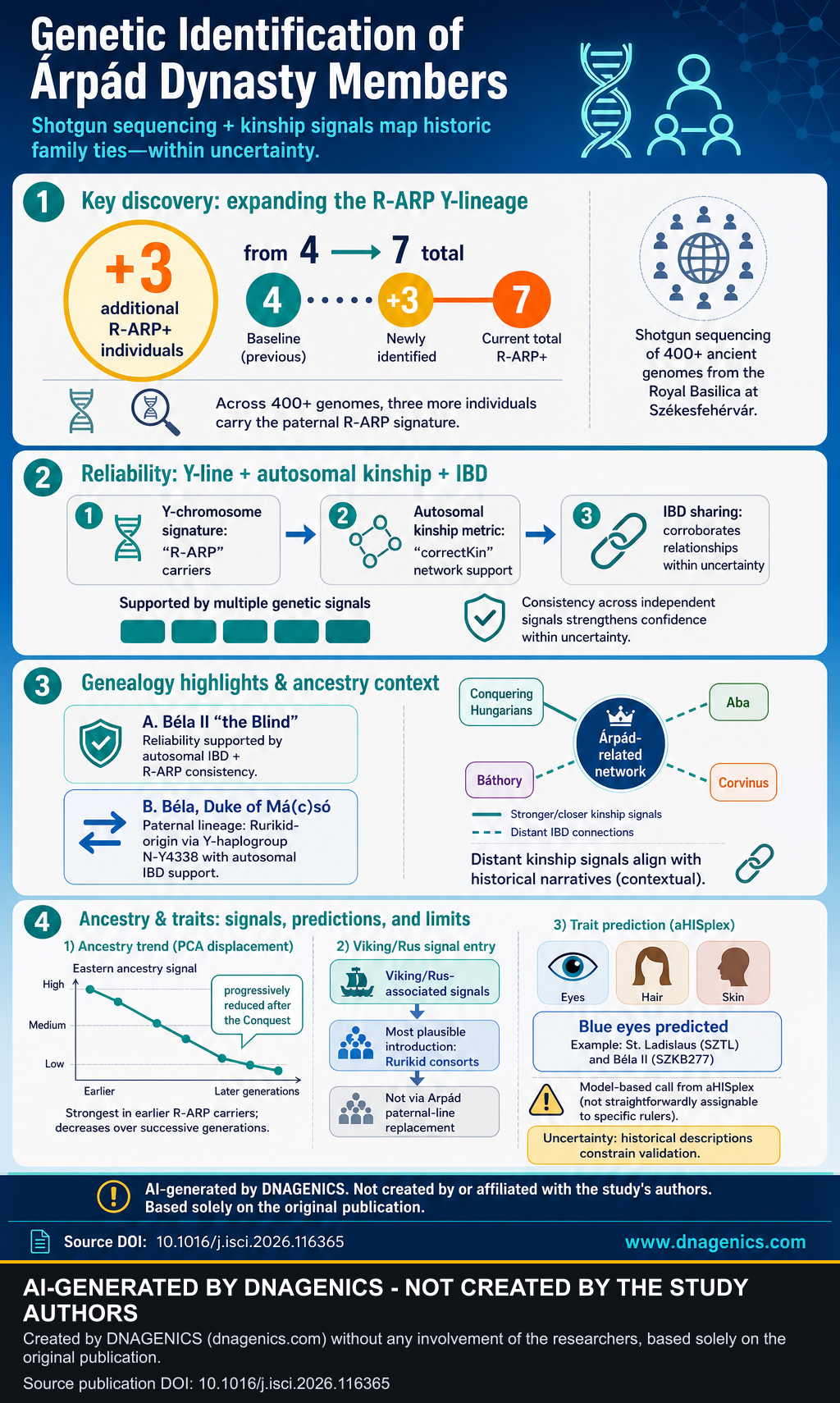
- This infographic was AI-generated.
- It was created by DNAGENICS, without any involvement of the researchers, based solely on the original publication.
- The researchers involved in the study have nothing to do with the creation of this infographic and are not associated with, and do not endorse, it.
Publication Details
Comprehensive information about this research publication
Abstract
Summary of the research findings
Shotgun sequencing of >400 genomes from the ossuary of the Royal Basilica of Székesfehérvár identified three additional skeletal remains carrying the Árpád Dynasty's Y chromosome haplogroup R-ARP, raising the total known R-ARP+ individuals from four to seven. Kinship and IBD analyses placed these individuals within the dynasty alongside Béla, Duke of Macsó (†1272)—a Rurikid prince and great-great-grandson of King Béla III— and a fetus from a tomb adjacent to Béla III. One of these is King Béla II "the Blind" (1131–1141); a second is a likely second-degree relative of St. Ladislaus (probably an uncle, identity unresolved); the third, buried outside the original Basilica walls, is related to the Árpáds only by Y-haplogroup. The authenticity of Béla, Duke of Macsó's remains was genetically confirmed. IBD also linked Árpáds to conquering Hungarians, Vikings, and the Aba, Báthory, and Corvinus families.
AI-Generated Summary
AI-generated by DNAGENICSIndependent AI summary of ancestry and genetic findings from the published study
Important: This summary is AI-generated by DNAGENICS for informational purposes only. It was not created by, affiliated with, or endorsed by the researchers behind the original publication, and is based solely on that published research. It may contain errors or omissions. DNAGENICS disclaims all liability for any inaccuracies or consequences arising from use of this information. Verify all information against the original publication. This is not professional scientific review or medical advice.