
01
Paleolithic Migrations
40,000 - 12,000 BCEFirst modern humans settling East Asia, from Siberian tundra to the islands of Japan.


From Jomon Japan to the Eurasian steppe
Compare your DNA with ancient reference individuals from China, Japan, Korea, Mongolia, and Siberia. Explore genetic similarity across archaeological contexts and time periods without treating a statistical match as proof of direct descent.
The mountains remember.
The rivers remember.
The people continue. Ancient proverb
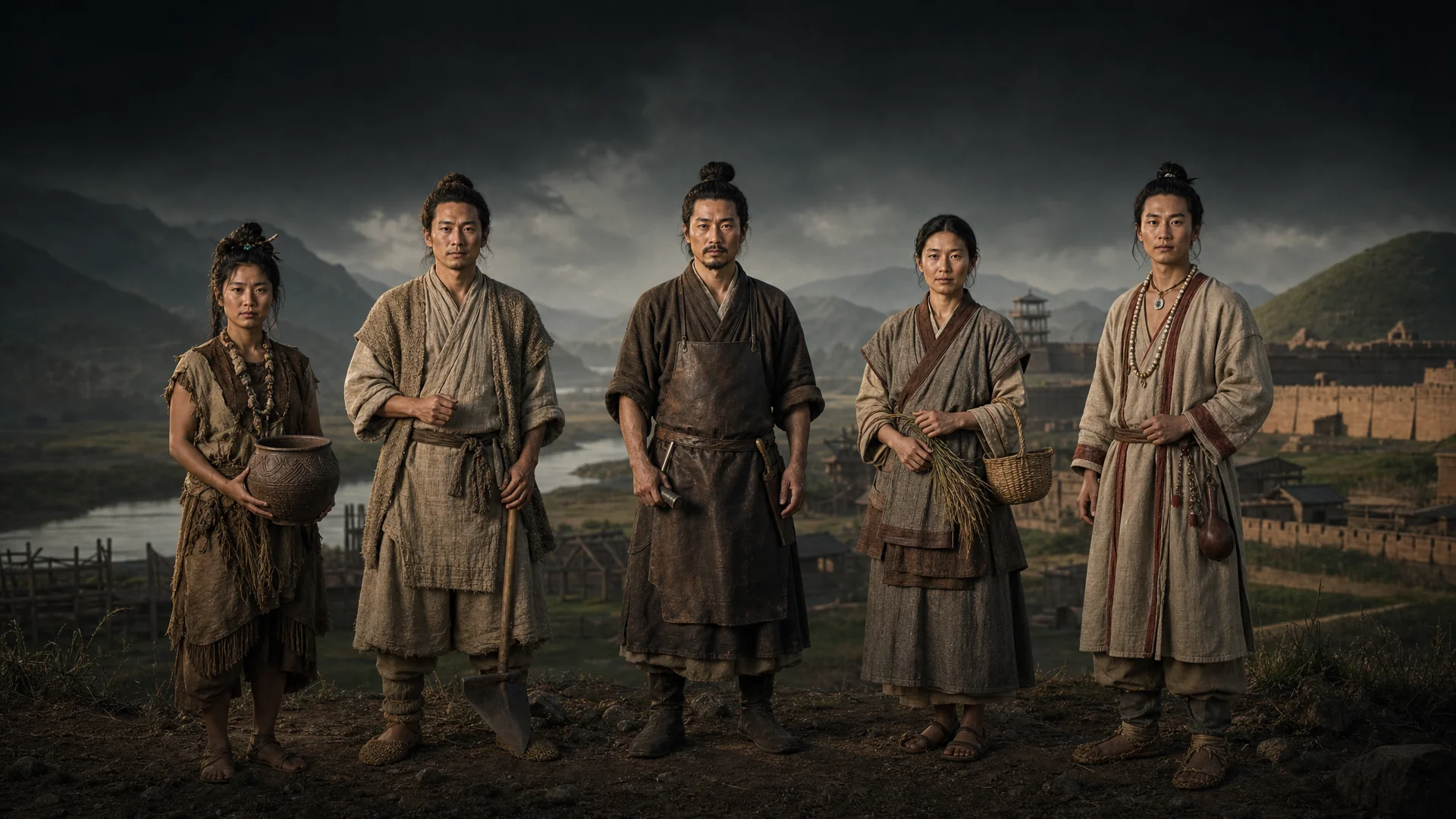
This illustration is an AI-generated speculative reconstruction and may be historically or biologically inaccurate. It is not a photograph of any real individual.
Peoples · Places · Empires · A shared past
When the Paleolithic peoples of Siberia ventured south and east, they found a world of extremes: volcanic islands, boundless steppes, river valleys rich with silt and promise.
In Japan, the Jomon people created some of the world's earliest pottery, living as hunter-gatherers for over 10,000 years in a culture of extraordinary longevity. On the mainland, Neolithic farmers along the Yellow and Yangtze rivers domesticated rice and millet, laying the foundations for the great dynasties to come.
The Bronze Age brought the Shang, whose oracle bones and ritual bronzes testify to a civilization of breathtaking sophistication. The Zhou, Qin, and Han dynasties that followed unified vast territories, built the Great Wall, and opened the Silk Road.
In Korea, the Three Kingdoms forged their own identity, while in Japan the Yayoi migrants brought rice cultivation and metalwork from the continent.
On the steppe, the Xiongnu, Turks, and Mongols built empires on horseback that reshaped the continent. The Tang Dynasty presided over a golden age of poetry and trade. The Song invented gunpowder and movable type. Through every era, these populations endured, and their genetic signatures remain visible in the reference panels used by this report.
“The rivers remember. The mountains remember. The steppe remembers.” Ancient proverb
First modern humans settling East Asia, from Siberian tundra to the islands of Japan.
Japan's extraordinary hunter-gatherer tradition, creators of the world's earliest pottery.
Yangshao and Longshan farmers cultivating rice and millet along the great rivers of China.
The Shang and early Zhou kingdoms, oracle bones, ritual bronzes, and the birth of Chinese writing.
The age of Confucius and the Terracotta Army, Qin unification and Han expansion.
Han, Sui, and Tang dynasties: Silk Road trade, Buddhist transmission, and cultural flowering.
Song innovation, Goryeo artistry, Kamakura warriors, and the age of porcelain and print.
Xiongnu, Turkic, and Mongol confederations, the horsemen who connected East and West.
Not just percentages. A detailed look at how your DNA compares with ancient East Asian reference populations.
We scan your autosomal DNA in short segments and compare each one against every ancient East Asian genome using identical-by-state (IBS) segment matching, weighting longer, rarer shared segments more heavily.
A panel-specific 0-100 statistical similarity score weighting shared-segment evidence at 50%, ADMIXTURE distance at 31.25%, and Monte Carlo fit at 18.75%. It is not an ancestry percentage or proof of direct descent.
The fixed regional ADMIXTURE reference panel defines stable PCA axes; your kit is projected afterward without moving the reference samples.
See the real archaeological sites where your closest matches were excavated, from the islands of Japan to the plains of Mongolia.
Your genetic affinity to each East Asian era: Paleolithic, Jomon, Neolithic, Bronze Age, Iron Age, Imperial, Medieval, and Steppe, all quantified.
Meet the ancient individual whose DNA is most similar to yours. Learn their story, their era, and their place in East Asian history.
Our AI assistant provides personalized explanations of your results, placing your genetic similarity in historical and archaeological context.
Explore connections to specific regions: the Japanese archipelago, the Korean peninsula, the Yangtze valley, the Mongolian steppe, Siberia, and more.
Find ancient East Asians who share your mtDNA maternal or Y-DNA paternal haplogroup, a shared lineage branch rather than a named common ancestor.
Understand whether your strongest similarity lies with the earliest Paleolithic settlers, Neolithic farmers, steppe nomads, or later dynastic populations across East Asia.
Connect with famous sites like the Terracotta Army, Sanxingdui, Yoshinogari, Erlitou, Gyeongju, and the Xiongnu royal tombs where your matches were found.
Your report includes an interactive map showing the exact archaeological sites across East Asia where your genetic matches were discovered.
Explore the map preview below, or search the complete reference panel in the table. Genetic similarity to these individuals does not mean they are your real ancestors.
Map preview This map shows a preview of 150 of 1259 reference individuals used in this report. Search the complete list in the table below.
| Sample ID | Name | Location | Era | mtDNA | Y-DNA |
|---|
Loading reference individuals…
No reference individuals match your search.
This portrait is an AI-generated speculative reconstruction and may be historically or biologically inaccurate. It is not a photograph of the individual.
Real archaeological individuals from burial sites across East Asia, their DNA preserved across millennia. The portraits are AI-generated speculative reconstructions, not photographs.
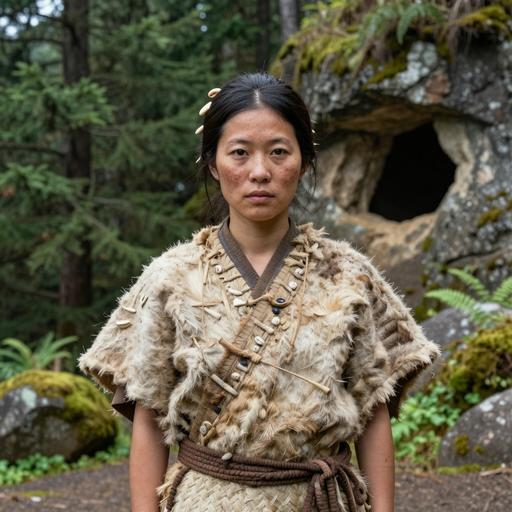
Lived among Japan's earliest pottery-making foragers, thousands of years before rice farming reached the islands.
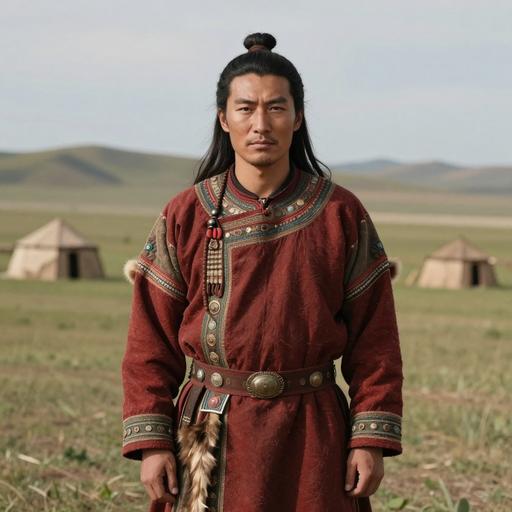
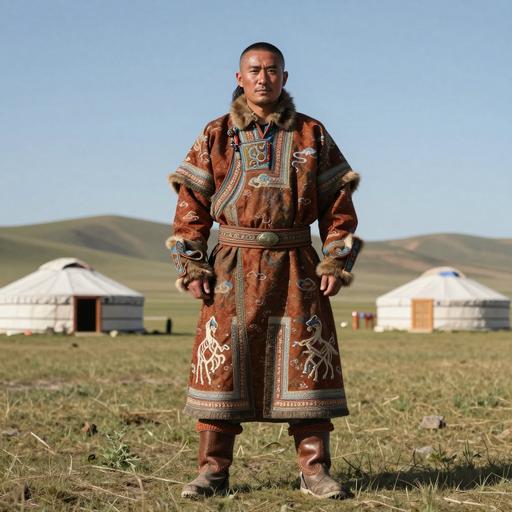


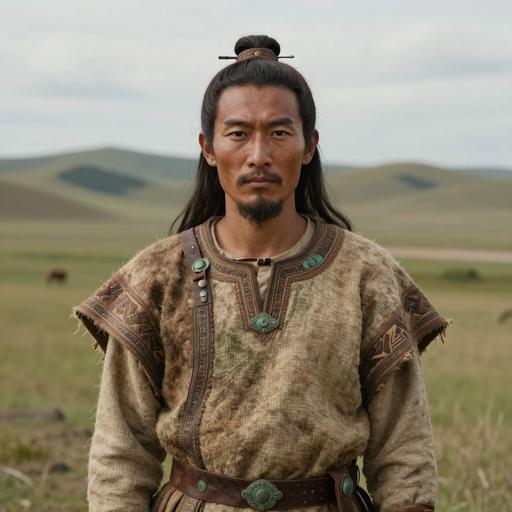
Lived along the West Liao River in Inner Mongolia, where Bronze Age herding cultures bridged the steppe and the cultures of the Yellow River.
Ancient DNA, modern analysis. Advanced algorithms, transparent results.
We scan your autosomal DNA in short segments and compare each one against every ancient East Asian genome using identical-by-state (IBS) segment matching, weighting longer, rarer shared segments more heavily.
Advanced ADMIXTURE algorithms compare your genotype against reference populations across ancestral components, providing high resolution for Ancient East Asia genetic comparison.
The fixed regional ADMIXTURE reference panel defines stable PCA axes; your kit is projected afterward without moving the reference samples.
Your Ancient East Asia Index is a panel-specific statistical similarity score weighting shared-segment evidence at 50%, ADMIXTURE distance at 31.25%, and Monte Carlo fit at 18.75%. It is not an ancestry percentage or proof of direct descent.
Our East Asia reference panel includes samples from China, Japan, Korea, Mongolia, and Siberia, spanning over 40,000 years of human history.
All ancient DNA samples come from peer-reviewed academic publications, with full citations and links provided in your report.
Every score in the report states the method behind it, so you can see exactly which evidence drove each result rather than being handed an unexplained number.
Full compliance with European data protection regulations.
Bank-level security for all your genetic data.
Delete your data anytime. No questions asked.
See what awaits you in your personalized Ancient East Asia report. The figures below are illustrative examples, not real results.
Preview a Live Demo ReportExplore your genetic connections to the great regions of Ancient East Asia.
See your position in Ancient East Asia genetic space with interactive scatter plots.
Find ancient individuals who share your maternal or paternal lineage branch.
Print, export, or share your results with family and friends.
Some connections are inherited. Others are measured. Yours is waiting in the reference panels of ancient East Asia.
The rivers remember. The mountains remember. The steppe remembers. Now you can see where your DNA fits in that record.
Secure payment · GDPR compliant · Your data stays yours
DNA Genics has been building ancestry and DNA analysis reports since 2018. Our reports come from years of work with our own reference panels, calculators and ancient-genome comparisons, developed and reviewed by our team. They are not generated on the fly or assembled as a side project. We use AI only in clearly labelled optional features.
Trusted by 200,000+ DNA Explorers
Real, verified reviews from people who have explored their genetic similarity with DNAGENICS
Great reports like the "Human Leukocyte Antigen" Report. The Deep Ancient Reports with Samples are very helpful to understand the Results and own Heritage. I like the Admixture Studio and the powerful G25 Studio.
DNAGenics is an excellent company. It provides necessary services for those of us who need help understanding and working with complex genetic information. They are efficient in their communications. I recommend them without hesitation.
Excellent company with helpful customer support that always respond very quickly. There are always new features and the purchase packs include a lot of admixture reports and G25 coordinates. Highly recommend.