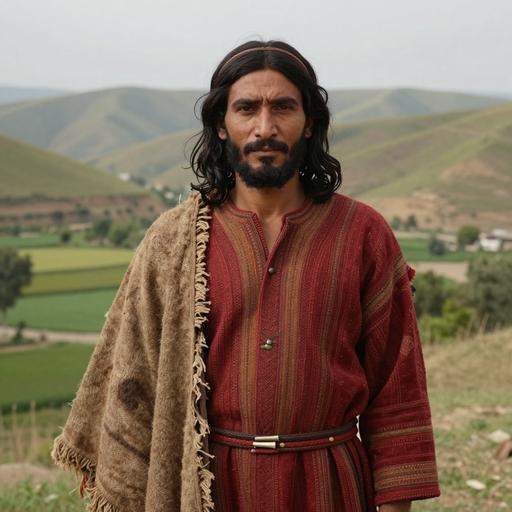
The Story
The journey of mtDNA haplogroup HV17
Origins and Evolution
mtDNA haplogroup HV17 is a subclade within the HV phylogeny, positioned under the parent clade HVB (which derives from the broader HV lineage that itself branches from R0/R). HV lineages are characteristic of West Eurasian maternal diversity and are thought to have deep roots in the Near East and adjacent regions following the Last Glacial Maximum. Based on the time depth of related HV subclades and the behavior of HV lineages in both modern and ancient samples, HV17 is plausibly a post‑glacial / early Neolithic clade, with an estimated origin on the order of approximately ~9 kya (thousands of years ago). This estimate is provisional and derived from the relative position of HV17 within HVB and observed coalescence times for comparable HV subclades.
Because HV17 is described as an intermediate node in the phylogenetic tree, it likely represents a lineage that helped connect earlier Near Eastern maternal diversity with later regional subclades that spread into Europe and the Mediterranean. However, the clade is currently under‑sampled in published datasets and may be split into further subclades once more whole mitogenomes are reported.
Subclades
At present, HV17 is best treated as an intermediate clade with limited resolved downstream diversity in public phylogenies. Where whole mitogenome sequencing has been performed on samples assigned to HV-derived lineages, researchers frequently find further internal structure (for example HV1, HV4, etc.), but HV17's internal branching pattern is not yet comprehensively characterized in the literature. Future sequencing and Phylotree updates are likely to define named subclades (e.g., HV17a/HV17b) and to refine its diagnostic mutations and time estimates.
Geographical Distribution
Modern distribution: Based on the geographic patterns of HV and HVB and the sparse reported occurrences consistent with an HV17 placement, this lineage is most plausibly found at low to moderate frequencies in the Near East, Anatolia, and the Caucasus, with occasional presence in the eastern Mediterranean and southern Europe. Where dense sampling exists (e.g., Armenian, Georgian, Turkish, and some Levantine datasets), HV clades in general are common and HV17-type mitogenomes may be detected at low frequencies.
Ancient DNA context: Broader HV lineages appear repeatedly in ancient Near Eastern and early European farmer contexts (Anatolian Neolithic and Early European Farmers). If HV17 is an early Neolithic Near Eastern lineage, it could appear in Neolithic Anatolian and early farmer-associated ancient samples; however, explicit HV17 assignments to published ancient mitogenomes remain limited and require confirmation.
Historical and Cultural Significance
Because HV lineages played a role in the maternal ancestry of populations that participated in the Neolithic expansion from Anatolia into Europe, HV17—if centered in Anatolia/Caucasus—could represent one of the maternal components carried by early farming communities into southeastern Europe and the Mediterranean. Its archaeological and cultural associations are therefore most plausibly with Anatolian Neolithic and other early farming complexes. Later, low‑frequency dispersals into Europe and the Mediterranean could reflect millennia of regional migrations, trade, and admixture (Bronze Age movements, historical population flows in the Near East and Mediterranean).
It is important to emphasize that HV17 itself is currently of limited visibility in published population surveys; therefore, its precise cultural affiliations and historical trajectories remain provisional until broader whole‑mitogenome sampling and ancient DNA matches are available.
Conclusion
mtDNA HV17 is a modestly aged, West Eurasian maternal lineage best placed as an intermediate subclade of HVB with an inferred origin in the Near East / Anatolia–Caucasus around the early Neolithic (roughly ~9 kya). It likely contributed to the maternal pool of early farming and regional populations, but is under‑sampled and understudied at present: targeted whole mitogenome sequencing and careful inclusion in ancient DNA analyses will be required to resolve its internal structure, precise age, and detailed geographic history.
Key Points
- Origins and Evolution
- Subclades
- Geographical Distribution
- Historical and Cultural Significance
- Conclusion