The Story
The journey of mtDNA haplogroup K1A4A1I
Origins and Evolution
mtDNA haplogroup K1A4A1I sits as a downstream subclade of K1A4A1, itself part of the broader haplogroup K lineage that is derived from the U8b'K branch. The parent clade K1A4A1 has been dated to the late Neolithic–Chalcolithic period in Anatolia / the Near East (roughly ~5.5 kya in the provided parent context). Given that pattern and the scarcity of K1A4A1I in modern and ancient samples, it is most parsimonious to place the origin of K1A4A1I later than the parent—likely in the late Chalcolithic to Bronze Age (approximately 3–4.5 kya). This timing is consistent with a derivation within farmer-derived communities in Anatolia, the Aegean, or nearby Levantine populations followed by limited dispersal into surrounding regions.
Subclades (if applicable)
K1A4A1I is itself a fine-scale terminal subclade within the K1A4A1 branch. At present it is rare enough that few (or no) reliably defined downstream sub-branches have been widely reported in public mtDNA phylogenies or population surveys. Where additional mutations are observed on full mitogenomes from modern or ancient individuals, they are treated as private or emergent lineages until replicated in multiple samples. Continued high-resolution sequencing of modern and ancient mitogenomes from Anatolia, the Aegean and southern Europe could identify further substructure beneath K1A4A1I.
Geographical Distribution
Empirical detection of K1A4A1I is sparse. The clade is best characterized by a low-frequency, patchy distribution consistent with a founder event in the Near East or Anatolia and subsequent spread with small-scale movements or gene flow into adjacent regions. Reported and plausible occurrences include:
- Southern Europe (Italy, Greece, Balkans, Iberia): low-to-moderate representation through Holocene farmer-descended populations and later continuity in some Mediterranean maternal pools.
- Western Europe (France, Britain): sporadic, generally low frequency likely reflecting later migration and gene flow rather than primary expansion.
- Levant and Anatolia: the likely area of origin and persistence at low frequency in modern Near Eastern populations.
- Caucasus and Anatolian fringe: occasional detections reflecting geographic proximity and gene flow.
- Diasporas (Americas and other regions): low-frequency modern occurrences tied to historic migration.
Only a very small number of ancient DNA hits (one documented ancient sample in the referenced database) have been attributed to the broader K1A4A1 lineage or its derivatives, consistent with a scenario of low effective maternal population size for this subclade through the Holocene.
Historical and Cultural Significance
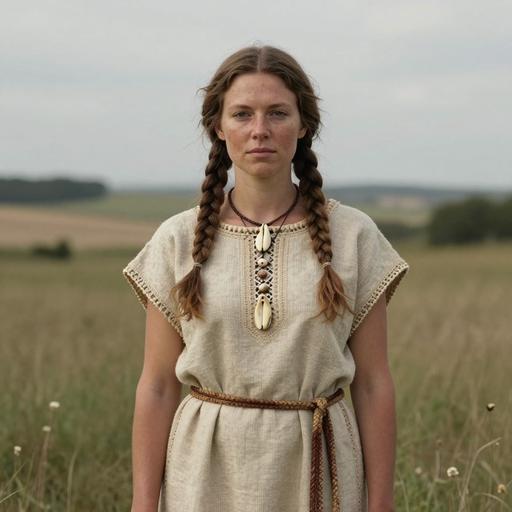
Because K1A4A1I is rare, it does not mark large demographic turnovers. Instead, it is best interpreted as a marker of localized maternal ancestry that probably spread with small farmer-derived communities and later persisted in pockets across the Mediterranean and Near East. The broader K haplogroup is strongly associated with Early European Farmers (EEF) and Anatolian farmer migrations into Europe during the Neolithic; K1A4A1 and its subclades show a pattern consistent with Near Eastern farmer origins and limited westward diffusion during the Chalcolithic and Bronze Age.
K1A4A1I has also been observed, at very low frequency, in some Jewish maternal lineages and modern Mediterranean populations; these occurrences likely reflect complex historical mobility in the eastern Mediterranean (trade, population movements, and later diasporas) rather than a single large-scale migration event.
Conclusion
K1A4A1I represents a narrowly distributed, late-forming subclade of K1A4A1 that likely originated in an Anatolian / Near Eastern farming context in the late Chalcolithic–Bronze Age and survives today at low frequencies across southern Europe, parts of the Near East and in diasporas. Its rarity limits its use as a broad demographic marker, but it is informative for fine-scale maternal ancestry reconstructions and for tracing localized founder events and continuity in the eastern Mediterranean and adjoining regions. Future full mitogenome sequencing in under-sampled ancient and modern populations may clarify its internal structure and precise phylogeographic history.
Key Points
- Origins and Evolution
- Subclades (if applicable)
- Geographical Distribution
- Historical and Cultural Significance
- Conclusion