Menu
mtDNA Haplogroup • Maternal Lineage

L3F1B1A1

mtDNA Haplogroup L3F1B1A1

~7,000 years ago
Horn of Africa / East Africa
0 subclades
Scroll to explore
Chapter I

The Story

The journey of mtDNA haplogroup L3F1B1A1

Origins and Evolution

mtDNA haplogroup L3F1B1A1 is a downstream branch of L3F1B1A, itself nested within the broader L3F1B1 topology of African L3 lineages. Based on the time depth of its parent clade (L3F1B1A ~8.5 kya) and published coalescent estimates for related L3 subclades, L3F1B1A1 most likely emerged in the Early Holocene in the Horn of Africa / East Africa roughly ~7 kya. Its origin fits an East African pattern of localized diversification of L3-derived maternal lineages during the Holocene, a period that saw climatic amelioration, population growth, and cultural shifts toward more complex foraging and early food-producing lifeways.

Subclades (if applicable)

As a defined subclade of L3F1B1A, L3F1B1A1 may contain internal diversity identifiable by additional private mutations in complete mitogenomes. Published and public-sequence databases currently record L3F1B1A1 as a discrete branch; additional sequencing of whole mitochondrial genomes from East and Central African samples will refine its internal substructure. Because population sampling in the region is still incomplete, previously unrecognized daughter lineages could be revealed with broader sampling.

Geographical Distribution

L3F1B1A1 shows a clear concentration in the Horn of Africa and neighboring East African regions, with lower-frequency but geographically widespread occurrences across central, western and southern Africa and in African-derived populations in the Americas. Documented modern occurrences include Oromo, Amhara, Somali, coastal Swahili-adjacent communities, certain Central African Pygmy groups (e.g., Mbuti), and low-frequency presence among West African (e.g., Yoruba) and southern African (Khoe-San and other groups) populations. Small numbers are also reported in North African and Middle Eastern populations, likely reflecting historical gene flow, and in African-descended communities in the Americas through the trans-Atlantic diaspora. The lineage has been observed in at least two ancient DNA samples, indicating its presence in archaeological contexts and continuity in the region through the Holocene.

Historical and Cultural Significance

The distribution of L3F1B1A1 corresponds with regions involved in major Holocene demographic processes in eastern Africa: local Late Stone Age continuities, the expansion of pastoralist and agropastoralist economies, and later population movements associated with Afroasiatic- and Nilo-Saharan-speaking groups. While mtDNA lineages do not map one-to-one onto languages or cultures, the high prevalence in Horn populations (Oromo, Amhara, Somali) suggests L3F1B1A1 contributed to the maternal substrate of communities that played central roles in regional cultural histories. Its lower-frequency presence in central African pygmy populations and across western and southern Africa reflects prehistoric and historic mobility—trade, intermarriage, and episodic long-distance dispersals—plus the trans-Atlantic slave trade that introduced East/Central African maternal lineages into the Americas.

Conclusion

L3F1B1A1 is a regionally important East African maternal lineage that exemplifies Holocene mitochondrial diversification in the Horn of Africa. Continued mitogenome sequencing, denser geographic sampling (particularly in under-sampled central and southern African populations), and integration with archaeological and linguistic data will refine its internal branching, age estimates, and the demographic events that shaped its current distribution. For genealogical and population studies, L3F1B1A1 is most informative when interpreted alongside other local L0/L2/L3 lineages and paternal markers common to the Horn and East Africa.

Key Points

  • Origins and Evolution
  • Subclades (if applicable)
  • Geographical Distribution
  • Historical and Cultural Significance
  • Conclusion
Chapter II

Tree & Relationships

Phylogenetic context and subclades

Evolution Path

This haplogroup's evolutionary journey from its earliest ancestor to the present.

Steps Haplogroup Age Estimate Archaeology Era Time Passed Immediate Descendants Tested Modern Descendants Ancient Connections
1 L3F1B1A1 Current ~7,000 years ago 🌾 Neolithic 7,000 years 0 0 0
2 L3F1B1A ~8,000 years ago 🌾 Neolithic 8,500 years 1 38 4
3 L3F1B1 ~11,000 years ago 🌾 Neolithic 11,000 years 1 39 0
4 L3F1B ~12,000 years ago 🌾 Neolithic 12,000 years 3 148 2
5 L3F1 ~20,000 years ago 🏹 Mesolithic 20,000 years 2 192 0
6 L3F ~30,000 years ago 🦴 Paleolithic 30,000 years 2 202 1
7 L3 ~70,000 years ago 🦴 Paleolithic 70,000 years 11 17,621 6
8 L ~160,000 years ago 🦴 Paleolithic 160,000 years 7 18,987 5

Subclades (0)

Terminal branch - no known subclades

Chapter III

Where in the World

Geographic distribution and modern presence

Place of Origin

Horn of Africa / East Africa

Modern Distribution

The populations where mtDNA haplogroup L3F1B1A1 is found include:

  1. Oromo and Amhara (Horn of Africa / East Africa)
  2. Somali and other Horn populations (East Africa)
  3. Coastal East African communities (e.g., Swahili-adjacent groups)
  4. Mbuti and other Central African Pygmy groups (low to moderate frequencies)
  5. Yoruba and other West African groups (low frequencies)
  6. Khoe-San and southern African populations (low frequencies)
  7. African-descended populations in the Americas (African American, Afro-Caribbean; low frequencies)
  8. Small numbers in North African and Middle Eastern populations (low frequencies, historical admixture)
CHAPTER IV

When in Time

Your haplogroup in the context of human history

~10k years ago

Neolithic Revolution

Agriculture begins, settled communities form

~7k years ago

Haplogroup L3F1B1A1

Your mtDNA haplogroup emerged in Horn of Africa / East Africa

Horn of Africa / East Africa
~5k years ago

Bronze Age

Metalworking, writing, and early civilizations

~3k years ago

Iron Age

Iron tools, expanded trade networks

~2k years ago

Classical Antiquity

Greek and Roman civilizations flourish

Present

Present Day

Modern era

Your Haplogroup
Historical Era
Chapter IV-B

Linked Cultures

Ancient cultures associated with mtDNA haplogroup L3F1B1A1

Cultural Heritage

These ancient cultures have been linked to haplogroup L3F1B1A1 based on matching ancient DNA samples from archaeological excavations. The presence of this haplogroup in these cultures provides insights into the migrations and population movements of populations carrying this haplogroup.

Bungule Corded Ware Early Pastoral Neolithic Elmenteitan Culture Jordanow-Michelsberg Culture Khovd Long-Term Modern Period Mtwapa Nubian Christian Slab Grave Culture St. Helena Colonial
Culture assignments are based on archaeological context of ancient DNA samples and may represent regional associations during specific time periods.
Chapter V

Sample Catalog

2 direct carriers of haplogroup L3F1B1A1

2 / 2 samples
Portrait Sample Country Era Date Culture mtDNA Match
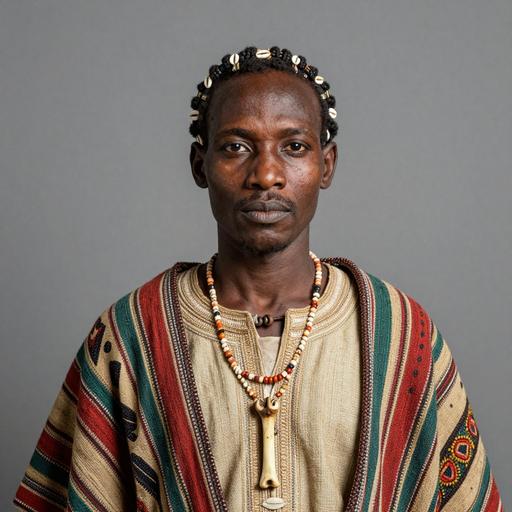
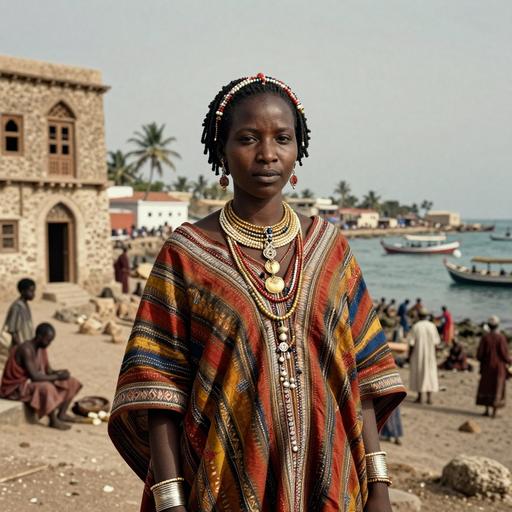
Portrait of ancient individual I19419 from Kenya, dated 1250 CE - 1650 CE
I19419
Kenya Swahili Culture of Mtwapa 1250 CE - 1650 CE Mtwapa L3f1b1a1 Direct
Portrait of ancient individual I21475 from Kenya, dated 1454 CE - 1623 CE
I21475
Kenya Swahili Culture of Mtwapa 1454 CE - 1623 CE Mtwapa L3f1b1a1 Direct
Chapter VI

Carrier Distribution Map

Geographic distribution of 2 ancient DNA samples (direct and subclade carriers of L3F1B1A1)

Direct carrier
Time Period Filter
All Time Periods
Showing all samples
Chapter VII

Temporal Distribution

Distribution of carriers across archaeological periods

Chapter VIII

Geographic Distribution

Distribution by country of origin (direct and subclade carriers shown by default)

Chapter IX

Country × Era Distribution

Cross-tabulation of carrier countries and archaeological periods (direct and subclade carriers shown by default)

Data

Data & Provenance

Source information and data quality

Last Updated 2026-02-16
Confidence Score 50/100
Coverage Low
Data Source

We use the latest phylotree for MTDNA haplogroup classification and data.