The Story
The journey of mtDNA haplogroup M20
Origins and Evolution
mtDNA haplogroup M20 is a descendant clade within the macrohaplogroup M and sits beneath the broader M1'20'51A branch in recent phylogenies. Its estimated coalescence in the late Upper Paleolithic (on the order of ~20–30 kya) places its origin after the initial out-of-Africa dispersal but well before major Holocene cultural transitions in South and Southeast Asia. As with many regional M subclades, M20 probably diversified locally from an early maternal lineage that settled and differentiated in South/Southeast Asia during the Late Pleistocene.
Subclades
Genetic surveys and PhyloTree-style classifications treat M20 as an intermediate clade that may contain downstream sublineages (often labeled in literature as M20a, M20b, etc., where sampling resolution permits). The internal structure of M20 is not as deeply sampled or as well resolved as some other mtDNA clades, so many published studies report M20 as a single haplogroup or split into a small number of regional subclades. Better resolution depends on larger whole-mitogenome datasets from understudied tribal and island populations.
Geographical Distribution
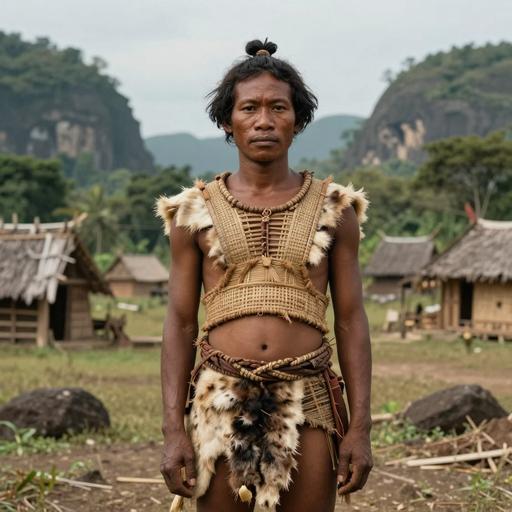
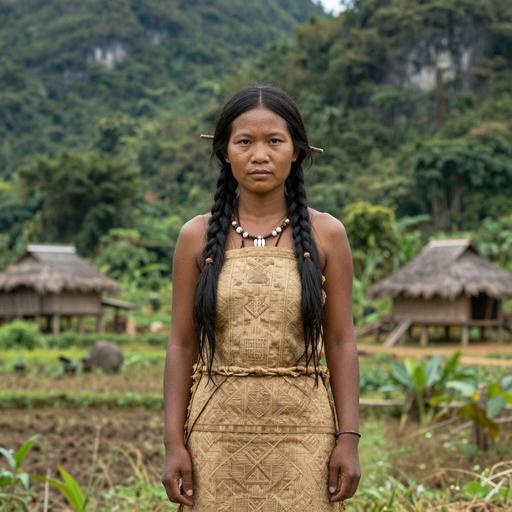
M20 is observed mainly across South Asia and Mainland and Island Southeast Asia. It tends to occur at low to moderate frequencies in a patchy distribution: detectable among various indigenous tribal groups of India and Myanmar, among Tibeto-Burman and Austroasiatic-speaking communities in Northeast India and nearby regions, and in parts of mainland Southeast Asia (Thailand, Laos, Cambodia) and the Malay Archipelago at lower frequencies. Its presence in island Southeast Asia and the Philippines is sporadic in published datasets, which suggests either secondary dispersals or low-level persistence from earlier regional populations.
Historical and Cultural Significance
Because of its antiquity and regional distribution, M20 is useful as a marker of local Late Pleistocene and Holocene demographic continuity in South and Southeast Asia. It appears in populations associated today with Austroasiatic-speaking and Tibeto-Burman-speaking groups and may reflect maternal lineages that pre-date, accompany, or were assimilated during Neolithic transitions (rice farming and other subsistence changes) and later cultural expansions (including some Austronesian movements). M20 therefore provides insight into interactions between indigenous hunter-gatherer groups and incoming or expanding agriculturalist groups, although it is not by itself a diagnostic marker of any single archaeological culture.
Conclusion
mtDNA M20 is a regionally informative maternal haplogroup that documents deep local ancestry across South and Southeast Asia. While not extremely frequent, its persistence across a range of tribal and lowland populations—and its likely Late Pleistocene origin—make it a useful lineage for reconstructing maternal population histories in the region. Continued whole-mitochondrial sequencing across understudied groups will improve understanding of M20's internal diversity, precise age estimates, and the timing and routes of its dispersals.
Key Points
- Origins and Evolution
- Subclades
- Geographical Distribution
- Historical and Cultural Significance
- Conclusion